

Learn how we are working to transform how we use and produce energy.
Impact Accounting Methodology for Building Construction
Guiding Strategic Investments to Reduce Embodied Carbon in Construction
Why we share this work for free
RMI is an independent nonprofit working to accelerate the clean energy transition. We publish research like this to inform decision-makers and drive real-world impact.
Our work is supported by philanthropy as well as partnerships, including fee-for-service engagements. This support makes it possible for us to share our independent insights for free.
If you find this work valuable, you can support it anytime.
Get more insights like this
Stay up to date with the latest research, analysis, and tools from RMI by opting in to receive occasional emails below. You’ll get new reports, event invitations, and practical insights to help us all accelerate the clean energy transition.
Loading form...
Your download should start automatically. If it doesn’t, click the download button below.
This work is made possible by philanthropy
RMI is a nonprofit supported by donors and partners. Philanthropy enables us to produce independent research and make resources like this freely available.
If you find this report valuable, please consider supporting our work. You can also explore how we partner with organizations to drive impact.
Jump to Section
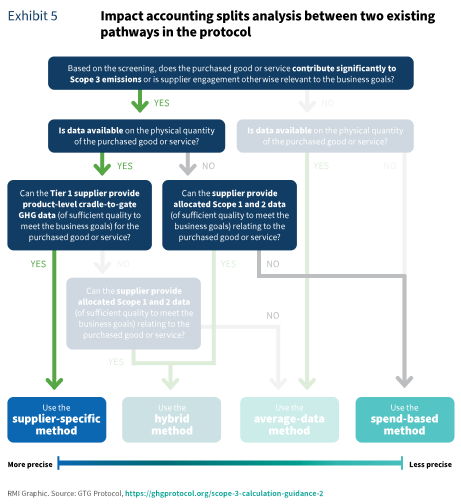
Corporate greenhouse gas emissions fall into three categories: Scope 1 (direct emissions from facilities and vehicles), Scope 2 (indirect emissions from purchased energy), and Scope 3 (upstream and downstream activities like purchased goods and product disposal). As one of the early adopters of Scope 3 reporting, Microsoft determined that their Scope 3 emissions surpass their Scope 1 and 2 emissions combined, in part due to the embodied carbon from building materials and construction. RMI and Microsoft’s report Impact Accounting Methodology for Building Construction aims to refine Scope 3 emissions to provide architects, engineers, and procurement teams with an actionable method and reporting system to guide cost-effective investments and drive significant emissions reductions.
The GHG Protocol-aligned report expands upon conventional spend-based metrics that penalize investments in reducing embodied carbon by introducing a dual-path framework that combines process-based data with spend-based calculations and reporting. It leverages verified, product-specific Environmental Product Declarations (EPDs) for high-emitting materials such as steel and concrete, and supplements them with spend-based adjustments when detailed emissions data aren’t available. This report serves as both a roadmap for immediate application and a call to action for industry collaboration, accelerating the shift to better project designs and material procurement for buildings that are good for both business and the climate.
RMI and Microsoft would like to thank Building Transparency, LinkedIn, and the University of Washington for their technical support and collaboration on this research.


Related Insights


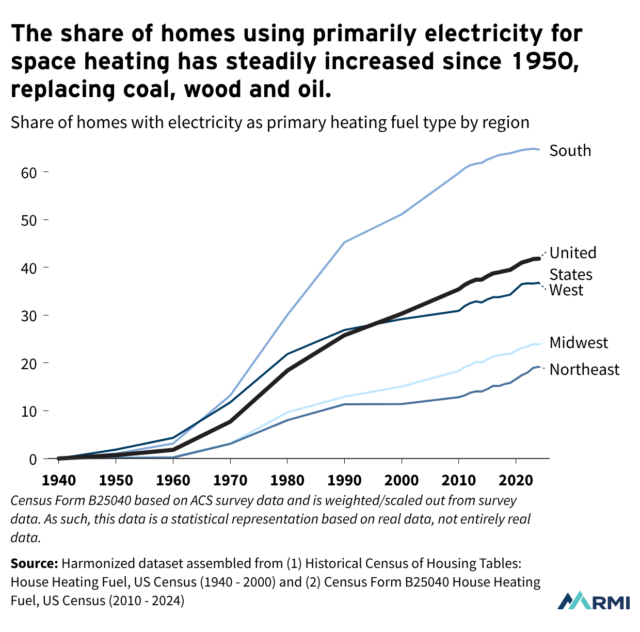
More Americans Are Heating Their Homes with Electricity than Ever Before
Help build the clean energy future. Donate today.
Independent research. Real-world solutions. Supported by donors.
RMI can pursue the highest-impact climate and energy solutions because we’re supported by people who believe change is possible. Every gift helps advance the work needed to make clean energy the default choice worldwide.
For other ways to give to RMI, including checks or gifts of stock, please visit Other Ways to Give.
