

Learn how we are working to transform how we use and produce energy.
HVAC Choices for Student Health and Learning
What Policymakers, School Leaders, and Advocates Need to Know about All-Electric, High-Performance HVAC
Why we share this work for free
RMI is an independent nonprofit working to accelerate the clean energy transition. We publish research like this to inform decision-makers and drive real-world impact.
Our work is supported by philanthropy as well as partnerships, including fee-for-service engagements. This support makes it possible for us to share our independent insights for free.
If you find this work valuable, you can support it anytime.
Get more insights like this
Stay up to date with the latest research, analysis, and tools from RMI by opting in to receive occasional emails below. You’ll get new reports, event invitations, and practical insights to help us all accelerate the clean energy transition.
Loading form...
Your download should start automatically. If it doesn’t, click the download button below.
This work is made possible by philanthropy
RMI is a nonprofit supported by donors and partners. Philanthropy enables us to produce independent research and make resources like this freely available.
If you find this report valuable, please consider supporting our work. You can also explore how we partner with organizations to drive impact.
Jump to Section
K-12 schools need all-electric, high-performance HVAC systems that deliver health and learning benefits to students and provide broader climate and economic benefits for decades to come. This report, HVAC Choices for Student Health and Learning: What Policymakers, School Leaders, and Advocates Need to Know, makes the case for transitioning schools to these modern systems — most often featuring electric heat pump technology as a centerpiece.
This report comes at a time when around 41 percent of school districts need to update or replace HVAC systems in their schools. Our original analysis shows that the HVAC systems currently installed in schools result in carbon emissions imposing an estimated $2 billion a year in societal costs. To reduce this cost, schools must shift away from outdated, inefficient HVAC systems reliant on polluting fossil fuels in favor of efficient, electric systems. This choice directly serves schools and their students by meeting growing cooling needs, improving air quality, and reducing school operational costs, among other benefits. Stark inequities in the condition of school facilities from chronic underinvestment in low-income communities and communities of color make it even more urgent that these schools can access these technologies.
New funding opportunities, such as the Inflation Reduction Act of 2022, give school district leaders a generational opportunity to make HVAC investments to better support their students and communities.
In the report, we introduce:
- Research connecting HVAC systems to student health, learning, and equity
- Six big ideas about school HVAC technology, paired with original analysis profiling school HVAC systems nationwide
- Six benefits of selecting all-electric, high-performance HVAC systems
- A framework for evaluating costs and approaches to funding HVAC investments
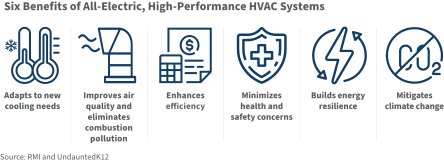
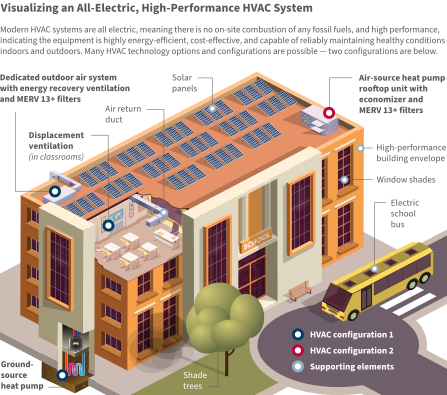
This report is intended to support informed decision-making by school district leaders as well as policymakers and advocates at the local, state, and federal levels.


Related Insights
The Opportunity for Heat Pumps to Put Downward Pressure on Electricity Rates
Building Smarter, More Efficient Air Conditioners for Real World Conditions

How Heat Pumps Reduce Energy Bills and Air Pollution in the San Francisco Bay Area
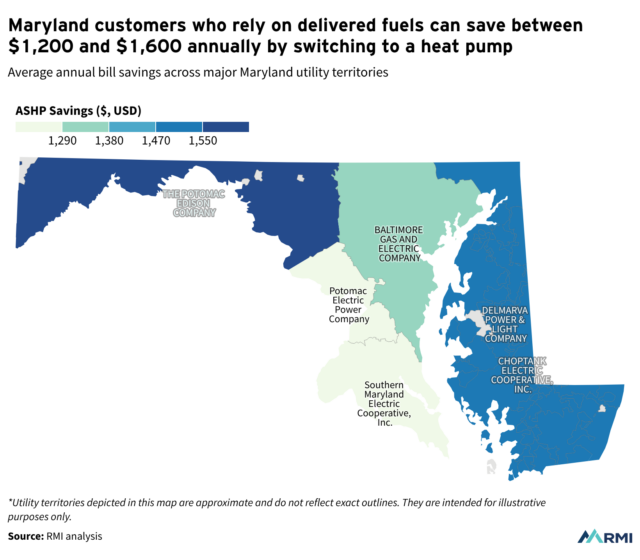
Delivered Fuel Customers in Maryland See Strong Energy Bill Savings in a Switch to Heat Pumps
Help build the clean energy future. Donate today.
Independent research. Real-world solutions. Supported by donors.
RMI can pursue the highest-impact climate and energy solutions because we’re supported by people who believe change is possible. Every gift helps advance the work needed to make clean energy the default choice worldwide.
For other ways to give to RMI, including checks or gifts of stock, please visit Other Ways to Give.