

Learn how we are working to transform how we use and produce energy.
Unlocking Renewable Embedded Generation in Nigeria
Enabling energy developers in Nigeria to provide improved electricity services through renewable embedded generation
Why we share this work for free
RMI is an independent nonprofit working to accelerate the clean energy transition. We publish research like this to inform decision-makers and drive real-world impact.
Our work is supported by philanthropy as well as partnerships, including fee-for-service engagements. This support makes it possible for us to share our independent insights for free.
If you find this work valuable, you can support it anytime.
Get more insights like this
Stay up to date with the latest research, analysis, and tools from RMI by opting in to receive occasional emails below. You’ll get new reports, event invitations, and practical insights to help us all accelerate the clean energy transition.
Loading form...
Your download should start automatically. If it doesn’t, click the download button below.
This work is made possible by philanthropy
RMI is a nonprofit supported by donors and partners. Philanthropy enables us to produce independent research and make resources like this freely available.
If you find this report valuable, please consider supporting our work. You can also explore how we partner with organizations to drive impact.
Jump to Section
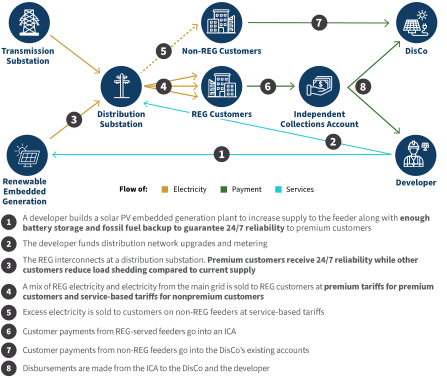
In Nigeria, the private sector is increasing the supply of electricity by building distributed energy resources (DERs), which has created an opportunity for investment. One such business model for DERs is embedded generation, which can improve supply for customers in urban and peri-urban areas by injecting up to 20 MW of generation directly at the distribution level. This method of implementing distributed energy resources is an effective way to improve electricity reliability for a large group of customers within an electricity distribution company’s (DisCo’s) territory. It has the potential to contribute 5 GW of supply, which would displace a sizeable portion of the 14–42 GW estimated distributed diesel generators and reduced energy costs for customers.
Embedded generation can result in immediate supply improvements for customers, as it does not rely on uncertain future central generation and transmission build out. It also enables DisCos to improve supply for customers without ceding parts of their franchise areas to other parties.
This model — developed in collaboration with Abuja Electric Distribution Company, Eko Electric Distribution Company, Ibadan Electric Distribution Company, Ikeja Electric Distribution Company, Lagos State Government, and Viathan Engineering Limited — addresses the limited scaling of embedded generation, which will increase the reliability of supply for customers.
Authors

Sakhi Shah
Senior Associate
Olamide Edun
Ighosime Oyofo
Osa Imoukhuede
Ola Okeowo
Olatunde Okeowo
Related Insights

Help build the clean energy future. Donate today.
Independent research. Real-world solutions. Supported by donors.
RMI can pursue the highest-impact climate and energy solutions because we’re supported by people who believe change is possible. Every gift helps advance the work needed to make clean energy the default choice worldwide.
For other ways to give to RMI, including checks or gifts of stock, please visit Other Ways to Give.