

Learn how we are working to transform how we use and produce energy.
Peaking: A Brief History of Select Energy Transitions
How Past Energy Transitions Foretell a Quicker Shift Away from Fossil Fuels Today
Why we share this work for free
RMI is an independent nonprofit working to accelerate the clean energy transition. We publish research like this to inform decision-makers and drive real-world impact.
Our work is supported by philanthropy as well as partnerships, including fee-for-service engagements. This support makes it possible for us to share our independent insights for free.
If you find this work valuable, you can support it anytime.
Get more insights like this
Stay up to date with the latest research, analysis, and tools from RMI by opting in to receive occasional emails below. You’ll get new reports, event invitations, and practical insights to help us all accelerate the clean energy transition.
Loading form...
Your download should start automatically. If it doesn’t, click the download button below.
This work is made possible by philanthropy
RMI is a nonprofit supported by donors and partners. Philanthropy enables us to produce independent research and make resources like this freely available.
If you find this report valuable, please consider supporting our work. You can also explore how we partner with organizations to drive impact.
Jump to Section
Sign-up to see new installments in our Climate Finance newsletter.
For more, see:
1. Summary
As new energy sources grow, the standard pattern of demand for existing energy sources is one of peak, plateau, and decline. In this brief, we set out the classic examples of this pattern in the past century as well as some clear examples from our own time. In most of these examples, incumbent demand peaks early in the transition, and then falls faster than it rose. Existing infrastructure enabled incumbents to resist change for a while (the plateau) but they were overwhelmed as soon as price parity was reached. This pattern repeats across the following transitions:
- Horses to cars for transport. Peak demand for horses was 1905 in the United States; within two decades demand was down by 90%.
- Gas lighting to electric lighting. Peak UK demand for gas lighting was 1907. There was a plateau until 1920. Then demand collapsed, falling 80% in the next two decades.
- Steam power to electricity. UK demand for steam power peaked around 1910, was on a plateau for around a decade, and then fell rapidly.
- Steam ships to oil ships. UK demand for steam ships peaked in 1914, bounced around on a plateau until around 1929, and then fell very fast.
- Coal heating to gas heating. UK coal demand for heating was flat after the second world war until around 1960; when cheaper gas was discovered in the North Sea, coal demand fell rapidly.
- Coal electricity to renewable electricity. The electricity shift has started in our own era. As solar and wind have entered the energy mix, OECD demand for coal electricity peaked in 2003, plateaued for about 5 years, and went into decline in 2008. Since 2008, demand has fallen by 43%.
We are now seeing massive change across the rest of the energy complex. This peak, plateau, decline pattern is spreading across sectors and geographies, from buildings to transport, and from China to the rest of the non-OECD countries. Subsequent briefs will demonstrate how this is unfolding.
Authors

Kingsmill Bond
Sam Butler-Sloss
Related Insights

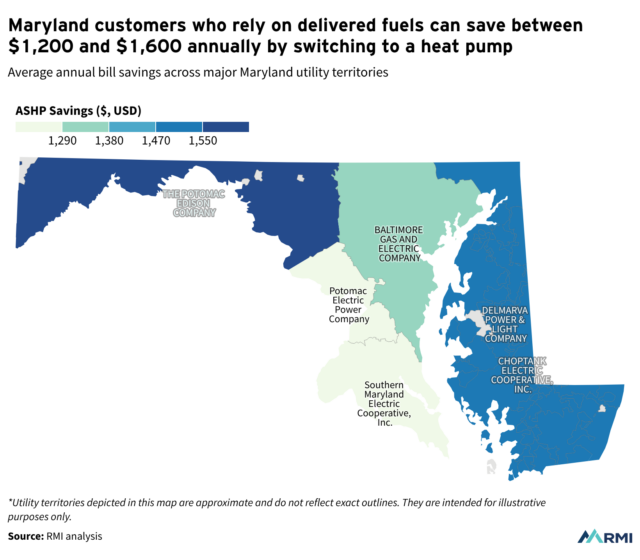
Delivered Fuel Customers in Maryland See Strong Energy Bill Savings in a Switch to Heat Pumps

Help build the clean energy future. Donate today.
Independent research. Real-world solutions. Supported by donors.
RMI can pursue the highest-impact climate and energy solutions because we’re supported by people who believe change is possible. Every gift helps advance the work needed to make clean energy the default choice worldwide.
For other ways to give to RMI, including checks or gifts of stock, please visit Other Ways to Give.
