

Learn how we are working to transform how we use and produce energy.
PIMs for Progress
Using Performance Incentive Mechanisms to Accelerate Progress on Energy Policy Goals
Why we share this work for free
RMI is an independent nonprofit working to accelerate the clean energy transition. We publish research like this to inform decision-makers and drive real-world impact.
Our work is supported by philanthropy as well as partnerships, including fee-for-service engagements. This support makes it possible for us to share our independent insights for free.
If you find this work valuable, you can support it anytime.
Get more insights like this
Stay up to date with the latest research, analysis, and tools from RMI by opting in to receive occasional emails below. You’ll get new reports, event invitations, and practical insights to help us all accelerate the clean energy transition.
Loading form...
Your download should start automatically. If it doesn’t, click the download button below.
This work is made possible by philanthropy
RMI is a nonprofit supported by donors and partners. Philanthropy enables us to produce independent research and make resources like this freely available.
If you find this report valuable, please consider supporting our work. You can also explore how we partner with organizations to drive impact.
Jump to Section
Performance incentive mechanisms (PIMs) are receiving increased attention for their ability to better align utility incentives with new social and environmental policy goals. By transitioning to business models where an increasing share of revenues relies on efforts to build a clean, reliable, and affordable energy economy, utilities have the opportunity to better meet evolving customer, policy, and technological demands.
PIMs can motivate utilities with financial rewards and penalties to deploy and utilize distributed energy resources (DERs), improve resilience, better engage customers, and deliver greenhouse gas (GHG) emissions reductions. However, the ability of PIMs to change the way the utility does business depends on their development, design, and implementation.
RMI’s new report, PIMs for Progress, reviews a selection of historical PIM examples and provides a simple taxonomy of the results to identify important lessons for future PIM development. By exploring why some PIM proposals are rejected by regulators and others are accepted, as well as what happens to PIMs after acceptance, we can learn how these regulatory tools can best be leveraged in a shifting electricity landscape.
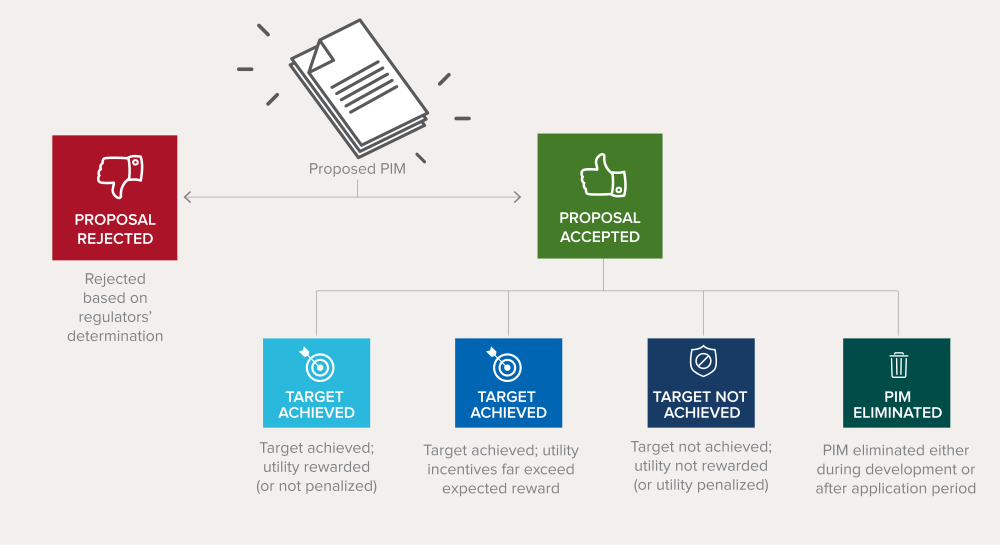
Based on this research and interviews with stakeholders involved in recent PIM development in various US states, we offer recommendations to regulators, utilities, and other stakeholders looking to integrate PIMs into their regulatory frameworks.




Related Insights


Gas Utility Depreciation: Recommendations for an Uncertain Future


States Are Opening the Door to Data Center Investment in Virtual Power Plants
Help build the clean energy future. Donate today.
Independent research. Real-world solutions. Supported by donors.
RMI can pursue the highest-impact climate and energy solutions because we’re supported by people who believe change is possible. Every gift helps advance the work needed to make clean energy the default choice worldwide.
For other ways to give to RMI, including checks or gifts of stock, please visit Other Ways to Give.
