

Learn how we are working to transform how we use and produce energy.
Global Stimulus Principles
The Economy We Build Should Not Be the Same Economy We Decarbonize
Why we share this work for free
RMI is an independent nonprofit working to accelerate the clean energy transition. We publish research like this to inform decision-makers and drive real-world impact.
Our work is supported by philanthropy as well as partnerships, including fee-for-service engagements. This support makes it possible for us to share our independent insights for free.
If you find this work valuable, you can support it anytime.
Get more insights like this
Stay up to date with the latest research, analysis, and tools from RMI by opting in to receive occasional emails below. You’ll get new reports, event invitations, and practical insights to help us all accelerate the clean energy transition.
Loading form...
Your download should start automatically. If it doesn’t, click the download button below.
This work is made possible by philanthropy
RMI is a nonprofit supported by donors and partners. Philanthropy enables us to produce independent research and make resources like this freely available.
If you find this report valuable, please consider supporting our work. You can also explore how we partner with organizations to drive impact.
Jump to Section
As the effects of the COVID-19 crisis ripple across the globe, strategic stimulus and recovery investments can get world economies back on track now and help us build back in a way that ensures greater resilience to the disruptions and crises we will inevitably face in the future. The current pandemic shows many parallels to, and interconnections with, a looming climate crisis. A response that addresses both crises at once will advance a low-carbon economy that is more resilient and helps mitigate the worst impacts of climate change, while improving the economy, the environment, and our health and communities.
Four Stimulus Principles to Build Back a Global Low-Carbon Economy
This paper outlines four core principles of stimulus and recovery efforts that should guide any global response to the COVID-19 pandemic:
- Create jobs and grow the economy: prioritize investments with the greatest job creation and economic growth potential.
- Support public health and reduce air pollution: in light of the current COVID-19 crisis, support industries and technologies with the potential to improve public health.
- Enhance economic, energy and climate resilience: prioritize the industries, technologies and systems that help people weather or adapt to unexpected shocks or crises.
- Decarbonize: prioritize investments that will enable the world to achieve the Paris Agreement’s goal of keeping global temperature rise to well below 2.0⁰C with best efforts to limit warming even further to 1.5⁰C.
Executing on the Principles
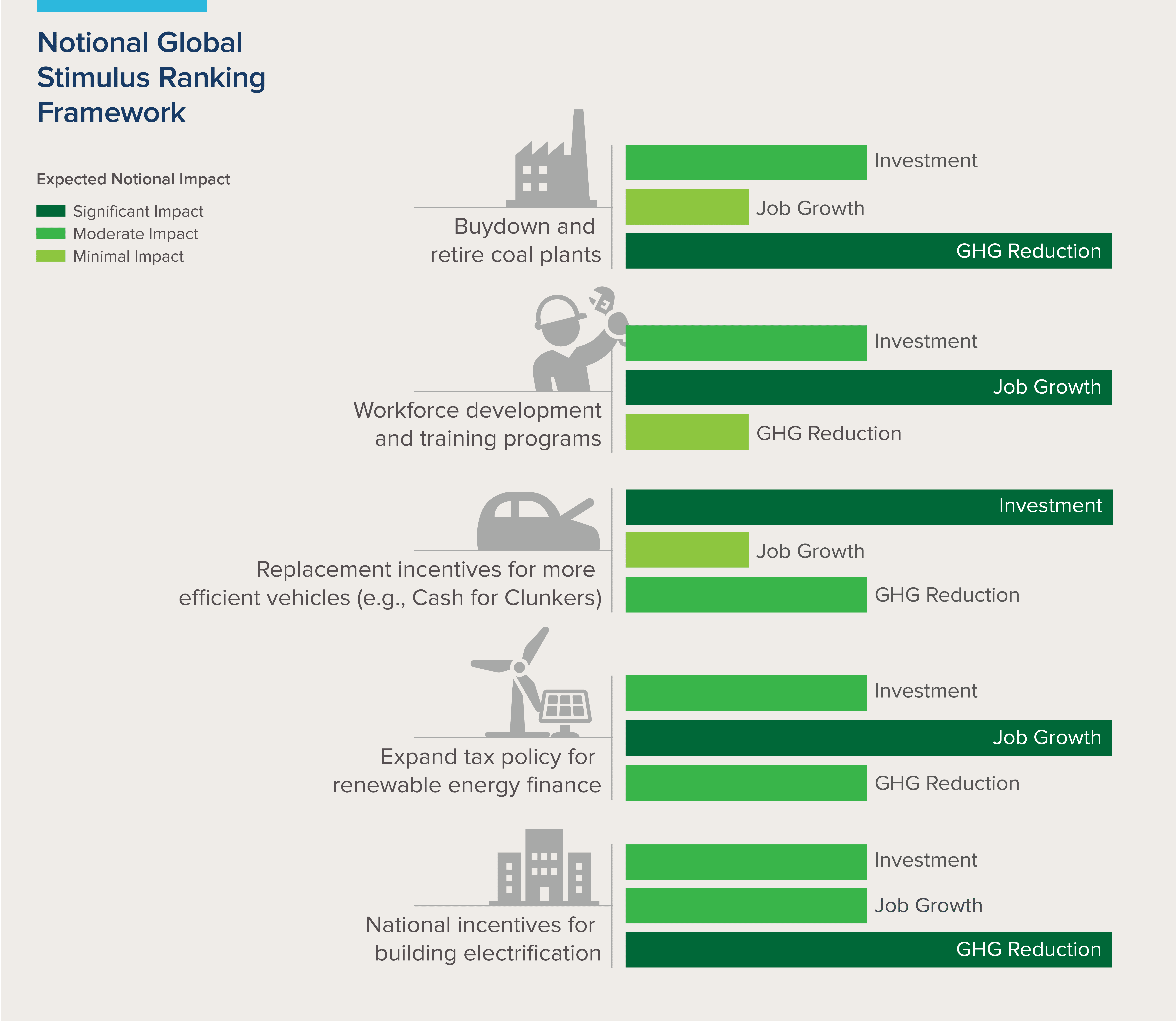
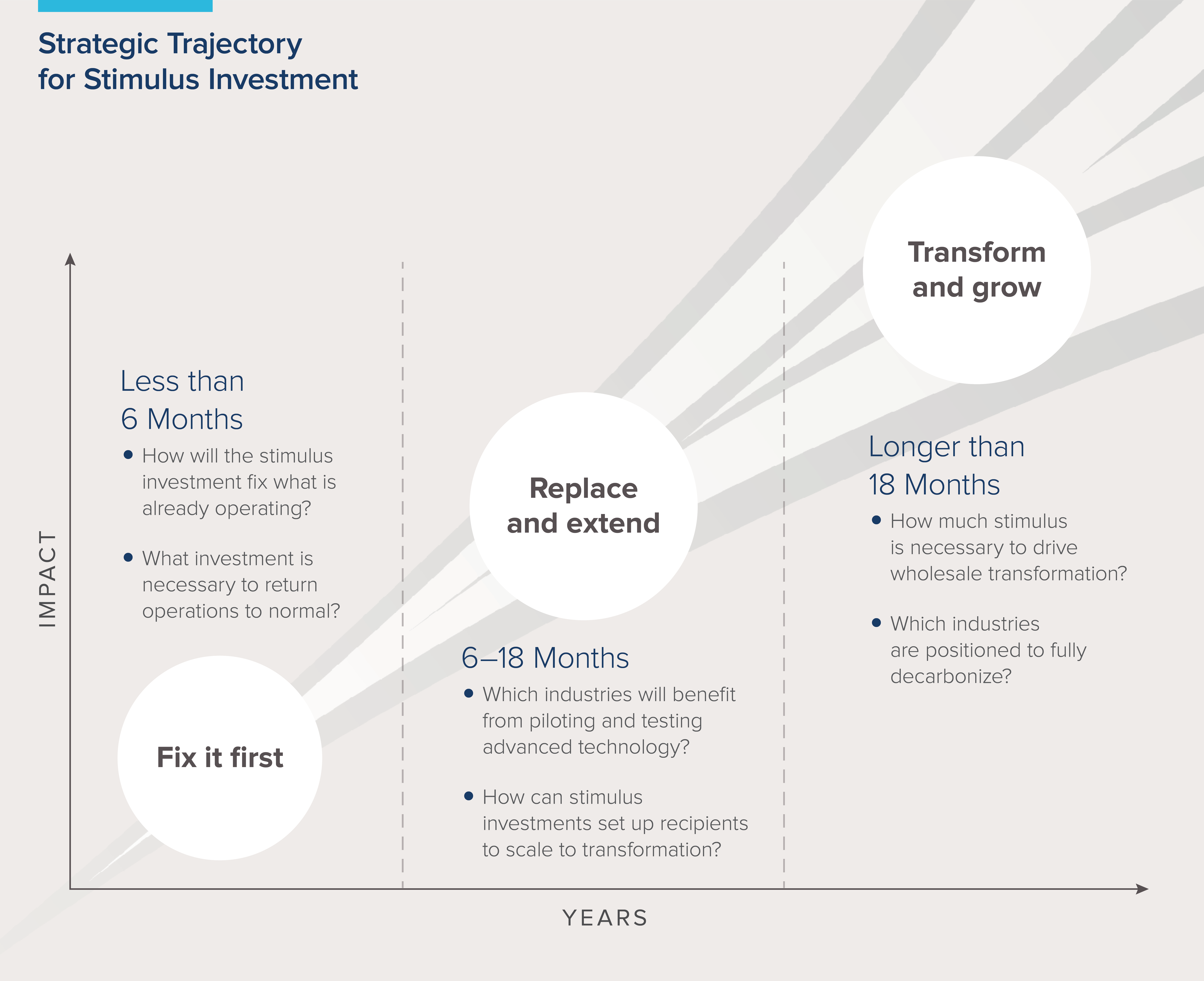
This paper also provides guidance for effectively integrating these principles into our efforts to rebuild, while setting us on a path toward a cleaner, healthier, more just, and more sustainable future. We must optimize decision-making across these principles and build an enduring impact over time.


Related Insights
The Opportunity for Heat Pumps to Put Downward Pressure on Electricity Rates
Gas Utility Depreciation: Recommendations for an Uncertain Future
Help build the clean energy future. Donate today.
Independent research. Real-world solutions. Supported by donors.
RMI can pursue the highest-impact climate and energy solutions because we’re supported by people who believe change is possible. Every gift helps advance the work needed to make clean energy the default choice worldwide.
For other ways to give to RMI, including checks or gifts of stock, please visit Other Ways to Give.