

Learn how we are working to transform how we use and produce energy.
Why we share this work for free
RMI is an independent nonprofit working to accelerate the clean energy transition. We publish research like this to inform decision-makers and drive real-world impact.
Our work is supported by philanthropy as well as partnerships, including fee-for-service engagements. This support makes it possible for us to share our independent insights for free.
If you find this work valuable, you can support it anytime.
Get more insights like this
Stay up to date with the latest research, analysis, and tools from RMI by opting in to receive occasional emails below. You’ll get new reports, event invitations, and practical insights to help us all accelerate the clean energy transition.
Loading form...
Your download should start automatically. If it doesn’t, click the download button below.
This work is made possible by philanthropy
RMI is a nonprofit supported by donors and partners. Philanthropy enables us to produce independent research and make resources like this freely available.
If you find this report valuable, please consider supporting our work. You can also explore how we partner with organizations to drive impact.
Jump to Section
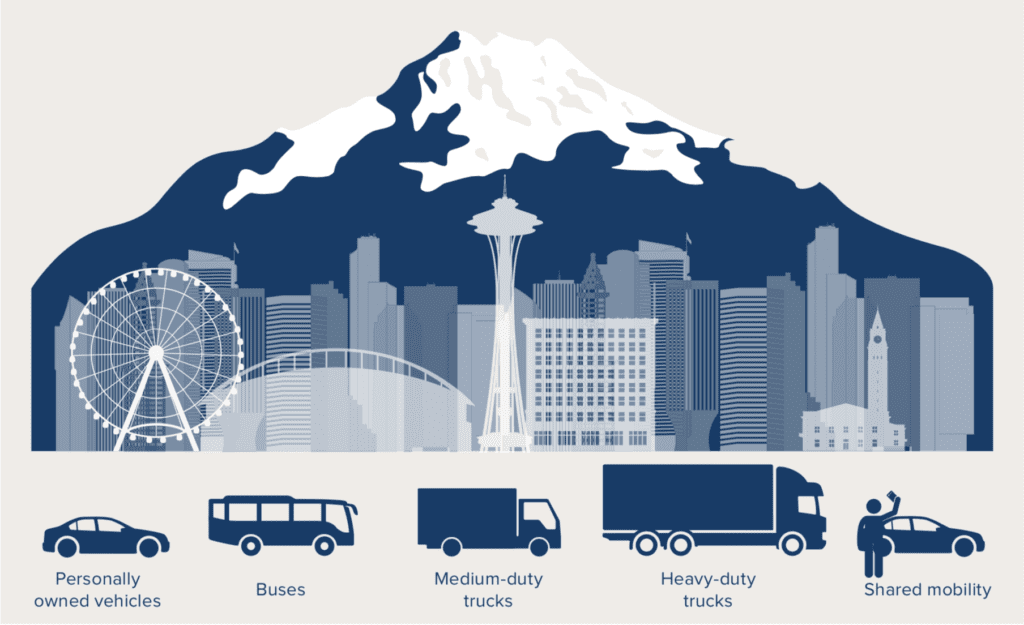
Rocky Mountain Institute worked with Seattle City Light to develop the first comprehensive transportation electrification strategy for a municipal utility, looking across all market segments—personally owned vehicles, trucks, buses, and shared mobility.
The market and policy landscape for transportation electrification is changing rapidly. Private developers are investing heavily in electric vehicle charging stations. Utilities are examining their role and testing new business models. New and improving technologies are accelerating the electrification of buses, ferries, freight, and fleets.
With such rapid change, utilities—investor owned and municipal—are seeking to refresh their business models with a clear understanding of how best to play an enabling role and respond to opportunities as they emerge.
For this report we worked with Seattle City Light, Seattle’s municipal utility, to lay out a strategic vision of its continuing role and the actions it should take.
Market segments are at a tipping point. Personal vehicle adoption is poised to accelerate. The financial case for electric trucks and buses is becoming clearer. High-utilization shared-mobility vehicles are ripe for electrification.
- Critical to personally owned vehicles, vehicle costs are soon to reach a tipping point as battery costs are projected to reach $150/kWh in 2019 just as more vehicle models are soon to be available from manufacturers; however, available infrastructure continues to be a bottleneck and an opportunity for utility investment.
- The report also highlights large spot loads associated with electrified fleets of buses or medium- and heavy-duty trucks, which can easily overwhelm available capacity and require grid upgrades. As electric bus and truck technologies rapidly improve, these segments are likely to electrify quickly because they are responsive to the favorable economics of electricity as fuel.
Based on market conditions RMI recommends that utilities focus on programs in three core areas:
- Invest in charging infrastructure with an emphasis on universal access and expanding coverage
- Develop new rates and improve customer service for the transportation market
- Prepare for heavy-duty electrification
Authors

Brendan O’Donnell
Lynn Daniels
Related Insights


Help build the clean energy future. Donate today.
Independent research. Real-world solutions. Supported by donors.
RMI can pursue the highest-impact climate and energy solutions because we’re supported by people who believe change is possible. Every gift helps advance the work needed to make clean energy the default choice worldwide.
For other ways to give to RMI, including checks or gifts of stock, please visit Other Ways to Give.
