

Learn how we are working to transform how we use and produce energy.
The Economics of Electrifying Buildings
Why we share this work for free
RMI is an independent nonprofit working to accelerate the clean energy transition. We publish research like this to inform decision-makers and drive real-world impact.
Our work is supported by philanthropy as well as partnerships, including fee-for-service engagements. This support makes it possible for us to share our independent insights for free.
If you find this work valuable, you can support it anytime.
Get more insights like this
Stay up to date with the latest research, analysis, and tools from RMI by opting in to receive occasional emails below. You’ll get new reports, event invitations, and practical insights to help us all accelerate the clean energy transition.
Loading form...
Your download should start automatically. If it doesn’t, click the download button below.
This work is made possible by philanthropy
RMI is a nonprofit supported by donors and partners. Philanthropy enables us to produce independent research and make resources like this freely available.
If you find this report valuable, please consider supporting our work. You can also explore how we partner with organizations to drive impact.
Jump to Section
Seventy million American homes and businesses burn natural gas, oil, or propane on-site to heat their space and water, generating 560 million tons of carbon dioxide each year—one-tenth of total US emissions. But now, we have the opportunity to meet nearly all our buildings’ energy needs with electricity from an increasingly low-carbon electric grid, eliminating direct fossil fuel use in buildings and making obsolete much of the gas distribution system—along with its costs and safety challenges.
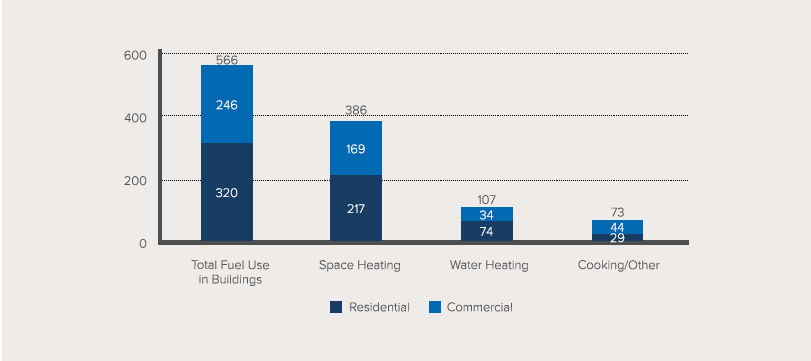
Carbon Emissions of Fossil Fuel End Uses in US Builidings, 2015, MT CO2E
In RMI’s new report, The Economics of Electrifying Buildings, we analyze the economics and carbon impacts of electrifying residential space and water heating both with and without demand flexibility—the ability to shift energy consumption in time to support grid needs. We compare electric space and water heating to fossil-fueled space and water heating for both new construction and home retrofits under various electric rate structures in four cities: Oakland, California; Houston; Providence, Rhode Island; and Chicago.
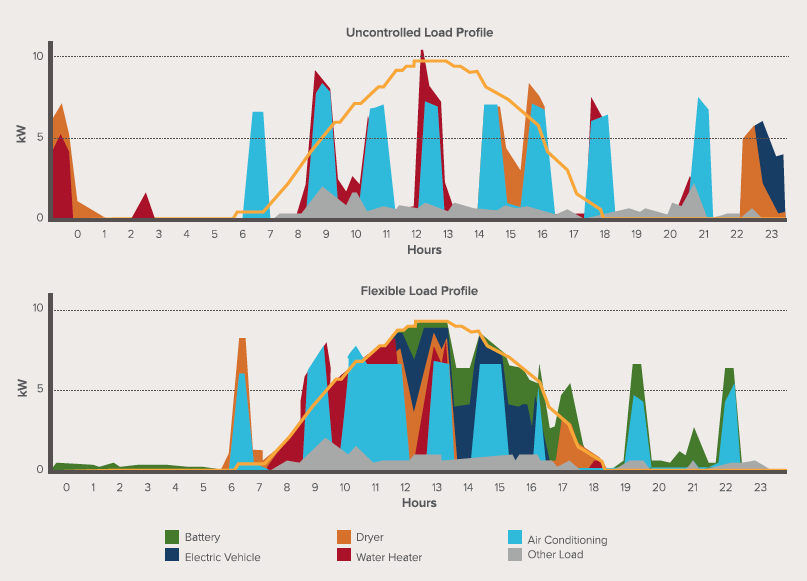
Demand Flexibility Can Shift Loads into Times of High Renewable Output or Low Cost
In many scenarios, notably for most new home construction, we find electrification of space and water heating and air conditioning reduces the homeowner’s costs over the lifetime of the appliances when compared with performing the same functions with fossil fuels. Costs are also reduced for customers in several retrofit scenarios: for customers switching away from propane or heating oil, for gas customers who would otherwise need to replace both a furnace and air conditioner simultaneously, and for customers who bundle rooftop solar with electrification. New homes and homes currently lacking natural gas service also avoid the cost of gas mains, services, and meters not needed in all-electric neighborhoods.
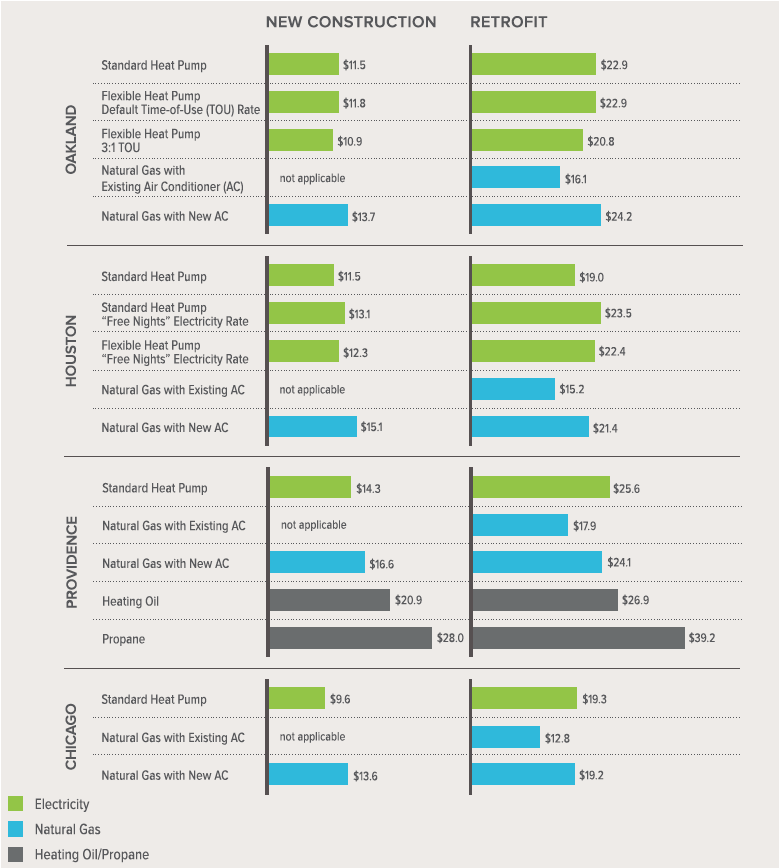
Comparisons of 15-year Net Present Costs of Water Heating and Space Conditioning (Thousand $)
Reaching “deep decarbonization” goals of 75 percent or greater reduction in greenhouse gas emissions will require eliminating most of the CO2 produced by furnaces and water heaters across the country, alongside other measures across the economy. Further, electric space and water heating can be intelligently managed to shift energy consumption in time, aiding the cost-effective integration of large amounts of renewable energy onto the grid.
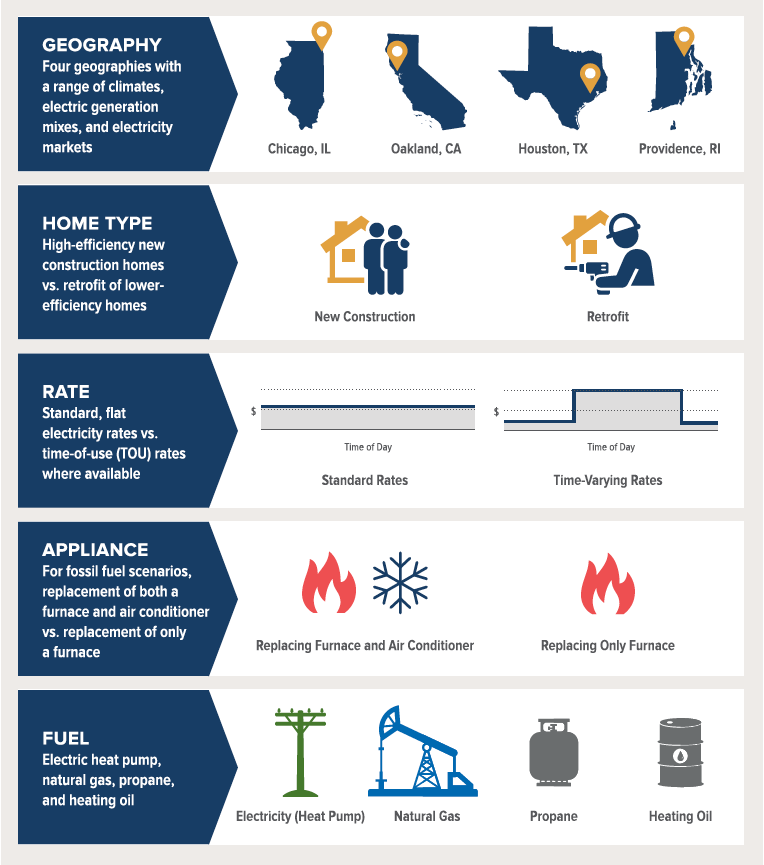
Scenario Characteristics
Authors

Sherri Billimoria
Manager
Leia Guccione
Chief Program Officer, Sectors and Systems
Mike Henchen
Principal
Leah Louis-Prescott
Related Insights

For Clean Energy Projects, How Community Benefits Are Delivered Matters
Tracking WestTEC: Where 100+ Transmission Projects Stand and What Comes Next
Building Smarter, More Efficient Air Conditioners for Real World Conditions

How Heat Pumps Reduce Energy Bills and Air Pollution in the San Francisco Bay Area
Help build the clean energy future. Donate today.
Independent research. Real-world solutions. Supported by donors.
RMI can pursue the highest-impact climate and energy solutions because we’re supported by people who believe change is possible. Every gift helps advance the work needed to make clean energy the default choice worldwide.
For other ways to give to RMI, including checks or gifts of stock, please visit Other Ways to Give.
