

Learn how we are working to transform how we use and produce energy.
Electrifying The Underserved
Collaborative Business Models for Developing Minigrids Under the Grid
Why we share this work for free
RMI is an independent nonprofit working to accelerate the clean energy transition. We publish research like this to inform decision-makers and drive real-world impact.
Our work is supported by philanthropy as well as partnerships, including fee-for-service engagements. This support makes it possible for us to share our independent insights for free.
If you find this work valuable, you can support it anytime.
Get more insights like this
Stay up to date with the latest research, analysis, and tools from RMI by opting in to receive occasional emails below. You’ll get new reports, event invitations, and practical insights to help us all accelerate the clean energy transition.
Loading form...
Your download should start automatically. If it doesn’t, click the download button below.
This work is made possible by philanthropy
RMI is a nonprofit supported by donors and partners. Philanthropy enables us to produce independent research and make resources like this freely available.
If you find this report valuable, please consider supporting our work. You can also explore how we partner with organizations to drive impact.
Jump to Section
In Nigeria alone, thousands of rural communities could be best served by undergrid minigrids.
Funded by All On, this report by RMI, Clean Technology Hub, and Energy Markets and Rates Consultants explains how to access this opportunity. Implementing 4,000 undergrid minigrid projects has the potential to save Nigerian distribution companies $30–60 million annually while offering minigrid owners $1 billion in annual revenue and saving communities $170 million in yearly energy expenditures. However, the undergrid minigrid opportunity is a new concept, and exploratory projects are needed to test and refine potential business models.
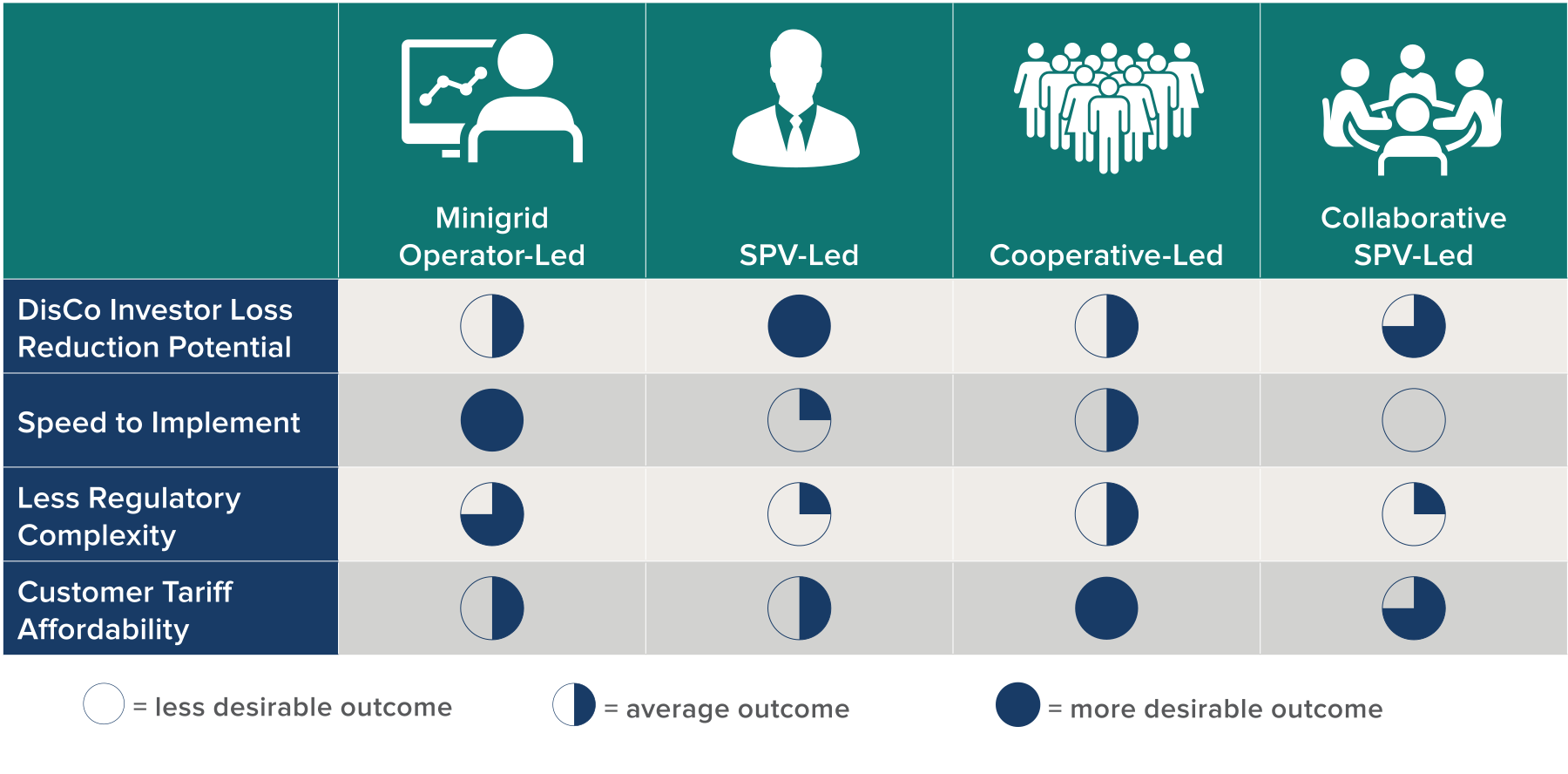
This report is designed to help stakeholders—including minigrid operators, DisCos, investors, and communities—clearly understand the process of developing an undergrid minigrid project. We articulate four business models that can be implemented under today’s social, political, and economic environment including a minigrid operator-led approach in which a private minigrid operator leads development in consultation across the distribution company and community, a special purpose vehicle (SPV)-led model where the SPV may include distribution company investors, a cooperative-led approach formed by the community to lead minigrid development, and a collaborative SPV-led model where ownership and operation are shared among stakeholders.
Initial proof of concept can allow undergrid minigrids to scale quickly both within Nigeria and globally, wherever utilities are not able to fully serve all customers and distributed energy resources can help provide cost-effective local power.
In Partnership With:


Related Insights
Bringing Clean Energy Opportunities to Women and Youth in Nigerian Agriculture


Nigeria’s Electricity Devolution Law Creates an Opportunity to Reshape Its Power System
Help build the clean energy future. Donate today.
Independent research. Real-world solutions. Supported by donors.
RMI can pursue the highest-impact climate and energy solutions because we’re supported by people who believe change is possible. Every gift helps advance the work needed to make clean energy the default choice worldwide.
For other ways to give to RMI, including checks or gifts of stock, please visit Other Ways to Give.
