

Learn how we are working to transform how we use and produce energy.
Transforming India’s Electricity Markets
The Promise of Market-Based Economic Dispatch and the Path Forward
Why we share this work for free
RMI is an independent nonprofit working to accelerate the clean energy transition. We publish research like this to inform decision-makers and drive real-world impact.
Our work is supported by philanthropy as well as partnerships, including fee-for-service engagements. This support makes it possible for us to share our independent insights for free.
If you find this work valuable, you can support it anytime.
Get more insights like this
Stay up to date with the latest research, analysis, and tools from RMI by opting in to receive occasional emails below. You’ll get new reports, event invitations, and practical insights to help us all accelerate the clean energy transition.
Loading form...
Your download should start automatically. If it doesn’t, click the download button below.
This work is made possible by philanthropy
RMI is a nonprofit supported by donors and partners. Philanthropy enables us to produce independent research and make resources like this freely available.
If you find this report valuable, please consider supporting our work. You can also explore how we partner with organizations to drive impact.
Jump to Section
The Indian power sector has evolved rapidly over the past decades. The country has electrified every village and transformed from a power-deficit to a power-surplus nation, led by remarkable growth in renewable energy deployment. Moreover, continued rapid economic growth is anticipated to maintain a high rate of electricity demand growth over the coming decade. Demand growth, coupled with India’s declared target of meeting 50 percent of its power generation capacity from non-fossil fuel-based sources by 2030, will necessitate a paradigm shift in India’s electricity market.
India’s distribution sector continues to face many challenges, including financial distress and large cumulative debt. A fiscally healthy distribution sector is necessary to ensure robust growth of the renewable sector and to achieve projected electricity demand growth. Suboptimal scheduling and dispatch of generators contributes to the distribution companies’ economic strain at the wholesale level. To resolve this issue, the Ministry of Power has proposed a Market-Based Economic Dispatch (MBED) mechanism to optimize the day-ahead scheduling of power generators.
This report is designed to create a shared understanding among stakeholders of the status and impact of proposed changes to India’s wholesale power market. This report provides a summary of the current market design in India, outlines the proposed MBED mechanism, identifies its anticipated benefits, and looks at key barriers toward implementation. The report shares lessons learned from international electricity markets and provides recommendations to successfully transition to the MBED mechanism in India’s power sector.
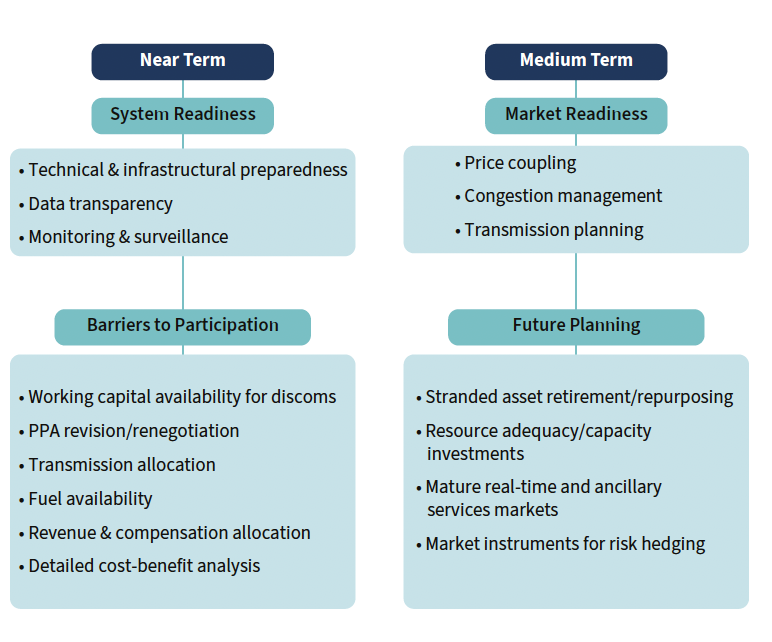
MBED is a step toward creating a system that operates efficiently with an integrated pan-India approach for generators. Building off two decades of evolution, India needs to ensure that the right electricity market operational structure is in place to develop a reliable, flexible, and cost-effective power sector. Markets well suited to integration of variable renewable generation will be key for making India a global leader in this innovative sector and maximizing the economic and environmental benefits.
Authors

Related Insights

India’s Used EV Battery Market Needs Trust. Battery Aadhaar Can Help.



Help build the clean energy future. Donate today.
Independent research. Real-world solutions. Supported by donors.
RMI can pursue the highest-impact climate and energy solutions because we’re supported by people who believe change is possible. Every gift helps advance the work needed to make clean energy the default choice worldwide.
For other ways to give to RMI, including checks or gifts of stock, please visit Other Ways to Give.
