

Learn how we are working to transform how we use and produce energy.
Transforming Existing Buildings from Climate Liabilities to Climate Assets
Low-embodied-carbon and carbon-storing materials in building retrofits can reduce total building emissions.
Why we share this work for free
RMI is an independent nonprofit working to accelerate the clean energy transition. We publish research like this to inform decision-makers and drive real-world impact.
Our work is supported by philanthropy as well as partnerships, including fee-for-service engagements. This support makes it possible for us to share our independent insights for free.
If you find this work valuable, you can support it anytime.
Get more insights like this
Stay up to date with the latest research, analysis, and tools from RMI by opting in to receive occasional emails below. You’ll get new reports, event invitations, and practical insights to help us all accelerate the clean energy transition.
Loading form...
Your download should start automatically. If it doesn’t, click the download button below.
This work is made possible by philanthropy
RMI is a nonprofit supported by donors and partners. Philanthropy enables us to produce independent research and make resources like this freely available.
If you find this report valuable, please consider supporting our work. You can also explore how we partner with organizations to drive impact.
Jump to Section
Investing in existing buildings makes climate sense; retrofitting an existing building emits 50 to 75 percent less carbon than constructing the same building new. However, we cannot ignore the embodied carbon impact of these retrofits. It is important to consider the upfront embodied carbon emissions that arise from the production, transportation, and installation of materials to prevent a spike in emissions that will negate years of the operating emissions reductions achieved through retrofits.
This report provides data to support using low-carbon and carbon-storing materials in deep energy retrofits to reduce net emissions and transform buildings into climate assets. The study focuses on retrofit strategies for cold and mixed-humid climates and analyzes how reducing embodied carbon upfront impacts long-term operating emissions reductions through two examples of affordable multifamily housing deep energy retrofit projects in the Northeast. The report also includes case studies of successful completed retrofit projects and a list of available building products that use carbon-storing materials such as straw, bamboo and hemp for design teams and manufacturers.
Realizing the full benefits of carbon-storing materials requires innovation from manufacturers, designers, and the industry. Policies that support investment in low-embodied-carbon products, carbon-storing materials, and deep energy retrofit solutions can speed up this process. The lessons on embodied carbon can be applied to the broader decarbonization of buildings.
Key Takeaways:
- The analysis of 24 deep energy retrofit exterior insulation systems reveals that lower embodied carbon options exist today and can be substituted for traditional materials.
- Using lower-embodied-carbon or carbon-storing materials can reduce operating emissions quickly, and in best case scenarios, the building can store carbon for its remaining service life.
- The use of carbon-storing materials in retrofits becomes increasingly important as the industry strives to meet 2030 decarbonization goals.
- Support for the development of carbon-storing material manufacturing can bolster the clean energy economy and create new economic growth and green jobs.
- The right policies can make existing buildings carbon sinks, storing greenhouse gases out of the atmosphere and reducing their impact on the environment.



Related Insights


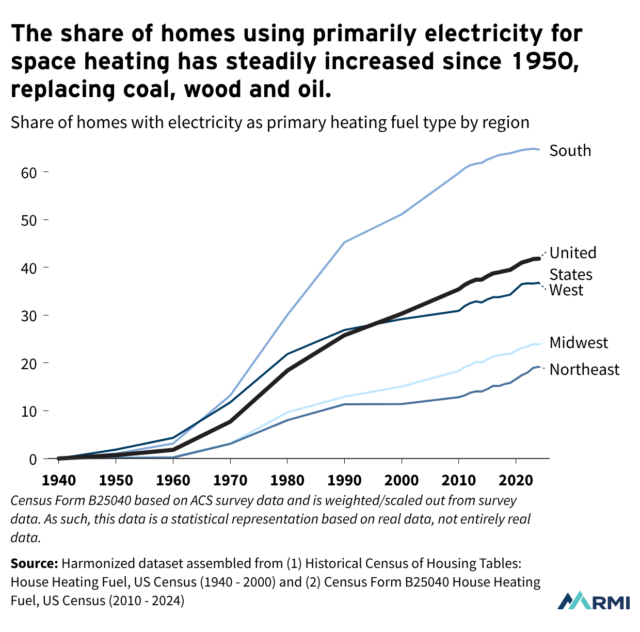
More Americans Are Heating Their Homes with Electricity than Ever Before

Help build the clean energy future. Donate today.
Independent research. Real-world solutions. Supported by donors.
RMI can pursue the highest-impact climate and energy solutions because we’re supported by people who believe change is possible. Every gift helps advance the work needed to make clean energy the default choice worldwide.
For other ways to give to RMI, including checks or gifts of stock, please visit Other Ways to Give.
