

1976
NASA first identifies methane as a significant greenhouse gas

Learn how we are working to transform how we use and produce energy.
Solutions to stop gas — and methane — from leaking are readily available and affordable and have the potential to create jobs, protect public safety, and bolster national security.
RMI is an independent nonprofit working to accelerate the clean energy transition. We publish research like this to inform decision-makers and drive real-world impact.
Our work is supported by philanthropy as well as partnerships, including fee-for-service engagements. This support makes it possible for us to share our independent insights for free.
If you find this work valuable, you can support it anytime.
Stay up to date with the latest research, analysis, and tools from RMI by opting in to receive occasional emails below. You’ll get new reports, event invitations, and practical insights to help us all accelerate the clean energy transition.
Loading form...
RMI is a nonprofit supported by donors and partners. Philanthropy enables us to produce independent research and make resources like this freely available.
If you find this report valuable, please consider supporting our work. You can also explore how we partner with organizations to drive impact.
Even as renewable energy scores historic gains in the global economy, oil and gas resource trading totals a whopping $3 trillion annually, ranking as the first and fourth most traded products worldwide. Those numbers are likely to get higher as the United States and others aim to double down on oil and gas production and exports — a recent upward trend that has borne out through Democratic and Republican administrations despite differing energy goals.
Being overly dependent on oil and gas poses a security risk, especially when assets leak methane — wasting a primary product with a cost volatility that can upend household and national budgets seemingly overnight. As we continue working to reduce demand for these resources, there are critical short-term wins that can guarantee a safer future and stronger economy.
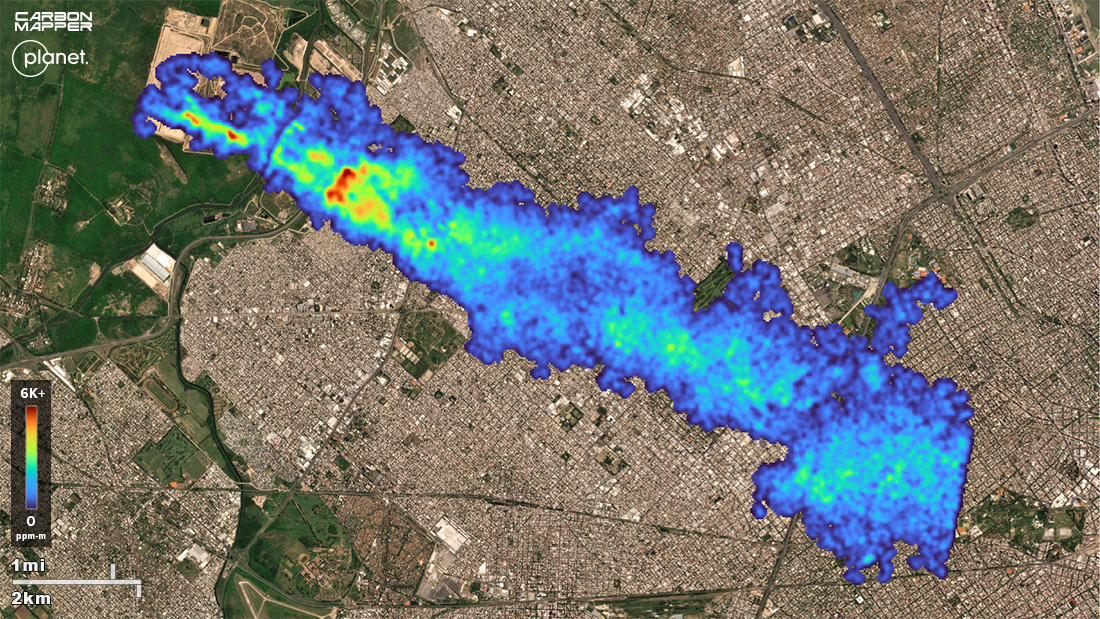
A Carbon Mapper-led study of 1 million measurements of US oil and gas systems found wide-ranging leakage from under 1 percent to nearly 10 percent of total production. Satellites launched by the Carbon Mapper Coalition, EDF, NASA, and others are now able to pinpoint leaks of gas’s main ingredient, methane, a major system inefficiency that could be prevented by oil and gas operators around the globe.
While thousands of leaks have been detected in the United States alone, there are big emitters globally. Take for example super-emitters in Mexico (16.6 metric tons/hour) and Russia (18.5 metric tons/hour). These two observed emissions events combined amount to hurling twenty-five loaded dump trucks’ worth of a super-pollutant with 80+ times more warming potency than carbon dioxide into the atmosphere every hour. Slashing these methane emissions is critical for course-correcting toward a more secure economy and safer climate future within the next twenty years.
Stemming leakage solves numerous problems at once. More efficient operations produce less waste and save costly resources. Containing gas rather than leaking it bolsters energy security. Leak-free systems pose less danger to people and property. Given that methane superheats the planet, carefully containing gas means less damage and disruption from extreme weather events. Considering these opportunities together makes it clear that slashing methane is the key to our well-being.
Unfortunately, the damage wrought by leaking gas and multiplying methane emissions has been brushed aside for decades. As early as the 1970s, scientific evidence emerged that methane — which is largely emitted during oil and gas production, processing, and shipping — is a powerful pollutant. Half a century later, we are learning how big the methane problem (and mitigation opportunity) is.
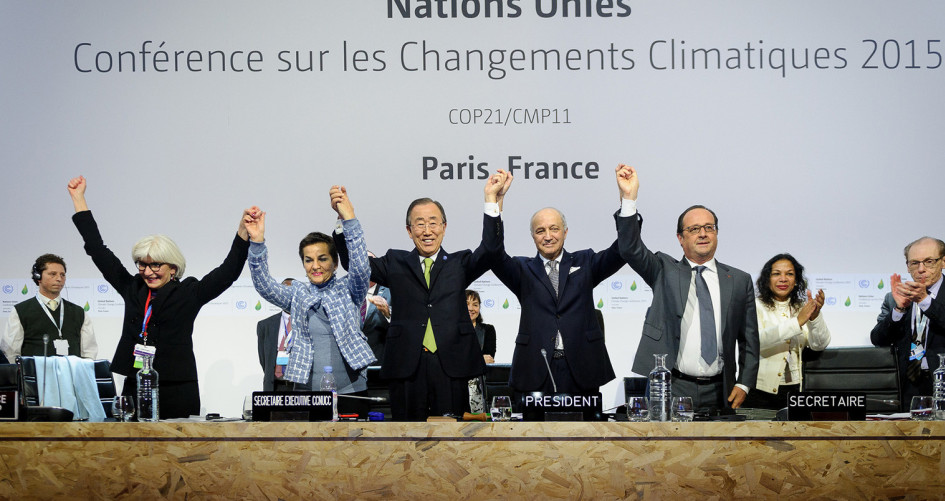
The good news is that the past five years have heralded many methane pollution firsts — from global pledges to reduce methane by 30 percent by 2030 to commitments made by 54 companies and 30 nations to end routine flaring and deliver net-zero upstream methane emissions by 2030 (see timeline below). Adding satellites to the mix to make methane visible is a game changer; we can manage what we can measure. Doubling down on these methane pronouncements and ushering them to fruition is crucial to our prosperity.


There’s more good news when it comes to mitigating methane. Companies are openly certifying and selling low-leakage gas, creating high-paying jobs in oil field operations and maintenance. Since oil and gas assets are often located in remote areas, rural communities would likely see the greatest employment benefits. Adding to the economic growth spurred by job creation are policies that financially incentivize preventing methane leaks — spurring a wave of innovative technology development and installation.
While stopping methane leaks is not just a climate win, nations are setting their sights on major methane reductions in their updated 2025 climate commitments. As an example, in 2024 the United States set a new ambitious target of up to a 66 percent reduction in economy-wide net greenhouse gas emissions with an anticipated methane reduction of at least 35 percent from 2005 levels in 2035.
Companies, countries, and communities are banding together to stop gas from leaking, creating a winning trifecta for energy, environmental, and economic security. Every molecule of methane that stays in a leak-free system improves efficiency and can help drive down costs for the end consumer while cutting energy waste. Stopping methane leaks also prevents the release of cancer-causing toxins like benzene that contaminate air, water, and soil, and put entire communities at risk.
The International Energy Agency (IEA) estimates that 80 million metric tons of methane are released into the atmosphere each year from global oil and gas sources — an astonishing waste of resources that could otherwise be used to meet energy demand, stabilize costs, and drive economic growth. By addressing these leaks, operators can turn waste into a valuable resource while reducing their environmental footprint.
This loss could be readily cut by 50 percent simply by implementing existing pledges (including the Global Methane Pledge.
Solutions are straightforward, ready-to-implement, and cost-effective. Low-cost options to prevent emissions are well known and have been deployed around the world, and some abatement measures will save money by keeping gas in the pipe. Furthermore, preventing this loss is risk-free. Studies suggest emissions are falling in some regions, and international partners are actively working to achieve deeper emissions cuts in emerging economies through the Fossil Fuel Regulatory Program.
RMI is focusing on advancing multiple solutions in the year ahead. We are conducting cutting-edge analysis using open-source tools, including the Oil Climate Index plus Gas, to quantify and compare methane emissions from equivalent barrels of oil and gas to identify the lowest leakage suppliers. Differentiating oil and gas sources makes a huge difference: According to the IEA, the best-performing countries score more than 100 times better than the worst.
Visualizing, quantifying, and pinpointing methane leaks is also a focus. Making methane emissions data accessible and understandable offers sound action guidance to policymakers, industry leaders, and financial institutions.
Collaborative policies and market activations will be essential to slash methane emissions below the 0.2 percent leakage rate commitment made by companies and countries. The most effective strategies include verifiably certifying essentially leak-free gas, accurately accounting for methane emissions from all sources, creating a market for buyers to procure ultralow-methane polluting oil and gas, setting import standards, and employing financial tools like fees and incentives.
Multiple wins rack up quickly when oil and gas systems operate leak free. Keeping methane in the pipe and out of the air is a win for our collective safety and prosperity.

Independent research. Real-world solutions. Supported by donors.
RMI can pursue the highest-impact climate and energy solutions because we’re supported by people who believe change is possible. Every gift helps advance the work needed to make clean energy the default choice worldwide.
For other ways to give to RMI, including checks or gifts of stock, please visit Other Ways to Give.