

Learn how we are working to transform how we use and produce energy.
Rock Bottom: Nearing the Limits of Metal Mining in Britain
Why we share this work for free
RMI is an independent nonprofit working to accelerate the clean energy transition. We publish research like this to inform decision-makers and drive real-world impact.
Our work is supported by philanthropy as well as partnerships, including fee-for-service engagements. This support makes it possible for us to share our independent insights for free.
If you find this work valuable, you can support it anytime.
Get more insights like this
Stay up to date with the latest research, analysis, and tools from RMI by opting in to receive occasional emails below. You’ll get new reports, event invitations, and practical insights to help us all accelerate the clean energy transition.
Loading form...
Your download should start automatically. If it doesn’t, click the download button below.
This work is made possible by philanthropy
RMI is a nonprofit supported by donors and partners. Philanthropy enables us to produce independent research and make resources like this freely available.
If you find this report valuable, please consider supporting our work. You can also explore how we partner with organizations to drive impact.
Jump to Section
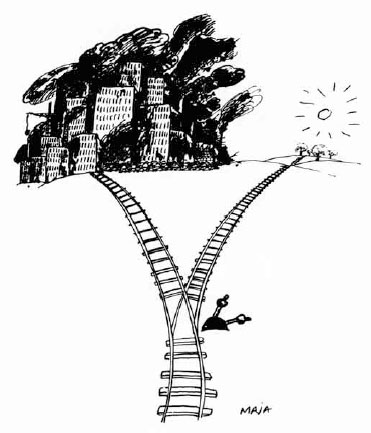
While serving as the British representative for Friends of the Earth, Amory Lovins wrote this letter to Lord Zuckerman, Chairman of Britain’s Independent Commission on Mining and the Environment. In this reprint published by The Ecologist, Lovins argues that elegant resource frugality stands as a more logical, sensible and natural process of energy use than unchecked mining development. He argues that the use of mined resources is subject to limits set by diminishing social returns. He writes that as mining decreasingly rich ores becomes increasingly common and damaging, we become steadily more doubtful that public policy can justify further large-scale mining to support an economic growth that is not essential to, and is indeed often antagonistic to, growth in well-being. The sensible alternative, which has not been examined seriously enough, is to use less profigately what we have already mined, and to devote as much effort to closing resource loops as we now devote to keeping them open.
Authors

Amory Lovins
Cofounder and Chairman EmeritusRelated Insights

For Clean Energy Projects, How Community Benefits Are Delivered Matters


Tracking WestTEC: Where 100+ Transmission Projects Stand and What Comes Next
Help build the clean energy future. Donate today.
Independent research. Real-world solutions. Supported by donors.
RMI can pursue the highest-impact climate and energy solutions because we’re supported by people who believe change is possible. Every gift helps advance the work needed to make clean energy the default choice worldwide.
For other ways to give to RMI, including checks or gifts of stock, please visit Other Ways to Give.
