

Learn how we are working to transform how we use and produce energy.
How Air Agencies Can Help End Fossil Fuel Pollution from Buildings
Why we share this work for free
RMI is an independent nonprofit working to accelerate the clean energy transition. We publish research like this to inform decision-makers and drive real-world impact.
Our work is supported by philanthropy as well as partnerships, including fee-for-service engagements. This support makes it possible for us to share our independent insights for free.
If you find this work valuable, you can support it anytime.
Get more insights like this
Stay up to date with the latest research, analysis, and tools from RMI by opting in to receive occasional emails below. You’ll get new reports, event invitations, and practical insights to help us all accelerate the clean energy transition.
Loading form...
Your download should start automatically. If it doesn’t, click the download button below.
This work is made possible by philanthropy
RMI is a nonprofit supported by donors and partners. Philanthropy enables us to produce independent research and make resources like this freely available.
If you find this report valuable, please consider supporting our work. You can also explore how we partner with organizations to drive impact.
Jump to Section
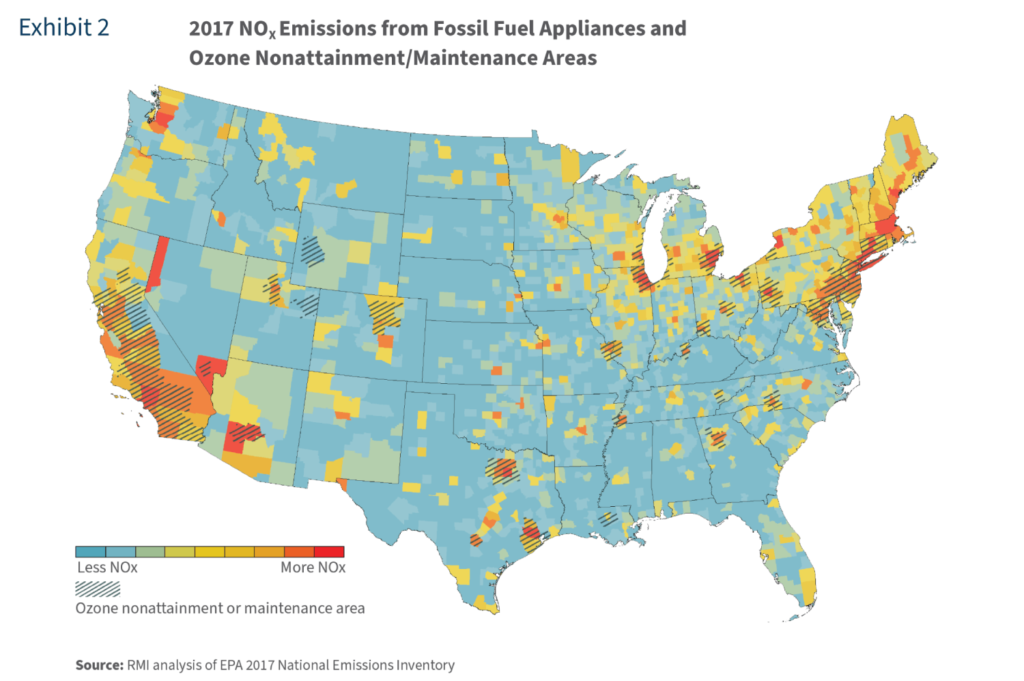
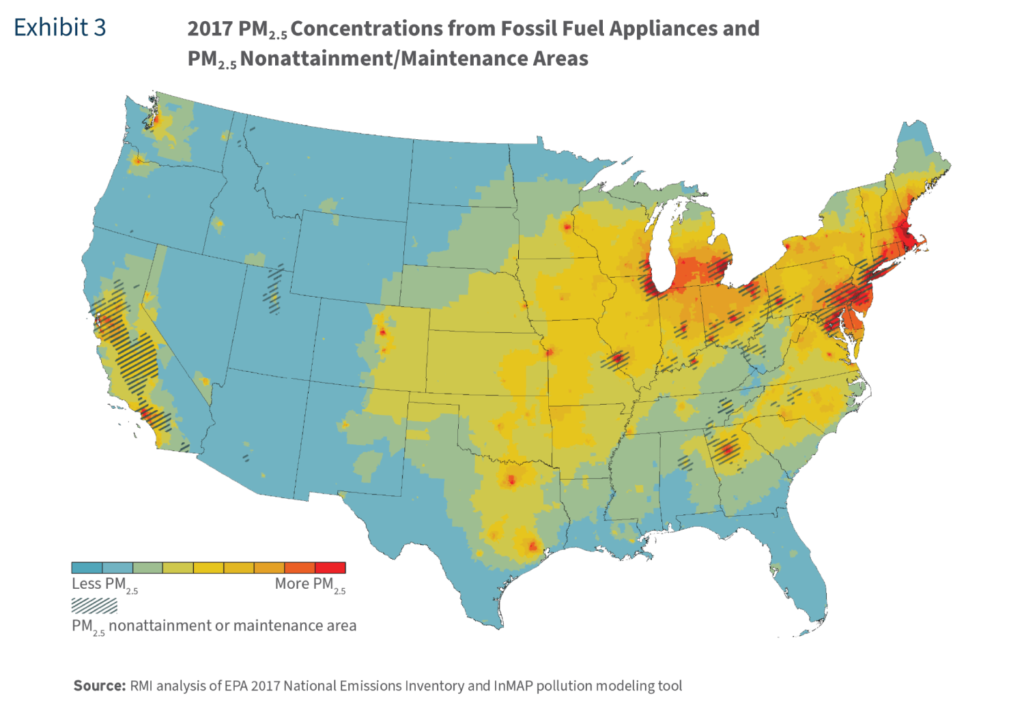
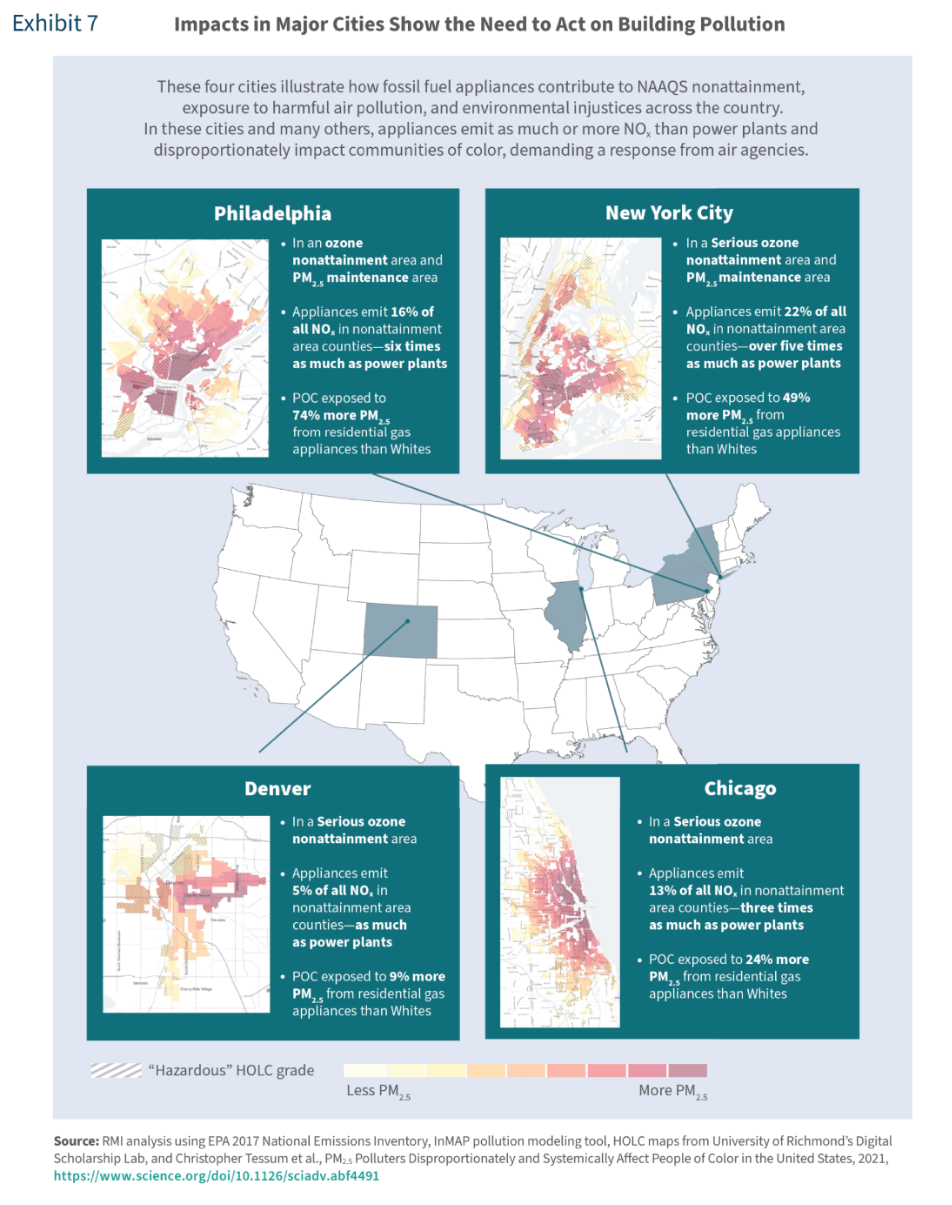
Fossil fuel appliances like gas furnaces and water heaters emit substantial amounts of air pollution from our buildings into our neighborhoods. US building appliances release 425,000 tons of harmful nitrogen oxides each year—more than oil refineries or gas-fired power plants. This pollution causes significant health impacts including thousands of premature deaths each year, with severely disproportionate impacts in Communities of Color.
Replacing fossil fuel appliances with efficient, zero-emissions electric alternatives can dramatically reduce building pollution and the resulting health harms and inequities, while providing benefits ranging from job creation to protection from extreme heat.
This Insight Brief recommends that air agencies address appliance pollution and help guide an equitable transition to a pollution-free buildings future. These agencies have authority to set zero-emissions standards for new appliances, which can be designed equitably and in coordination with other decision makers’ building electrification efforts. This can help catalyze the policies and investments needed for an inclusive, affordable transition away from fossil fuels in our homes and buildings toward an all-electric future.
Click the “Download” button above for a PDF of the full insight brief. The infographics below are also available for download.
 Source:
  Source:
  Source:
 Authors

Talor Gruenwald
Jim Dennison
Leah Louis-Prescott
Related Insights

Help build the clean energy future. Donate today.
Independent research. Real-world solutions. Supported by donors.
RMI can pursue the highest-impact climate and energy solutions because we’re supported by people who believe change is possible. Every gift helps advance the work needed to make clean energy the default choice worldwide.
For other ways to give to RMI, including checks or gifts of stock, please visit Other Ways to Give.
