

Learn how we are working to transform how we use and produce energy.
Why we share this work for free
RMI is an independent nonprofit working to accelerate the clean energy transition. We publish research like this to inform decision-makers and drive real-world impact.
Our work is supported by philanthropy as well as partnerships, including fee-for-service engagements. This support makes it possible for us to share our independent insights for free.
If you find this work valuable, you can support it anytime.
Get more insights like this
Stay up to date with the latest research, analysis, and tools from RMI by opting in to receive occasional emails below. You’ll get new reports, event invitations, and practical insights to help us all accelerate the clean energy transition.
Loading form...
Your download should start automatically. If it doesn’t, click the download button below.
This work is made possible by philanthropy
RMI is a nonprofit supported by donors and partners. Philanthropy enables us to produce independent research and make resources like this freely available.
If you find this report valuable, please consider supporting our work. You can also explore how we partner with organizations to drive impact.
Jump to Section
Battery energy storage plays a critical role in accelerating electricity and transportation decarbonization in India. The recently finalized $2.5 billion Production Linked Incentive (PLI) Scheme on advanced cell chemistry (ACC) battery storage has signalled India’s intent to meet the need for batteries through domestic manufacturing. With the announcement of the bid winners for the scheme, the momentum has finally shifted from planning to actions on the ground.
Within this background, this report is the second of a three-report series designed to create a shared understanding among stakeholders of the status and future trends that are emerging in ACC batteries. This report is a technical review of the various battery technologies and resulting theoretical value capture that could result from domestic battery manufacturing.
The report analyses existing, advanced, and upcoming battery technologies on multiple industry standard performance metrics, and provides an outlook of battery chemistries that could go mainstream by 2030 and beyond. It also highlights the key characteristics of various battery technologies, their pros and cons, and their suitability for key applications. India has the perfect opportunity to establish a battery manufacturing ecosystem on the foundation of new technologies that leverage abundantly available indigenous materials like sodium and aluminium.
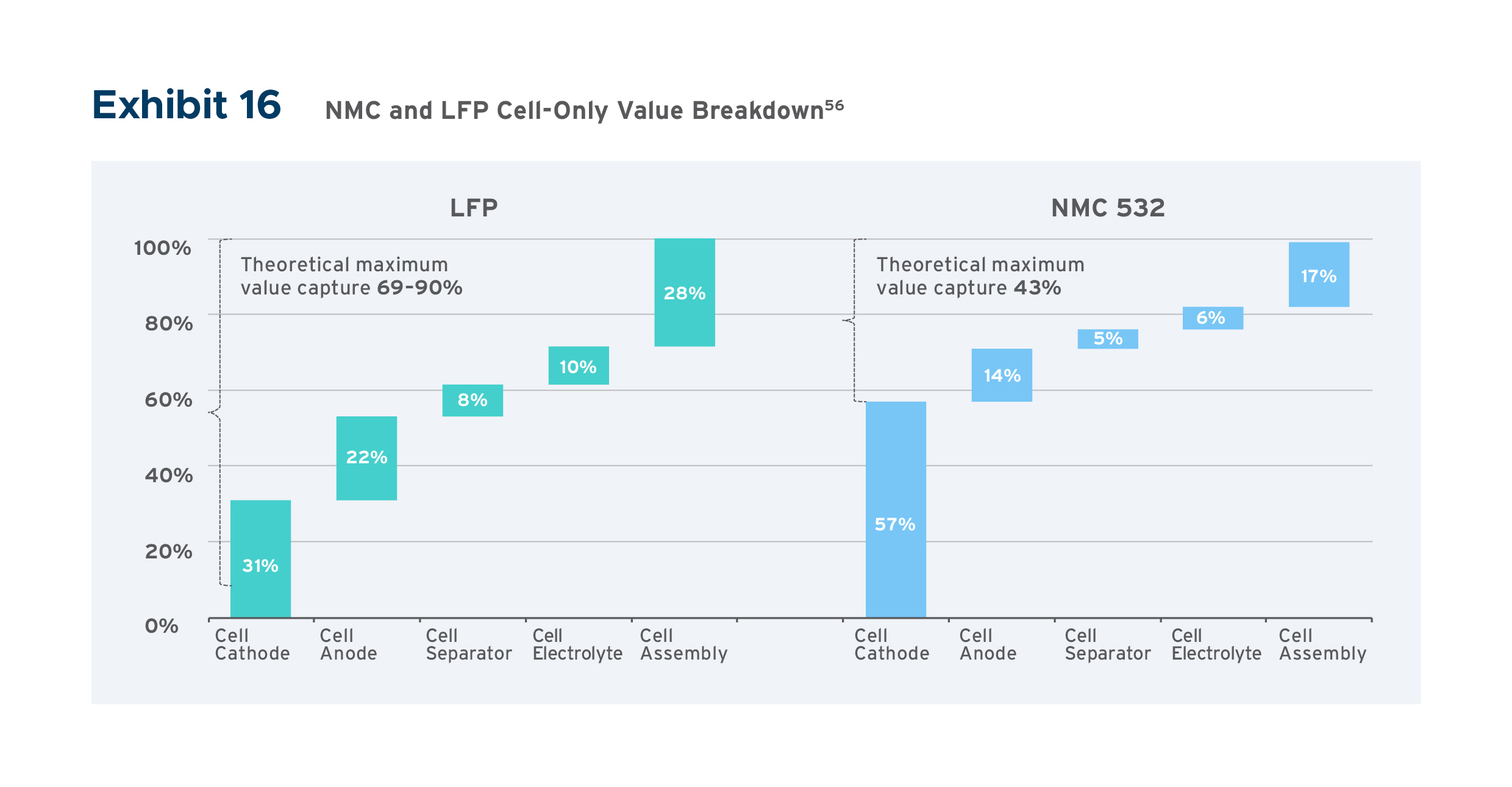
Promoting the domestic manufacturing of ACC batteries also provides India with the opportunity to reduce its dependence on imports to meet future advanced energy economy demands. Looking at the most common nickel manganese cobalt (NMC) and lithium iron phosphate (LFP) chemistry cells only, India could capture between 40 and 90 percent of total cell value within the country. This has the potential to make domestic cell manufacturing a catalyst of growth for some of India’s most promising demand sectors—e-mobility and grid-scale energy storage.


Related Insights

India’s Used EV Battery Market Needs Trust. Battery Aadhaar Can Help.

Help build the clean energy future. Donate today.
Independent research. Real-world solutions. Supported by donors.
RMI can pursue the highest-impact climate and energy solutions because we’re supported by people who believe change is possible. Every gift helps advance the work needed to make clean energy the default choice worldwide.
For other ways to give to RMI, including checks or gifts of stock, please visit Other Ways to Give.
