

Learn how we are working to transform how we use and produce energy.
Financing Zero-Emission Trucking Infrastructure in India
Strategies and tactics for ZET power demands
Why we share this work for free
RMI is an independent nonprofit working to accelerate the clean energy transition. We publish research like this to inform decision-makers and drive real-world impact.
Our work is supported by philanthropy as well as partnerships, including fee-for-service engagements. This support makes it possible for us to share our independent insights for free.
If you find this work valuable, you can support it anytime.
Get more insights like this
Stay up to date with the latest research, analysis, and tools from RMI by opting in to receive occasional emails below. You’ll get new reports, event invitations, and practical insights to help us all accelerate the clean energy transition.
Loading form...
Your download should start automatically. If it doesn’t, click the download button below.
This work is made possible by philanthropy
RMI is a nonprofit supported by donors and partners. Philanthropy enables us to produce independent research and make resources like this freely available.
If you find this report valuable, please consider supporting our work. You can also explore how we partner with organizations to drive impact.
Jump to Section
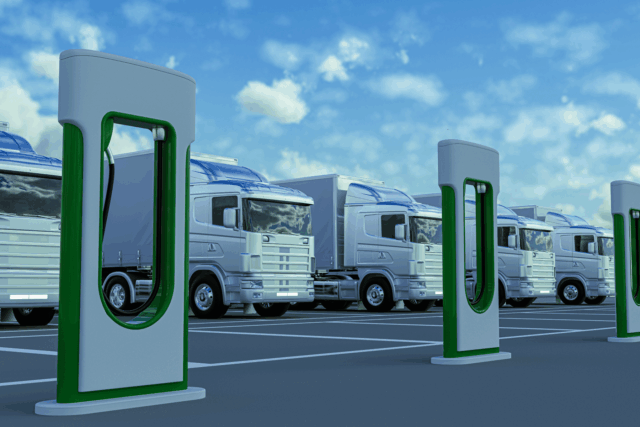
The widespread adoption of zero-emission trucks (ZETs) in India depends on establishing a high-capacity, reliable charging network — one that encompasses private depot charging, public charging, and the necessary grid infrastructure. Private depot charging, typically located in truck yards or warehouses, supports overnight and long-duration charging tailored to fleet needs. Public charging offers open-access stations along major freight corridors and high-traffic routes. To support these installations, strategic grid upgrades are essential to ensure an adequate and reliable power supply. This development requires significant investment, and targeted financing strategies are essential to unlock capital, reduce costs, and maximize the revenue potential of charging infrastructure.
This report explores strategies to finance the expansion of charging infrastructure to meet the power demands of ZETs. It maps the lending landscape to identify the most suitable financiers for different types of charging and examines how financial tools such as debt, equity, blended finance, and government intervention accelerate infrastructure development. Finally, it outlines practical implementation pathways, offering guidance on how public and private stakeholders can effectively coordinate efforts to accelerate the deployment of charging infrastructure and requisite grid upgrades at scale.
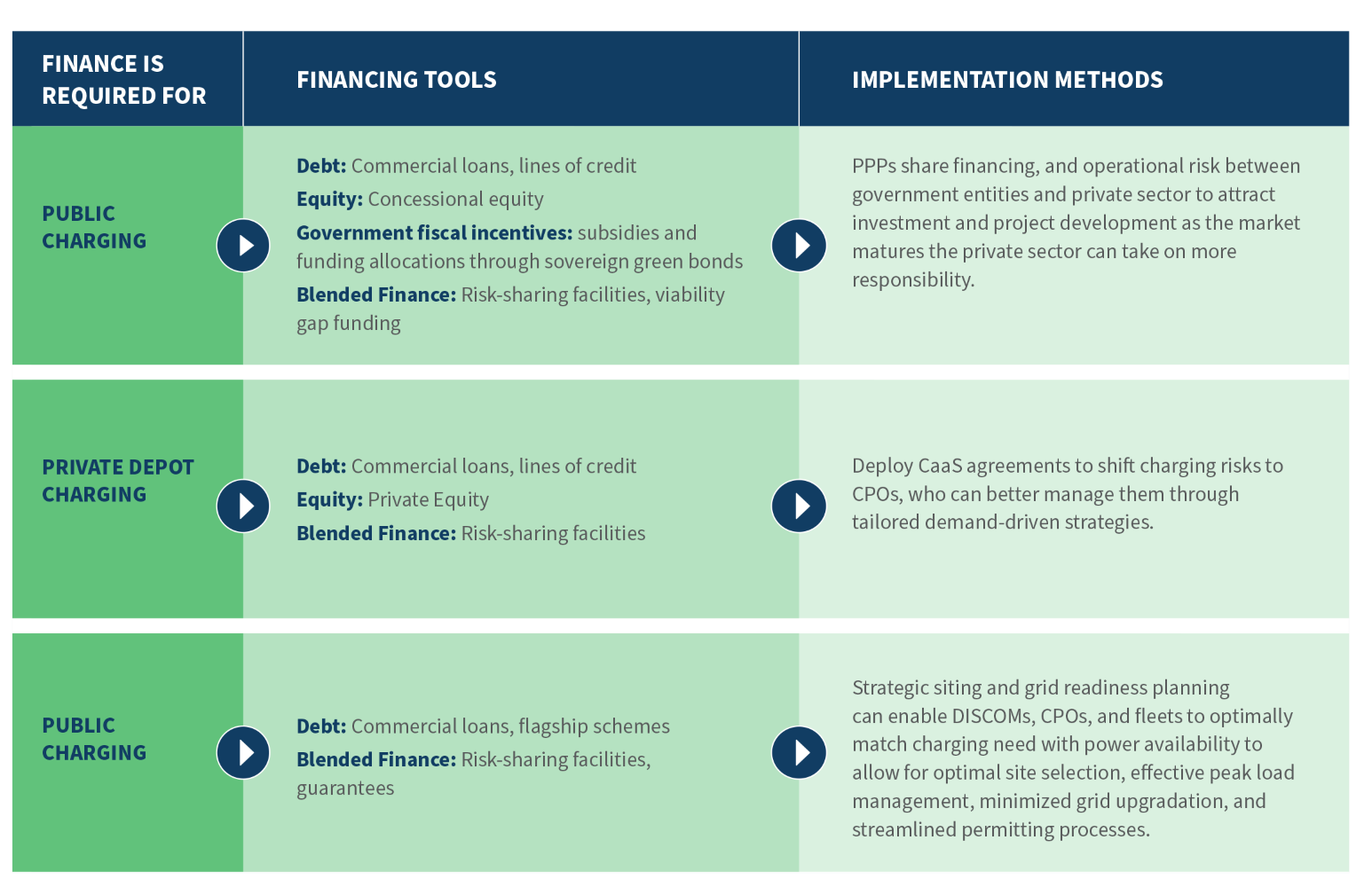
To mobilize the required capital, coordinated action is needed among government entities, financiers, distribution companies (DISCOMs), and charging point operators (CPOs). Public finance is crucial for unlocking investment in public charging infrastructure. It can play a catalytic role in crowding in private capital for depot charging through blended finance mechanisms and can also be used to mitigate lending risks for DISCOMs undertaking critical grid upgrades. At the same time, private investment is vital for scaling depot charging deployment and supporting CPOs, particularly those engaged in public-private partnership models for public charging. Mobilizing effective financing across these segments is crucial to accelerating ZET adoption and realizing India’s net-zero ambitions by 2070.



Related Insights

India’s Used EV Battery Market Needs Trust. Battery Aadhaar Can Help.

Help build the clean energy future. Donate today.
Independent research. Real-world solutions. Supported by donors.
RMI can pursue the highest-impact climate and energy solutions because we’re supported by people who believe change is possible. Every gift helps advance the work needed to make clean energy the default choice worldwide.
For other ways to give to RMI, including checks or gifts of stock, please visit Other Ways to Give.
