

Learn how we are working to transform how we use and produce energy.
Implications of Energy Spot Markets in China
Finding the Right Market Mechanisms to Address the Technical, Economic, and Political Impacts of China's Market Reform
Why we share this work for free
RMI is an independent nonprofit working to accelerate the clean energy transition. We publish research like this to inform decision-makers and drive real-world impact.
Our work is supported by philanthropy as well as partnerships, including fee-for-service engagements. This support makes it possible for us to share our independent insights for free.
If you find this work valuable, you can support it anytime.
Get more insights like this
Stay up to date with the latest research, analysis, and tools from RMI by opting in to receive occasional emails below. You’ll get new reports, event invitations, and practical insights to help us all accelerate the clean energy transition.
Loading form...
Your download should start automatically. If it doesn’t, click the download button below.
This work is made possible by philanthropy
RMI is a nonprofit supported by donors and partners. Philanthropy enables us to produce independent research and make resources like this freely available.
If you find this report valuable, please consider supporting our work. You can also explore how we partner with organizations to drive impact.
Jump to Section
China is in the process of introducing electricity spot markets, which could greatly improve power plant dispatch, reducing costs and CO2 emissions. Compared with China’s dispatch protocol before the 2015 electricity market reforms, our research shows market dispatch could reduce costs and emissions by up to 4% today, growing to 12% savings by 2035 according to IEA estimates.
Power markets will substantially change how generators operate and are paid, and ultimately help determine which resources are essential to economically meet electricity demand. Electricity spot market pilots in select provinces are underway, and regulators are concerned about how their market designs will impact generators: how will their economics change, how might this effect GDP and jobs, and how do we manage these changes? Understanding these impacts is key to managing stakeholders and finding a politically feasible, balanced way to institute these reforms. Without this, reforms may meet with strong resistance, delay or halt implementation, or force regulators to make concessions that sacrifice cost and emissions reductions.
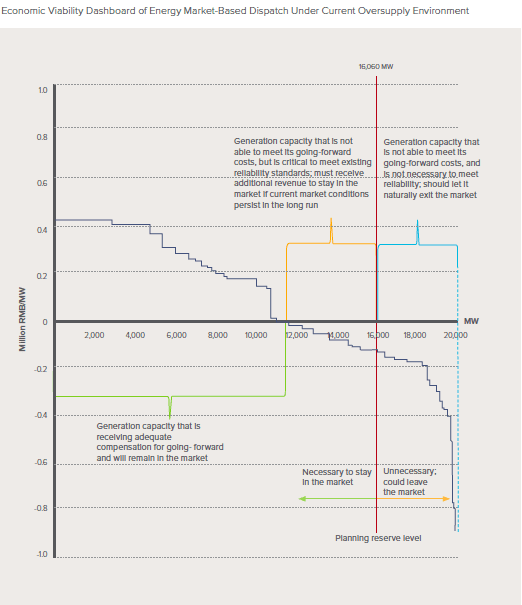
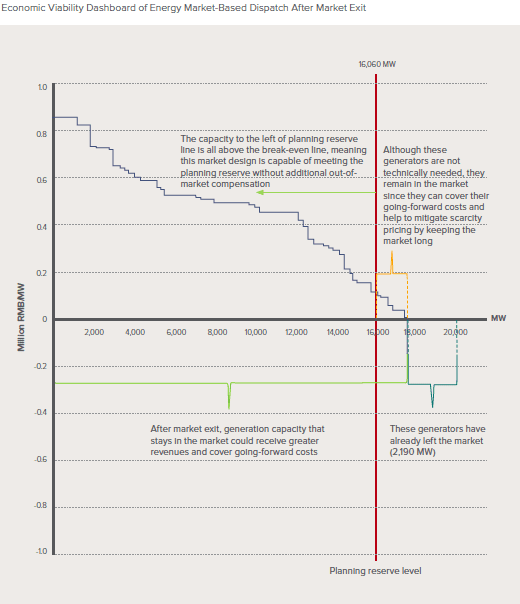
We believe rigorous, independent analysis enables regulators to evaluate market designs for their appropriateness in their province and select the right political mechanisms to manage the transition. This is why Rocky Mountain Institute (RMI) along with experts from China’s electric utility think tanks have developed a modeling tool that provides a rough estimate of which generators will exit the market and what the resulting market prices for generators will be under a specific market design. This analysis, conducted on are presentative sample of generators in China’s northern regions, is an example of the types of analysis provincial regulators might find useful in setting up their electricity spot markets, allowing them to assess different market design scenarios to decide which is best suited for their province.


Related Insights

Steel’s Transformation: China and Australia’s next horizon of clean steel

Efficiency Reimagined: The next phase of China’s industrial energy transition


Help build the clean energy future. Donate today.
Independent research. Real-world solutions. Supported by donors.
RMI can pursue the highest-impact climate and energy solutions because we’re supported by people who believe change is possible. Every gift helps advance the work needed to make clean energy the default choice worldwide.
For other ways to give to RMI, including checks or gifts of stock, please visit Other Ways to Give.
