

Learn how we are working to transform how we use and produce energy.
Delhi’s Drive Towards Zero-Emissions Deliveries
Why we share this work for free
RMI is an independent nonprofit working to accelerate the clean energy transition. We publish research like this to inform decision-makers and drive real-world impact.
Our work is supported by philanthropy as well as partnerships, including fee-for-service engagements. This support makes it possible for us to share our independent insights for free.
If you find this work valuable, you can support it anytime.
Get more insights like this
Stay up to date with the latest research, analysis, and tools from RMI by opting in to receive occasional emails below. You’ll get new reports, event invitations, and practical insights to help us all accelerate the clean energy transition.
Loading form...
Your download should start automatically. If it doesn’t, click the download button below.
This work is made possible by philanthropy
RMI is a nonprofit supported by donors and partners. Philanthropy enables us to produce independent research and make resources like this freely available.
If you find this report valuable, please consider supporting our work. You can also explore how we partner with organizations to drive impact.
Jump to Section
The time is apt for transforming urban deliveries in Delhi. Vehicles are the leading cause of air pollution in Delhi, and final-mile delivery vehicles disproportionally contribute to high particulate matter (PM) and nitrogen oxide (NOx) pollution levels. Electric vehicles (EVs) are one of the best ways to mitigate tailpipe emissions from delivery vehicles and reduce air pollution while significantly reducing delivery costs.
EVs have many advantages over internal combustion engine (ICE) vehicles, making them the front-runner in Delhi’s clean transport transition:
- Electrifying final-mile delivery vehicles can reduce PM and NOx emissions by over 28 per cent, leading to sustained urban air quality improvements in Delhi.
- The shift to all-electric can save fleets a lot of money in fuel and maintenance costs. In Delhi, electric two-, three-, and four-wheelers can save 96, 69, and 74 per cent, respectively, on fuel costs compared with ICE-equivalent vehicles.
- Electric final-mile delivery vehicles emit 25 per cent less CO2 than ICE final-mile delivery vehicles today. EVs are also more efficient than ICE vehicles and consume less energy on the same delivery routes.
Recognizing that fleet electrification represents a tremendous opportunity to reduce air pollution, the Delhi government notified a dynamic EV policy in August 2020. The policy adopted a holistic approach to vehicle electrification and set an ambitious target: to have 25 per cent of new vehicles registered in 2024 be electric. To achieve this target, Delhi enacted a series of fiscal incentives and regulatory measures to boost EV demand and create a robust EV ecosystem. Under the policy, the Delhi government specifically sought to fully electrify final-mile delivery vehicles and established ambitious electrification targets.
To complement the Delhi EV policy with on-the-ground implementation, the Dialogue Development Commission of Delhi (DDC), RMI, and RMI India designed the Deliver Electric Delhi pilot. Over the span of three years, DDC, RMI, and RMI India collaborated with industry partners to design the roadmap to deploy EVs and associated infrastructure in Delhi. Throughout the pilot, the team documented user experiences to assess the benefits and performance of final-mile delivery electrification and identify how policy, charging infrastructure availability, and access to finance enabled first movers to electrify final-mile delivery vehicles.
Within just over a year of enacting the Delhi EV policy and implementing the Deliver Electric Delhi pilot, EV sales in Delhi tripled from 3.3 to 10 per cent of new vehicles registered. Given the supportive market dynamics existent in Delhi today, the city is on track to become one of the global front-runners when it comes to EV sales.
To scale EV adoption, the Delhi government focused on two primary initiatives: 1) developing polices to incentivize EV adoption and 2) supporting the deployment of a robust charging infrastructure network.
To achieve the first, the Delhi government adopted a consultative approach to policy design and implementation. Through the Deliver Electric Delhi pilot, the government encouraged participants to raise concerns regarding operational barriers they faced in electrifying fleets. This feedback enabled the government to tailor fiscal and nonfiscal incentives and other regulatory provisions to meet the needs of the Delhi EV market.
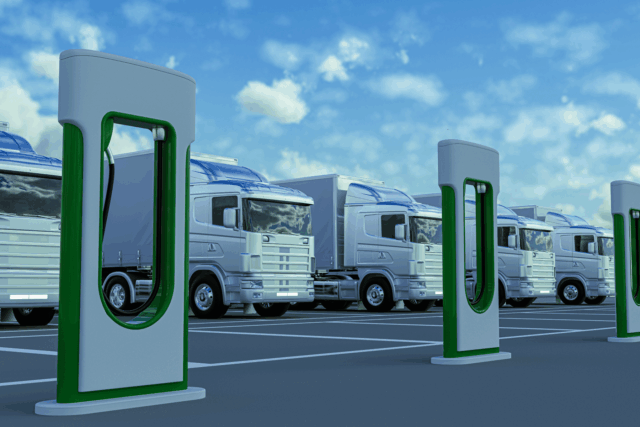
The Deliver Electric Delhi pilot also showed that the availability of charging infrastructure is a crucial driver of EV adoption. To help facilitate and scale infrastructure deployment, the Delhi government adopted a technology-agnostic approach, providing incentives for both battery swapping and conventional plug-in charging infrastructure. A few of the innovative schemes included the first public charging tender for 100 concessional charging locations, the enactment of a tariff schedule with rates specifically designed for vehicle charging, and a subsidy scheme for private charging infrastructure.
The success of the Deliver Electric Delhi pilot and Delhi EV policy is evidence that coordinated actions among private and public stakeholders can drive EV adoption and help India electrify its transportation sector. The Delhi government and its strategic partners have streamlined the EV registration process, mobilized EV finance, and strengthened the city’s public charging infrastructure network. The lessons learned from the largely successful implementation of the Delhi EV policy and deployment of the Deliver Electric Delhi pilot can be used as guidelines to scale fleet electrification throughout India.


Related Insights

India’s Used EV Battery Market Needs Trust. Battery Aadhaar Can Help.

Help build the clean energy future. Donate today.
Independent research. Real-world solutions. Supported by donors.
RMI can pursue the highest-impact climate and energy solutions because we’re supported by people who believe change is possible. Every gift helps advance the work needed to make clean energy the default choice worldwide.
For other ways to give to RMI, including checks or gifts of stock, please visit Other Ways to Give.
