

Learn how we are working to transform how we use and produce energy.
Building with Biomass: A New American Harvest
How manufacturing building products from domestically sourced upcycled biomass can create more jobs and affordable healthy housing
Why we share this work for free
RMI is an independent nonprofit working to accelerate the clean energy transition. We publish research like this to inform decision-makers and drive real-world impact.
Our work is supported by philanthropy as well as partnerships, including fee-for-service engagements. This support makes it possible for us to share our independent insights for free.
If you find this work valuable, you can support it anytime.
Get more insights like this
Stay up to date with the latest research, analysis, and tools from RMI by opting in to receive occasional emails below. You’ll get new reports, event invitations, and practical insights to help us all accelerate the clean energy transition.
Loading form...
Your download should start automatically. If it doesn’t, click the download button below.
This work is made possible by philanthropy
RMI is a nonprofit supported by donors and partners. Philanthropy enables us to produce independent research and make resources like this freely available.
If you find this report valuable, please consider supporting our work. You can also explore how we partner with organizations to drive impact.
Jump to Section
What if we could effectively store millions of tons of carbon in a way that helps solve America’s housing crisis, creates jobs, and boosts manufacturing — all at once? This report sheds new light on a powerful and cross-cutting solution: manufacturing building products from upcycled biomass that’s already abundant across the United States.
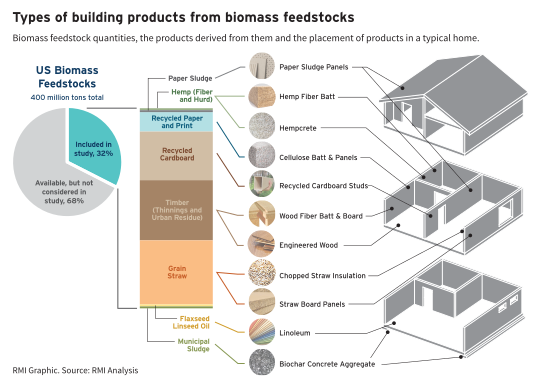
RMI’s analysis investigates into the multiple benefits of converting the 400 million tons of underutilized biomass from farms, forests, and landfills into valuable building materials. We determined the scale of positive impacts by analyzing the life cycle of bio-based versus conventional building products in US home construction, US manufacturing capacity needs and resulting economic benefits, and the availability of low-value biomass feedstocks across the country.
We found that the United States could store 100 million metric tons of CO2 in new residential buildings over 25 years — equivalent to almost the entire state of California being covered by a forest that is storing carbon in its soil and trees. Additionally, this would keep more than 35 million tons of waste out of landfills, prevent wildfires, and create $79 billion in new manufacturing opportunities, 42,000 direct jobs, and 310,000 indirect jobs (including supplier and induced jobs) in domestic manufacturing, while enabling the construction of healthier, affordable homes.
Unlike many carbon removal solutions still in development, biomass building products are already commercially manufactured in the United States and globally. From insulation to flooring, wall panels to concrete alternatives, these products are market-ready and cost-competitive with conventional materials.
This transformation requires four key actions:
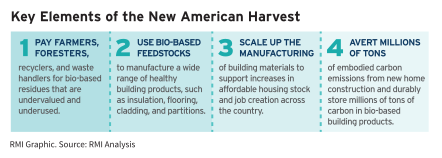
The report also presents case studies of affordable new homes built with the types of biomaterials featured in our modeling, alongside examples of recently established manufacturing facilities for such products across the United States. By uncovering the potential benefits of transitioning toward greater use of bio-based building products, we hope to inspire further research and action to bring about this “new American harvest.”
More than 50 US builder companies and nearly 100 Home Energy Rating System raters have already joined RMI’s HomebuildersCAN program with the explicit intent to tackle embodied carbon in construction. We encourage you to download the report and join the leading builders, manufacturers, and policymakers that are embracing this sustainable revolution in residential construction.




Related Insights
Building Smarter, More Efficient Air Conditioners for Real World Conditions

How Heat Pumps Reduce Energy Bills and Air Pollution in the San Francisco Bay Area
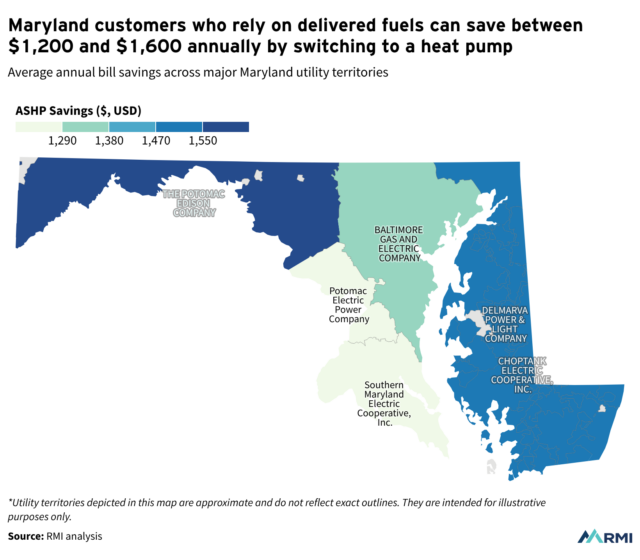
Delivered Fuel Customers in Maryland See Strong Energy Bill Savings in a Switch to Heat Pumps
Gas Utility Depreciation: Recommendations for an Uncertain Future
Help build the clean energy future. Donate today.
Independent research. Real-world solutions. Supported by donors.
RMI can pursue the highest-impact climate and energy solutions because we’re supported by people who believe change is possible. Every gift helps advance the work needed to make clean energy the default choice worldwide.
For other ways to give to RMI, including checks or gifts of stock, please visit Other Ways to Give.
