

Learn how we are working to transform how we use and produce energy.
Bringing Super Efficient Air Conditioners to the Market
Insights from field testing in India and the path forward
Why we share this work for free
RMI is an independent nonprofit working to accelerate the clean energy transition. We publish research like this to inform decision-makers and drive real-world impact.
Our work is supported by philanthropy as well as partnerships, including fee-for-service engagements. This support makes it possible for us to share our independent insights for free.
If you find this work valuable, you can support it anytime.
Get more insights like this
Stay up to date with the latest research, analysis, and tools from RMI by opting in to receive occasional emails below. You’ll get new reports, event invitations, and practical insights to help us all accelerate the clean energy transition.
Loading form...
Your download should start automatically. If it doesn’t, click the download button below.
This work is made possible by philanthropy
RMI is a nonprofit supported by donors and partners. Philanthropy enables us to produce independent research and make resources like this freely available.
If you find this report valuable, please consider supporting our work. You can also explore how we partner with organizations to drive impact.
Jump to Section
Amid record-breaking temperatures and surging electricity demand for cooling, the world is facing a cooling challenge. This is especially significant in India, which is on track to operate over 1 billion room air conditioners (ACs) by 2050 — driving a ninefold increase in cooling-related electricity use compared to 2022. Without swift intervention, this explosive growth will place immense strain on the power grid and create serious environmental consequences.
This report from the Global Cooling Efficiency Accelerator (GCEA) — a coalition of scientists and cooling experts — unveils groundbreaking field-testing results from Palava City, India. Conducted over nine months in partnership with Lodha and CEPT University, the study compared performance of super-efficient AC prototypes against typical market models, revealing how they perform in real-world heat and humidity.
The findings are staggering: In real-world conditions, super-efficient ACs used 60 percent less energy than typical AC units, while reducing peak demand and enhancing occupant comfort. The study also uncovered critical gaps in current testing standards — particularly around performance in humidity. The current testing standards underestimate the real-world energy use of ACs in warm and humid climates largely due to the extra energy used by typical ACs to attempt to control humidity.
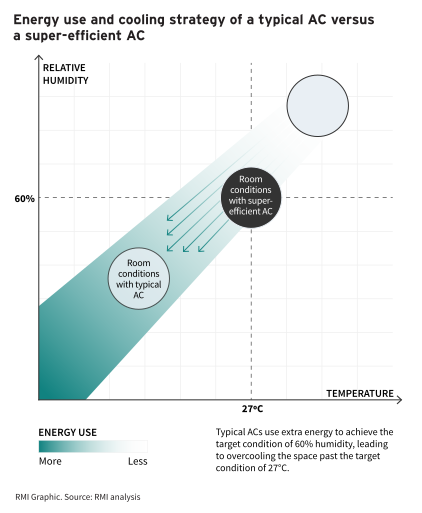
Bringing these technologies to scale requires rethinking how we define and measure performance. This report makes a compelling case for updating efficiency standards and accelerating early adoption of super-efficient ACs through procurement and demonstration efforts. It helps to raise the awareness of key stakeholders — such as government leaders, policymakers, AC manufacturers and industry players, and financial institutions — and garner their support for the development, commercialization, and adoption of super-efficient ACs in India and globally.
The enormous economic, grid resilience, and climate benefits India and the world stand to gain from commercializing super-efficient ACs and making them accessible to people is clear. By doing so, we can provide access to cooling for all, without further warming the planet.
This work was conducted in partnership with Lodha, one of the largest real-estate developers in India.



Related Insights
The Opportunity for Heat Pumps to Put Downward Pressure on Electricity Rates
Building Smarter, More Efficient Air Conditioners for Real World Conditions

How Heat Pumps Reduce Energy Bills and Air Pollution in the San Francisco Bay Area
Delivered Fuel Customers in Maryland See Strong Energy Bill Savings in a Switch to Heat Pumps
Help build the clean energy future. Donate today.
Independent research. Real-world solutions. Supported by donors.
RMI can pursue the highest-impact climate and energy solutions because we’re supported by people who believe change is possible. Every gift helps advance the work needed to make clean energy the default choice worldwide.
For other ways to give to RMI, including checks or gifts of stock, please visit Other Ways to Give.
