

Learn how we are working to transform how we use and produce energy.

Transition Finance Archetype
How Transition Planning Can Support Credible Transition Finance
Without a transition plan to contextualize them, some asset-level financings (e.g., loans for buying fuel-efficient aircraft) may risk being seen as business-as-usual activities rather credible examples of transition finance.
By Shravan Bhat
Use Case for Banks
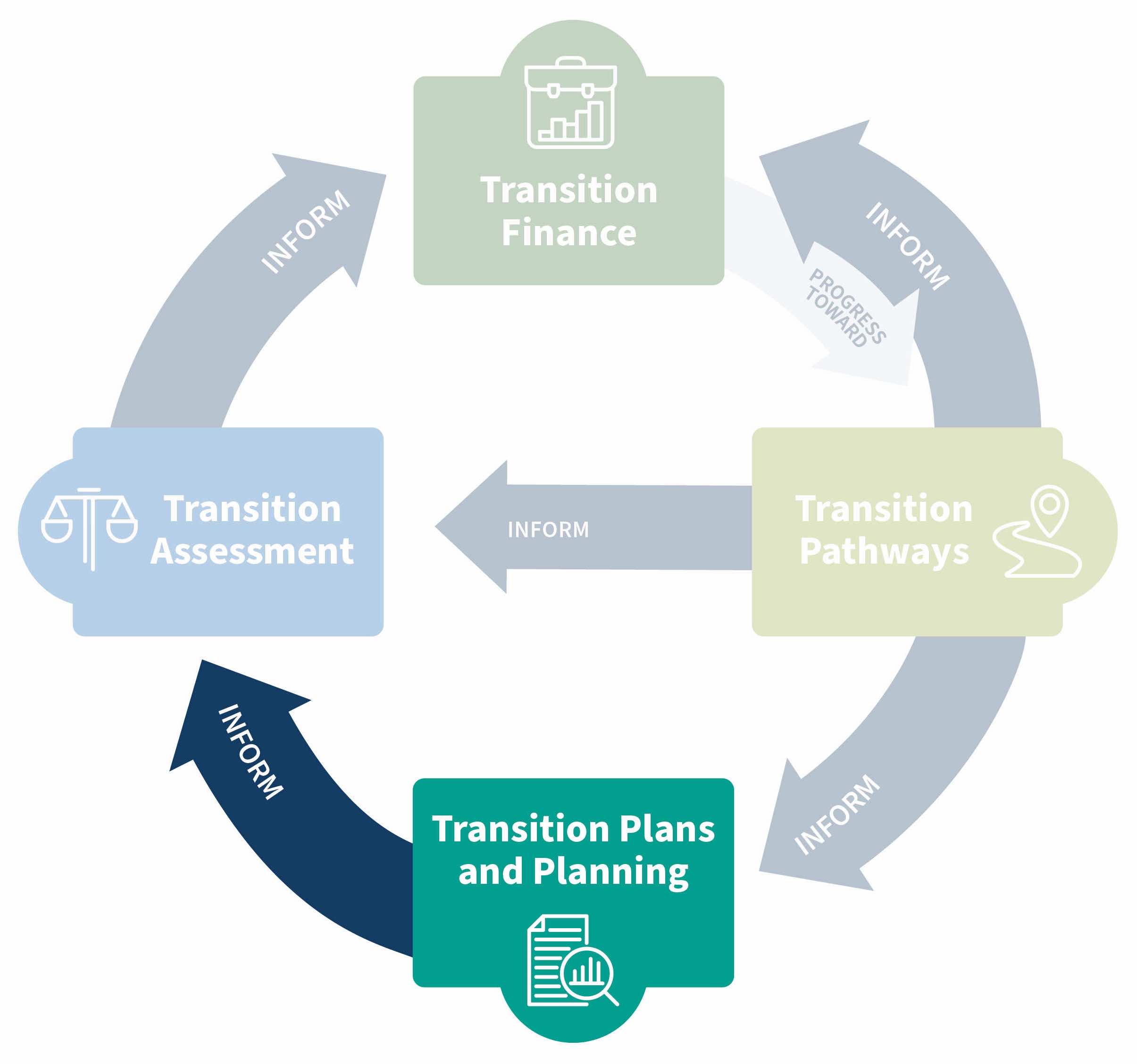
Banks can highlight to clients why granular, entity-level transition planning enables corporations to credibly finance low-hanging fruit like energy efficiency. For high-emitting corporations, near-term, decarbonization actions like energy efficiency are important to their net-zero journey despite being activities they might do regardless of climate goals (e.g., airlines buying fuel-efficient aircraft). These activities are usually necessary but insufficient to reach net -zero and shouldn’t inhibit/replace more difficult, transformative changes to capital stock in the medium -term. Transition plans can address this nuance by contextualizing near-term versus medium-term actions to protect against greenwashing.
Disclaimer: This hypothetical case study is based on several real-world transactions and conversations with aviation and sustainability bankers. This archetypal deal illustrates what credible transition finance could look like.
Situation
In this archetype, a large global airline with a medium investment-grade credit rating is raising around $100 million in use-of-proceeds (UOP) acquisition financing to purchase a new, energy- efficient Boeing 787 aircraft. The airline is a national carrier and several relationship banks – both private and public – are interested in the deal. The airline has an entity-level transition plan that highlights the large role of energy efficiency in reaching net -zero — particularly the importance of replacing old, inefficient aircraft with efficient new ones. Most airlines have standard, annual replacement rates for old aircraft, which typically have 20-to-30-year lifespans.
Complication
The nascent transition finance market often lacks consensus on assessing additionality. For example, whether and how to reward companies for conducting practices that could contribute to climate targets but also be business as usual (BAU), such as investing in energy efficiency.
Airlines routinely replace old aircraft with new ones and, generally, each new generation of aircraft is more energy efficient than the last. Airlines prioritized energy efficiency long before they set climate targets because efficiency improvements pay for themselves via lower fuel expenses (fuel costs can be 30%-40% of operating expenditure). Today, therefore, it could be unclear whether acquisition financing for new aircraft can be labeled as transition finance or whether this activity should be seen as BAU.
Simply replacing old aircraft with more efficient new models is necessary but insufficient to achieving net -zero; quickly modernizing fleets is one part of a comprehensive aviation transition plan that also includes switching to sustainable aviation fuel (SAF), mitigating contrails, and electrifying airport infrastructure in the medium- to long-term.
Additionally, rather than buying new, highly efficient aircraft, an airline may use bank financing to replace old/inefficient aircraft with used, slightly less inefficient aircraft because they are cheap and available. On the surface, it may look like the airline has improved its fleet’s overall efficiency, but deeper analysis would show the marginal improvement isn’t enough to align with sector decarbonization pathways. Transition-labeled UOP acquisition financing for a purchase like this could result in greenwashing accusations for lenders.
Resolution
In this archetypal case, the banks determined that replacing an old aircraft with the new Boeing 787-8 supported the client’s broader transition plan by helping keep the airline’s emissions trajectory inside a 1.5°C pathway. The banking syndicate could finance the purchase via a transition-linked loan tied to the airline’s overall Scope 1 GHG emissions decreasing ~20% by 2030 from a 2020 baseline, in line with aviation sector transition pathways.
Without a transition plan to contextualize it, this type of UOP, asset-level financing would risk being just a “transition-compatible” BAU activity rather than an example of transition finance. Good corporate transition planning can give private and public lenders high quality data on which to base financial offerings — especially for high capex, higher risk parts of the client’s transition. A good transition plan helps banks credibly disburse asset-level loans — and potentially also much larger general corporate purpose debt packages — in two main ways.
First, a transition plan contextualizes measures like energy efficiency upgrades relative to other decarbonization levers like SAF. Fuel efficiency comprises up to 45% of aviation sector emissions reductions (see infographic below), according to Mission Possible Partnership. In this archetypal case, a robust transition plan would quantify the (important but limited) role that this type of $100 million energy efficiency deal played in the airline’s net-zero transition relative to investments in SAF. Banks could do this energy-efficiency deal knowing that the client also plans to invest the appropriate amount in SAF.
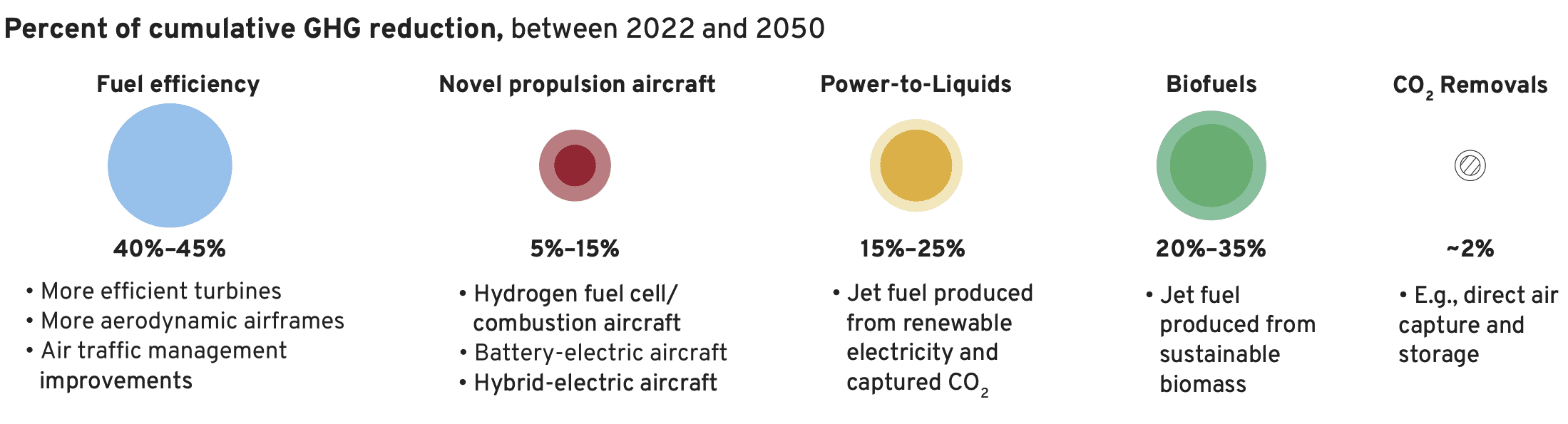
Second, a transition plan would provide granularity on the airline’s energy efficiency strategy, including the annual aircraft replacement rate needed to modernize the airline’s fleet in line with transition pathways. A robust plan would define what efficiency thresholds new aircraft need to meet to be considered “additional” beyond BAU. The Boeing 787, for example, is widely accepted as a leading example of an energy- efficient aircraft. Energy efficiency in aviation can entail near-term, low-hanging fruit (e.g., carbon fiber instead of metal alloys in planes’ wings) as well as more radical, medium-term changes (e.g., replacing traditional propulsion systems with novel propulsion systems like hydrogen fuel cells and batteries). For those breakthrough technologies, export credit agencies (i.e., public lenders that regularly participate in airline deals) could provide loan guarantees to support deals that private banks alone wouldn’t underwrite.
Help build the clean energy future. Donate today.
Independent research. Real-world solutions. Supported by donors.
RMI can pursue the highest-impact climate and energy solutions because we’re supported by people who believe change is possible. Every gift helps advance the work needed to make clean energy the default choice worldwide.
For other ways to give to RMI, including checks or gifts of stock, please visit Other Ways to Give.
