Learn how we are working to transform how we use and produce energy.

Annual Report 2026
Progress Is Built
How today’s work creates tomorrow’s solutions
Meaningful change doesn’t happen all at once. It is built through steady work, collaboration, and the accumulation of solutions over time.
RMI’s 2025–26 Annual Report highlights the practical work helping communities, businesses, and policymakers navigate a rapidly changing energy landscape — keeping homes comfortable while using less energy, preparing grids for soaring electricity demand, accelerating electrification, turning methane waste into an opportunity for greater energy security, and more.
The progress we see today is built on yesterday’s ideas, research, and investments. And today’s work is laying the foundation for tomorrow’s breakthroughs.
Chapter 1
Creating Comfort, Efficiently and Affordably
RMI is helping households stay comfortable while spending less and easing pressure on the grid.
From Mumbai to Milwaukee, changing weather patterns and extreme weather events are making it harder and more expensive to keep homes comfortable. As a result, demand for both cooling and heating is putting pressure on the grid and straining household budgets.
To meet that demand without causing higher bills or more energy use, RMI is working to rethink how buildings create comfort — from reducing the need for heating and cooling in the first place to making those systems more efficient.
Keeping heat out
One way to reduce the amount of energy buildings need for cooling is through passive daytime radiative cooling, an emerging class of materials that reflects the sun’s heat while releasing heat from buildings into the sky.

In Colorado, RMI and its global climate technology accelerator program, Third Derivative, are running a pilot project with Boulder County and Boulder Housing Partners using the paint on an affordable housing complex. In India, pilots are helping demonstrate how these materials can work across building types. Together with rooftop solar, these solutions can expand access to affordable cooling without placing as much strain on the grid.
Efficient heating and cooling
Through the Global Cooling Efficiency Accelerator, RMI and our partners field tested next-generation super-efficient room air conditioners in Palava City, India. By optimizing for both temperature and humidity under real-world conditions, these systems kept occupants more comfortable while using significantly less electricity.
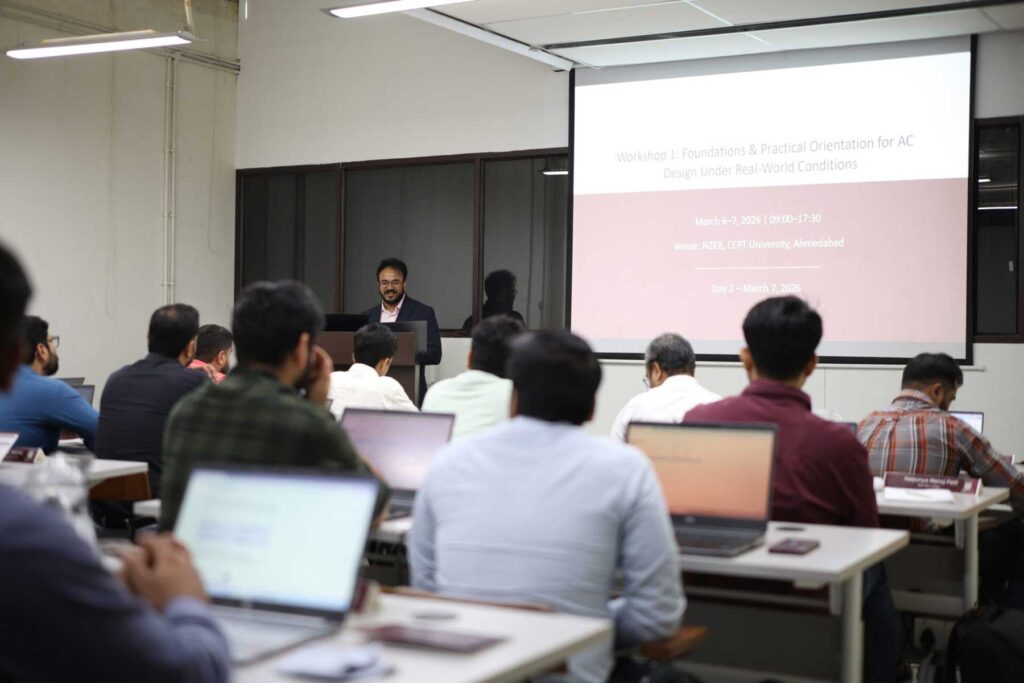
Testing showed that the next-generation systems used 60% less energy than conventional units and reduced peak electricity demand by up to 50%. As the world jumps from 2 billion air conditioners in operation today to more than 5 billion projected by 2050, these reductions matter.
RMI’s focus on delivering greater comfort with less energy also extends to heat pumps, which provide efficient heating and cooling in a single system. RMI estimates that a typical single-family household replacing electric resistance heating and water heating with heat pumps could save about $1,530 annually — nearly $23,000 over the equipment’s lifetime.
Partner Highlight
Shaw Solar:
How a Colorado company uses an RMI tool to unlock clean energy savings
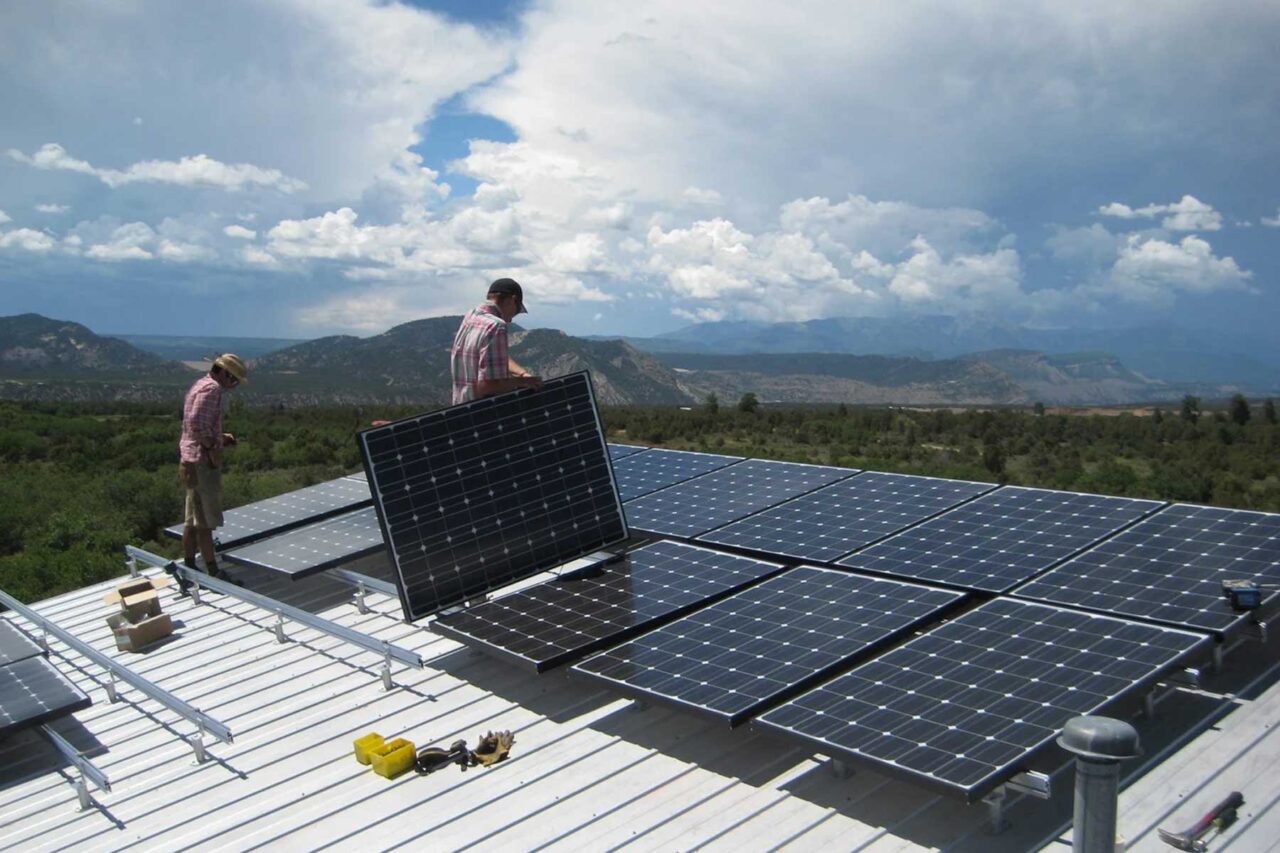
“Will this actually save me money?” is one of the first questions Shaw Solar hears from homeowners considering a heat pump, rooftop solar system, or other clean energy upgrade.
To help answer that question, Shaw Solar uses RMI’s Green Upgrade Calculator, a free tool RMI built to help households estimate the costs, energy savings, and emissions impacts of upgrades. For customers applying to Colorado’s Home Electrification and Appliance Rebates (HEAR) program, Shaw uses the calculator to estimate rebates, project future utility bills, and compare upgrade options. With every customer, they share a personalized report showing how the upgrades affect both up-front costs and long-term savings.
The results have been significant. Using RMI’s Green Upgrade Calculator, Shaw Solar has supported 100 HEAR projects, representing close to $1 million in savings for low-income homeowners. Shaw Solar is just one example of the calculator’s broader reach. Since its launch, more than 19,000 people have used the Green Upgrade Calculator. By giving contractors and homeowners clearer information about costs, incentives, and savings, RMI is helping more households make informed decisions.
From our donors
“Complex challenges require deep expertise, new ideas, and the freedom to learn what works. We value RMI’s ability to identify where innovation can make a meaningful difference, test promising approaches in the real world, and help solutions reach the scale needed to shift systems and improve people’s lives.”
— Shereen D’Souza, Climate Solutions Program Lead, Skyline Foundation
Chapter 2
New Grids for a New Era of Electricity Demand
Around the world, RMI is helping grid planners meet rapidly rising electricity demand while keeping power reliable and affordable.
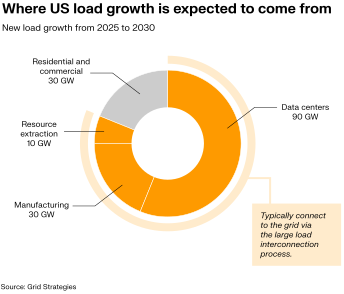
After years of relatively stable electricity demand in many mature economies, grids everywhere face a new era of rapid growth. In the United States, data centers and other large loads are supercharging demand forecasts, while in many global economies, transportation electrification and growing cooling needs are adding to load.
Together, these forces are putting new pressure on utilities, grid operators, and regulators to expand electricity supplies while keeping power reliable and affordable.
Across markets, RMI is focusing on three ways to help make that possible: getting more from existing infrastructure, planning for uncertain demand, and connecting new demand and supply faster.
Making more of the grid we have
Building new generation and transmission is only part of the answer. RMI’s Lightening the Load report identifies strategies that can accommodate new demand while limiting costs for other customers.
Demand response, energy efficiency, and flexible operations can reduce peak demand. On-site generation and storage can reduce pressure on the grid and provide backup power, while grid-enhancing technologies can increase the capacity of existing transmission infrastructure.
Planning for uncertainty
Rising electricity demand from data centers presents one of the most pressing challenges facing grid planners. One recent analysis tracked 190 GW of potential data center demand across 777 US projects. Yet utilities may receive requests for enormous amounts of electricity without knowing exactly when — or even if — individual projects will materialize.
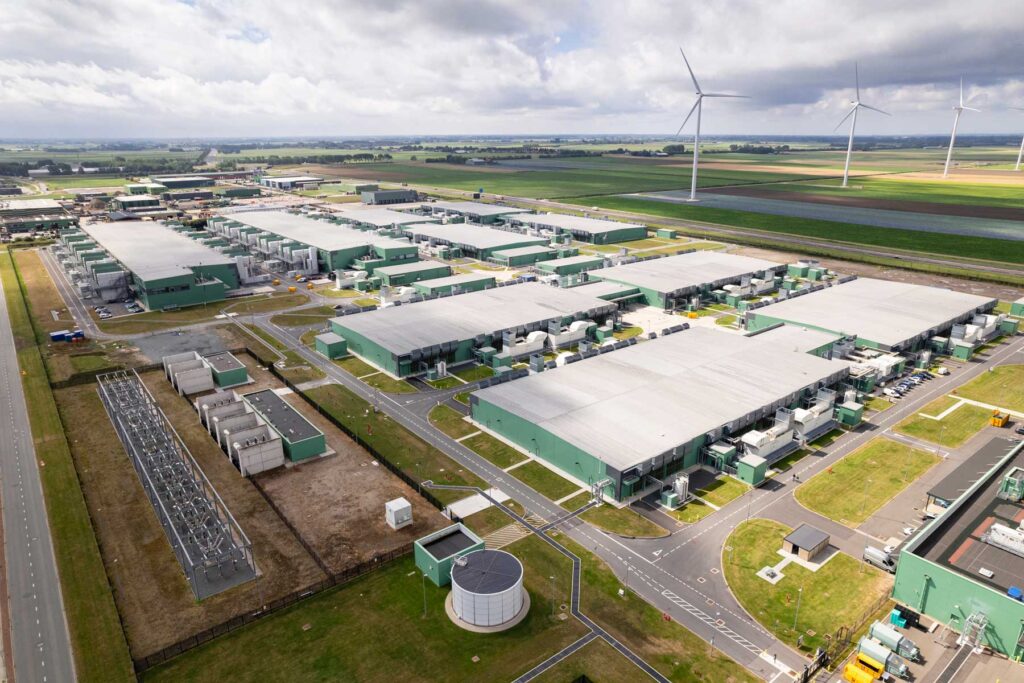
RMI is helping utilities and regulators manage that uncertainty without shifting unnecessary costs to customers. Better forecasting, customer commitment requirements, and regular forecast reviews can help distinguish firm demand from speculative requests and enable more confident infrastructure planning.
Connecting new demand to new supply
Even when new generation or large loads are ready to move forward, connecting them to the grid can take years.
RMI’s research is examining ways to speed those connections, including system-wide transmission planning and “connect-and-manage” interconnection, an approach already used in Texas that could allow new resources to connect more quickly while needed grid upgrades follow.
Better forecasting, smarter use of existing infrastructure, flexible planning, and faster interconnection can help grids grow without saddling customers with unnecessary costs.
Personal Story
Chris Rauscher:
Fortifying Puerto Rico’s fragile grid
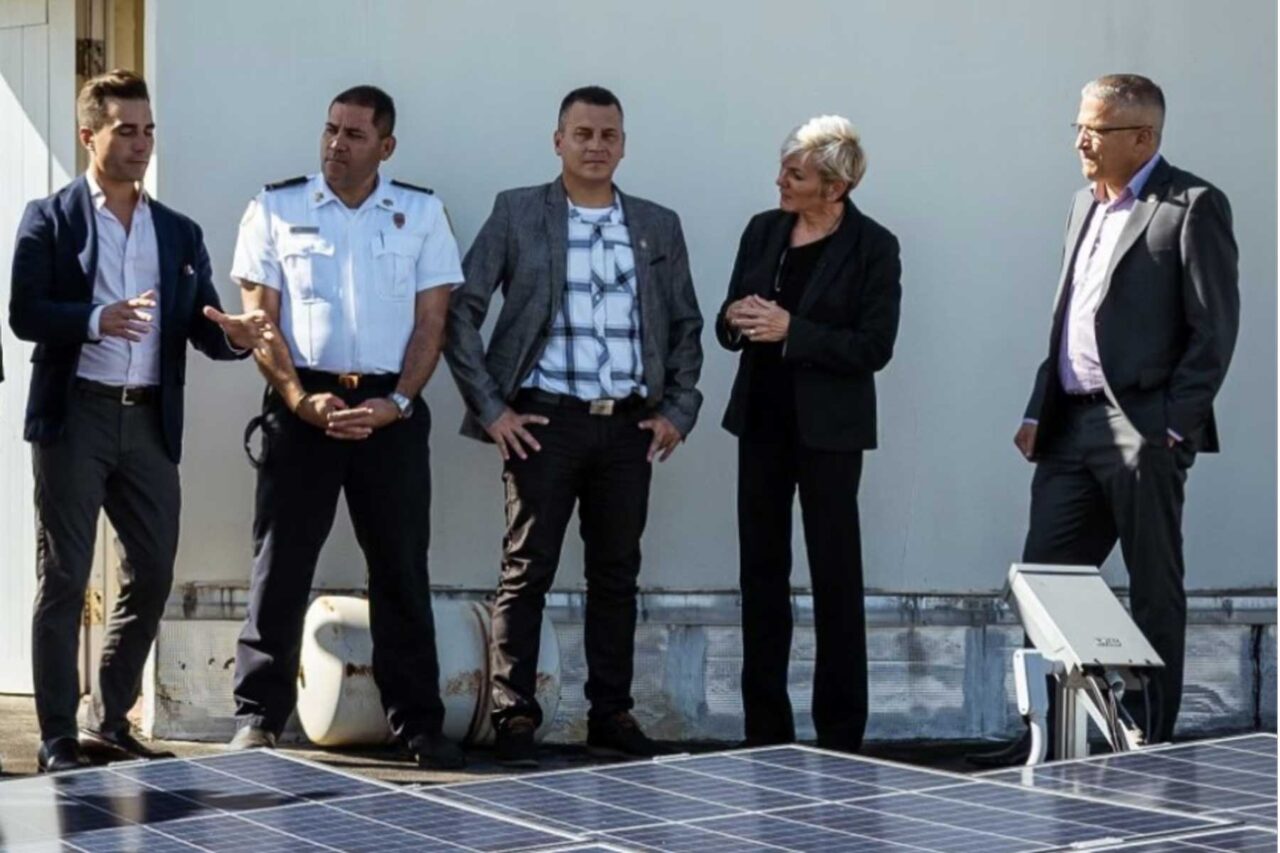
After Hurricanes Irma and Maria devastated Puerto Rico in 2017, RMI brought together leaders from Puerto Rico and the US mainland to explore how the island could build a more reliable and resilient electricity system.
Chris Rauscher, then a senior leader at Sunrun, took part in the convening. The group helped draft legislation that ultimately became Puerto Rico’s Energy Public Policy Act of 2019 and helped catalyze Sunrun’s PowerOn Puerto Rico program, a virtual power plant that now connects batteries from more than 33,000 Puerto Rican households to the grid.
For Rauscher, the results show the power of RMI’s role as a convener. “It’s some of the most impactful collaborative work I’ve done in my entire career,” he said. “RMI should take a lot of credit for facilitating that and helping chart a cleaner, more resilient future of energy in Puerto Rico.”
From our donors
“Meeting America’s growing electricity needs will require practical solutions and collaboration across the energy ecosystem. Our work with RMI is helping advance the policies, planning, and partnerships needed to build the grid faster and more efficiently. Together, we are helping create a more reliable, affordable energy system that supports economic growth and American competitiveness.”
— Heather Zichal, Global Head of Sustainability at JPMorganChase
Chapter 3
Charging Up Our Electric Future
Electric vehicle adoption is growing rapidly. And as homes and businesses electrify too, the world’s infrastructure needs to keep pace.
Not long ago, electric vehicles were the curious newcomer for most of the world’s vehicle buyers. Yet in just a few years, EV sales have multiplied worldwide, and in a growing number of markets large and small, they dominate overall sales. More than 1.5 million electrified vehicles were sold in 2025 — nearly 10% of total new car sales.
Electrification is also steadily transforming how homes and businesses are heated, cooled, and power appliances and other machines. These trends are combining to drive up global power demand.
Over the past year, RMI has helped utilities, policymakers, and industry leaders navigate these challenges, developing practical tools and strategies that make electrification easier, faster, and more affordable.

Planning for EV-ready grids
RMI developed GridUp to help utilities and grid operators, EV service providers, consumer advocates, and other stakeholders forecast when and where power demand is likely to materialize from EV charging. GridUp helps those stakeholders understand when and where power demand is likely to materialize from EV charging, with the specific benefit of helping utilities make smarter, more cost-effective infrastructure investments while keeping electricity affordable.
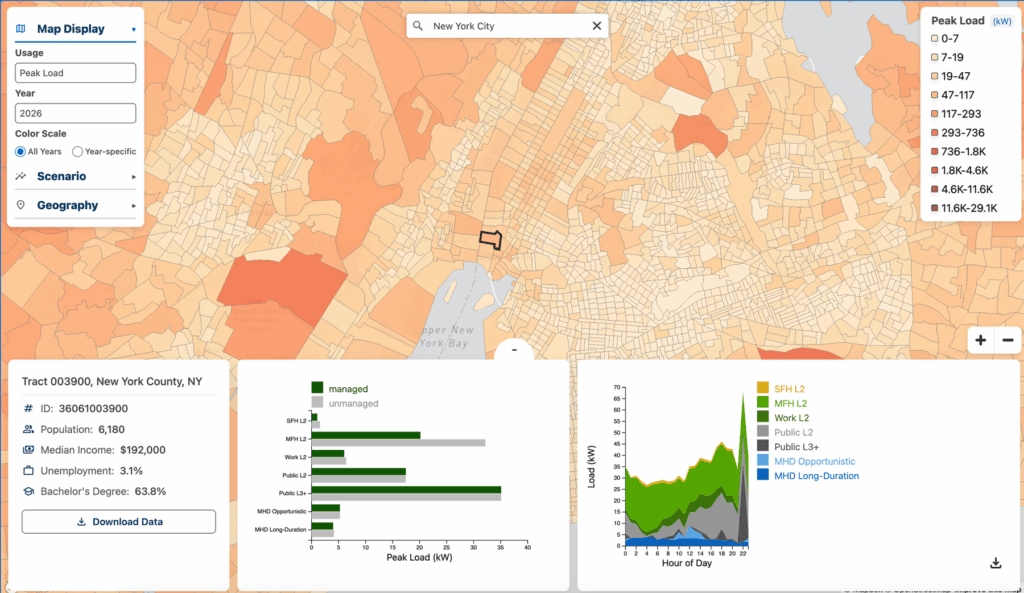
Since its launch, GridUp has supported 3,000 unique users and has been cited in over 10 state regulatory or legislative proceedings, influencing decisions affecting approximately 38 million households.
Over the past year, more than 20 large-format charging hubs have opened in utility service territories where GridUp and related load-forecasting methodologies have been deployed. GridUp is also the core analytical resource in the Department of Energy’s Charging Smart program.
Charging electric trucks: Timing matters
Electrifying heavy-duty trucks offers one of the biggest opportunities to reduce transportation pollution. Yet many fleets looking to go electric are stuck waiting years for charging depots to connect to the grid.
RMI showed that a simple solution can dramatically speed deployment: timing. If fleet operators limit charging during a limited number of peak-demand hours, utilities can generally connect truck charging depots without costly grid upgrades.
If California-based Pacific Gas & Electric adopted this approach, RMI found, it could support charging for an additional 25,000–70,000 heavy-duty trucks per year — enough to accommodate every electric truck purchased in California last year without requiring new grid upgrades.
Electrifying the Global South
In India, zero-emission trucking is growing rapidly, with more than 9,000 electric trucks sold in 2025. But only about 5% of chargers in India can meet the power needs of electric trucks.
RMI is helping transportation stakeholders address those barriers while also helping Indian cities plan effective public EV charging networks.
Africa’s electric mobility transition is also picking up pace. RMI’s Unlocking Africa’s EV Potential, coauthored with the United Nations Environment Programme, provides a continent-wide framework to harmonize EV policies and better coordinate the expansion of electric mobility across borders.

Personal Story
Bryn Grunwald:
Spinning e-bike data into action
As cities began rolling out e-bike rebate programs, RMI’s Bryn Grunwald noticed something was missing: policymakers lacked clear, credible data on what those programs could deliver.
Her work evolved into the E-Bike Environment & Economics Impact Calculator, a public tool that helps cities, states, and organizations estimate the real-world impacts of e-bike adoption, including cost savings, emissions reductions, and broader community benefits.
Today, cities such as Atlanta and Portland, as well as states including Colorado and Illinois, are using it to design smarter incentive programs. In Arkansas, an organization used the calculator to help secure a $7 million grant for e-bike incentives.
What began as a side project is now helping communities rethink transportation, lower household costs, and reduce emissions — one short trip at a time.
From our donors
“Deploying electric fleets at scale requires more than vehicles and chargers — it requires the infrastructure to power them. FedEx works with RMI to support GridUp to help address this critical planning challenge. This public tool is designed to help anticipate electricity demand from vehicle electrification and proactively plan charging infrastructure that can keep pace with the needs of fleet operators like FedEx and the communities we serve.”
— Karen Blanks Ellis, Chief Sustainability Officer, FedEx
Chapter 4
Soaring Energy Demand Puts Methane in the Spotlight
Stopping valuable resources from disappearing into thin air
This year’s global energy crisis underscored just how fragile energy markets can be — and how quickly fossil fuel supply chains can be disrupted. Geopolitical conflict, trade uncertainty, and constrained infrastructure reminded businesses, governments, and citizens alike that energy security cannot be taken for granted.
When supplies are disrupted, every unit of energy counts.
Methane is the primary component of natural gas, and the energy wasted and methane emitted via gas loss superheats the planet over 80 times more rapidly and powerfully than carbon dioxide. Stopping gas loss and mitigating methane emissions now, as we continue to cut carbon dioxide, offers major opportunities on energy and climate security grounds.

Drilling down on Texas
RMI’s Drilling Down on Methane Loss examined the scale of wasted natural gas in Texas, the nation’s leading oil- and gas-producing state.
After analyzing state data and developing a novel public methodology, RMI estimated that targeted Texas operators collectively wasted between 3 and 4.5 times more natural gas than they reported, approximately 7 million metric tons.
RMI estimated that Texas producers forfeited more than $1 billion in marketable natural gas through venting, flaring, and other losses. That wasted production also translated into nearly $100 million in lost state tax revenue during the 12-month study period.
Creating cutting-edge tools
RMI publicly probes the methane intensities of oil and gas from production through end uses using the Oil Climate Index plus Gas (OCI+) and its underlying open-source models.
Today, RMI analyzes 100% of the world’s oil and gas methane emissions, which are posted on ClimateTRACE. Our analytic tools and results are used by oil and gas companies, banks, insurers, tech firms, academics, philanthropies, NGOs, and policymakers.
Markets need this visibility to function efficiently. Policymakers need it to establish robust standards. Financiers need it to make wiser investments. Insurers need it to underwrite risks. And communities need it to prevent harms.
Turning waste into energy security
On a global scale, the amount of gas wasted through venting, flaring, and equipment leaks is staggering.
RMI’s analysis highlighted a striking reality: the world wastes more than twice the volume of gas flowing through the Strait of Hormuz every year through preventable methane losses.
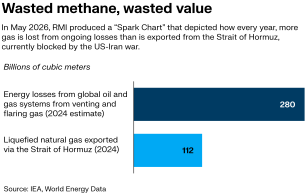
Preventing gas waste is an opportunity to strengthen energy security without drilling a single new well. It can also increase government revenues, protect workers and citizens, and help ensure that more of the energy being produced reaches the people and businesses that need it.

Personal Story
Lyda Hill:
A Bet Worth Making
Lyda Hill likes big ideas — especially ideas other people might not be ready to bet on yet.
In 2018, RMI presented Lyda Hill Philanthropies with a problem: methane leakage from oil and gas systems. RMI saw an opportunity to give companies and other decision makers much better information about how much methane was being emitted and use that visibility to help drive action.
Lyda Hill Philanthropies provided the early confidence and capital to pursue the idea; RMI brought the expertise and execution to develop it, build tools around it, and help it grow.
Today, RMI has publicly assessed methane emissions intensities of over 70% of global oil and gas supplies in the Climate Action Engine’s public OCI+ tool. More than 1 billion tons of methane have been abated globally as a result of RMI’s initial work, with a goal of 5 billion more tons by 2040.
Sometimes, foresight is simply seeing a good idea early enough to help make it real.
From our donors
“We value our partnership with RMI because of its ability to turn rigorous data and technical expertise into practical action. Together, we’ve seen initiatives like WasteMAP, the Methane Training Network, and RMI’s new analysis on mobilizing private capital evolve into powerful tools for decision-making, capacity building, and investment — helping governments across the globe identify methane opportunities, build local expertise, and move from ambition to implementation at scale.”
— Marcelo Mena, CEO of the Global Methane Hub
Chapter 5
The Road Not Taken, 50 Years On
Fifty years after Amory Lovins challenged conventional thinking about energy, the ideas behind RMI’s founding continue to shape the choices before us.
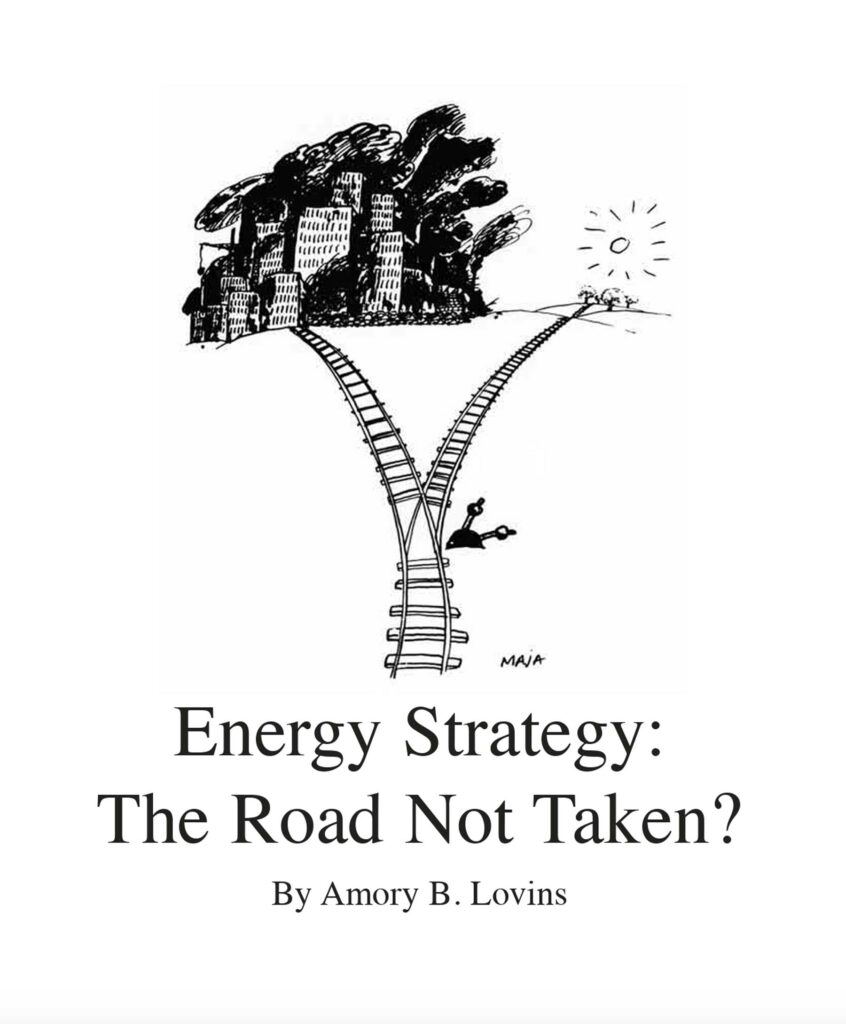
In 1976, 50 years ago this October, Amory Lovins published “Energy Strategy: The Road Not Taken?” in Foreign Affairs, in the thick of the worst energy crisis the world had yet known.

Governments responded to the energy crisis largely by asking how to secure and produce more fossil fuels.
Lovins asked a different set of questions: How much energy did people actually need to get the services they wanted — warm homes, convenient transportation, light in the dark, and reliable industrial production — and what was the cheapest, most resilient way to provide them?
The better answer, he argued, wasn’t the prevailing “hard path” built around centralized fossil-fuel and nuclear systems but a “soft path,” emphasizing efficiency and renewable energy.
Half a century later, Lovins’s analysis continues to echo.
Technologies that were promising but embryonic when Lovins first wrote in 1976 — including wind, solar, batteries, and highly efficient buildings and vehicles — are today mature, affordable, and being deployed at a global scale.
Applied together as an integrated system rather than a menu of options, these tools revive and modernize the soft energy path, making it not only viable but compelling along the dimensions that now matter most: speed, cost, resilience, security, and scalability.
Many of Lovins’s then-controversial ideas have become accepted wisdom today. His core insight remains central: People do not want energy itself; they want what energy does.
That insight became foundational to RMI’s founding. Today, RMI continues Lovins’s work: putting consequential ideas into the world and helping decision makers navigate the path from insight to action.

Personal Story
Leigh Alvarado Benson:
How Asking Better Questions Led to Lasting Impact
Twenty years after Amory Lovins first asked “Why do we need the energy in the first place?” in his groundbreaking 1976 essay, that basic question found its way onto the reading list of graduate student Leigh Alvarado Benson.
For Leigh, the encounter was transformative. Lovins’s focus on asking better questions and aiming for holistic solutions went on to shape every chapter of her career, from environmental engineering to data science and, more recently, teaching.
More than three decades later, Leigh and her husband included RMI in their estate plans, helping ensure that the ideas that transformed her thinking can benefit generations to come.
“To me, legacy giving isn’t about being remembered. It’s about helping good ideas outlive us.”
— Leigh Alvarado Benson
Read the full report
Explore the complete 2025–26 Annual Report and learn more about RMI’s work around the world.
Fiscal Year 2026 Financials and More


Thank You, Donors
As an independent nonprofit, RMI’s work to create a clean energy future for all is powered by generous donors like you.

Ways to Give
Your gift will help us increase access to safer, healthier energy in more communities around the world.
Help build the clean energy future. Donate today.
Independent research. Real-world solutions. Supported by donors.
RMI can pursue the highest-impact climate and energy solutions because we’re supported by people who believe change is possible. Every gift helps advance the work needed to make clean energy the default choice worldwide.
And right now, your impact goes twice as far. Thanks to generous donors and our special match, every $1 you give becomes $2, up to $150,000, through December 31, 2026.