Learn how we are working to transform how we use and produce energy.
Methane 101: Closing the Loop on Food Waste
How composting and anaerobic digestion can transform organic waste from food markets into valuable resources — while cutting methane emissions.
Why we share this work for free
RMI is an independent nonprofit working to accelerate the clean energy transition. We publish research like this to inform decision-makers and drive real-world impact.
Our work is supported by philanthropy as well as partnerships, including fee-for-service engagements. This support makes it possible for us to share our independent insights for free.
If you find this work valuable, you can support it anytime.
Get more insights like this
Stay up to date with the latest research, analysis, and tools from RMI by opting in to receive occasional emails below. You’ll get new reports, event invitations, and practical insights to help us all accelerate the clean energy transition.
Loading form...
Your download should start automatically. If it doesn’t, click the download button below.
This work is made possible by philanthropy
RMI is a nonprofit supported by donors and partners. Philanthropy enables us to produce independent research and make resources like this freely available.
If you find this report valuable, please consider supporting our work. You can also explore how we partner with organizations to drive impact.
Jump to Section
Food markets are essential components of urban food systems around the world. For local communities, these vibrant and often bustling spaces are key access points for fresh and affordable produce. However, as market stalls empty throughout the day, waste bins fill up with bruised fruit, vegetable trimmings, spoiled food, and expired goods — all usually mixed with other trash. This organic waste represents a significant opportunity for energy and nutrient recovery for local communities, while also reducing methane emissions.

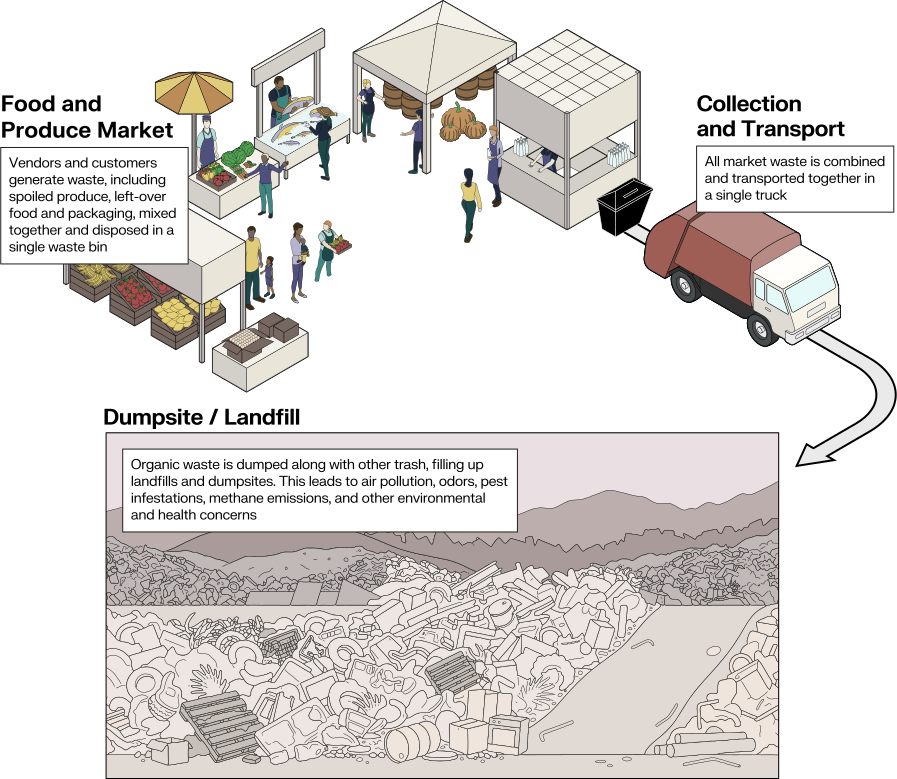
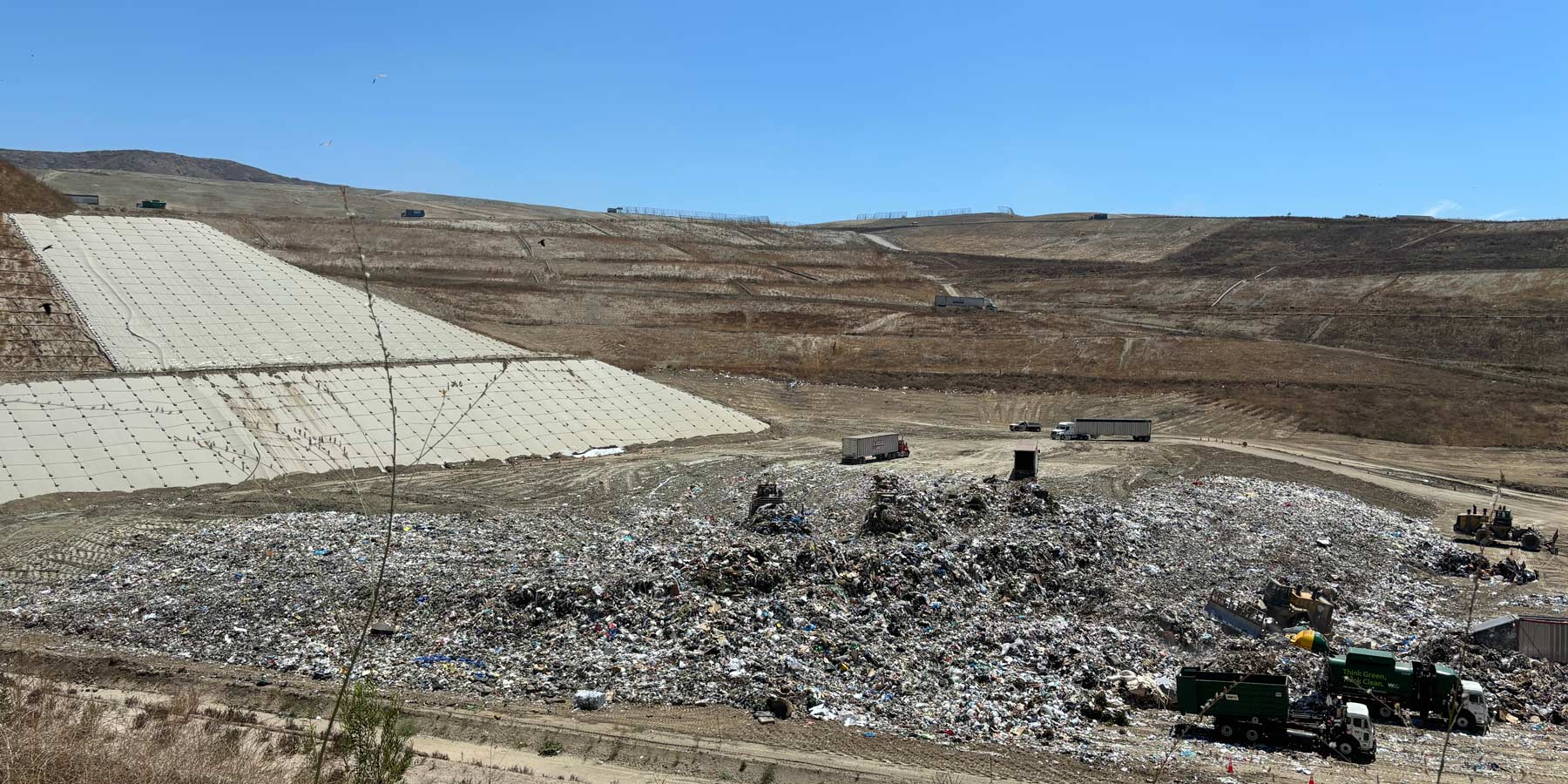
A market’s waste is typically hauled to a dumpsite or landfill, where the organic material decomposes in low-oxygen conditions and produces methane, a potent greenhouse gas. Unless captured, that methane escapes into the atmosphere and contributes to near-term warming — methane traps over 80 times more heat than CO2 over a 20-year time frame. Poorly managed organic waste can also stink, attract pests, and threaten to overwhelm disposal facilities quickly nearing capacity — all while missing the opportunity to recover nutrients and energy.
Exhibit 1: The status quo: Straight to the landfill
A circular alternative
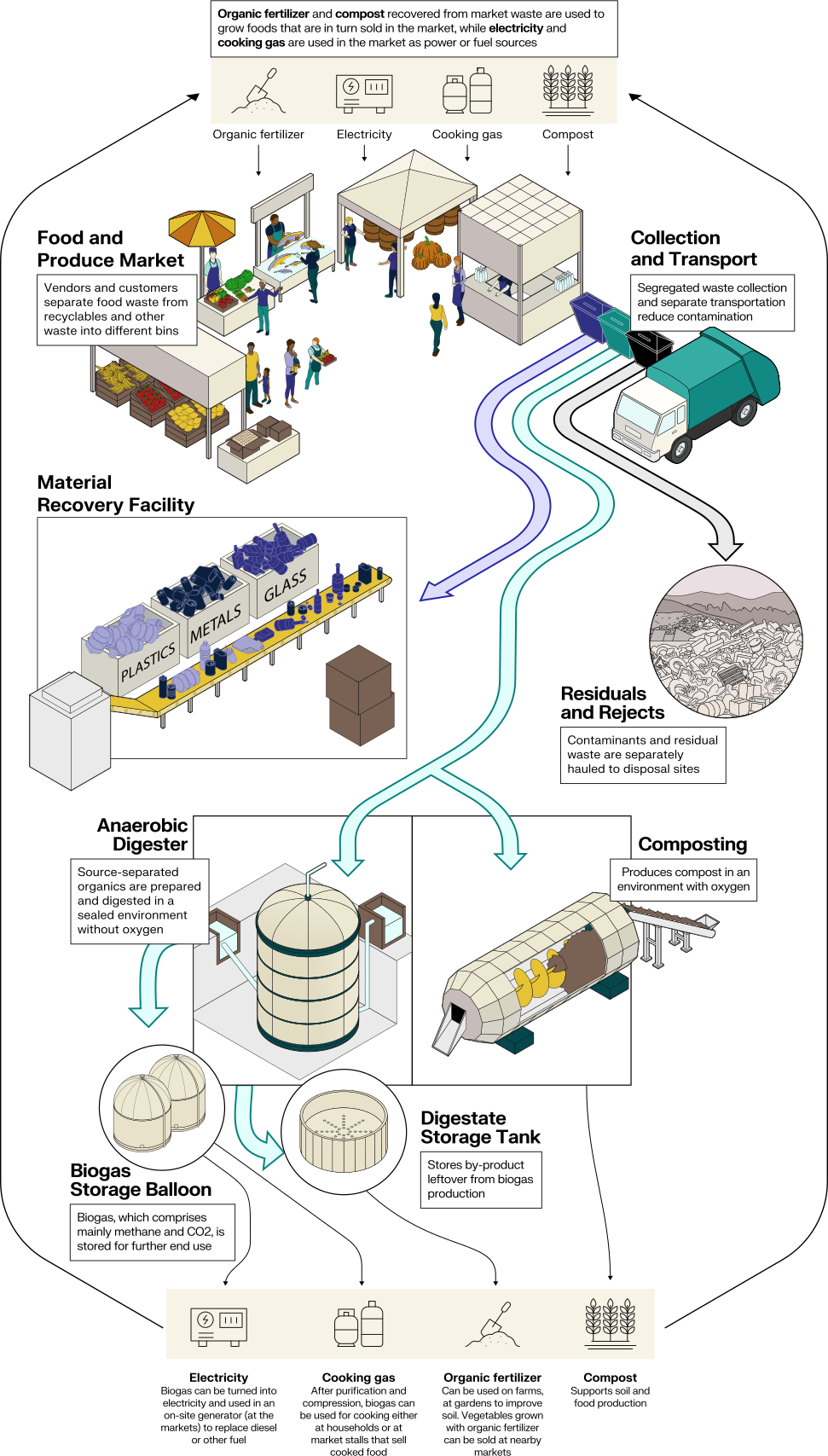
Adopting a more circular approach to waste management could seize the opportunity for nutrient and energy recovery, starting from where waste is generated. Organic waste from food markets can be directed toward two well-established treatment options: composting, to improve soil quality, or anaerobic digestion, for energy production. The site-specific technology choice depends on the amount and type of waste, land, and funding available, as well as operator capacity and demand for the end products generated.
Exhibit 2: Closing the loop: Recovering nutrients and energy from market waste
Composting: Returning nutrients to the soil
Composting is the process in which microorganisms break down organic material in the presence of oxygen. Over time, the organic material (often called ‘feedstock’ in this context) becomes a soil-like product called compost. When mixed into topsoil (for example, in a vegetable garden), finished compost replenishes soil with the nutrients, helps improve soil structure and water retention, and supports plant growth.
Composting operations can vary in scale. In this context, a smaller operation might serve one market or a few nearby markets, while a larger facility might aggregate organic waste across a city for processing. Composting is often considered a simpler technology than anaerobic digestion, due to its cheaper equipment and lower technical demand. However, facility operators must still actively manage the feedstock mix, moisture, temperature, and odors and ensure that the end product is of sufficiently high quality to improve crop production or generate revenue as a product sold by the facility.
Anaerobic digestion: Converting waste into renewable energy
Like composting, anaerobic digestion also relies on microorganisms to break down organic material, however, this process takes place in a sealed tank without oxygen. The two main outputs are biogas and digestate. Biogas, which is mostly methane and CO2, can be used directly for heat or cooking, burned in a generator to produce electricity, or further upgraded into renewable natural gas. The end use depends on the project’s scale, the quality and consistency of the gas, and nearby energy demand. The material remaining after digestion is digestate; when properly processed, digestate can be used as a fertilizer or soil additive, returning nutrients to the soil.
Anaerobic digestion is generally more complex and expensive than composting. Sustained operation requires a steady supply of high-quality feedstock, trained operators, reliable equipment and maintenance, and ongoing demand for the end products (e.g. sale to others, or use by the operator itself). Where these conditions are in place, a digester can turn organic waste into useful energy and soil products.
An untapped opportunity to close the loop across fresh produce markets
Market waste represents an especially important opportunity for resource recovery in lower-income countries, where food and yard waste make up more than half of municipal solid waste. Markets also provide a relatively concentrated and steady organic waste flow, which can make collection more efficient than collecting small quantities from individual households. Organic waste treatment can also create jobs in collection, material handling, facility operations, and end product distribution, while helping cities reduce their reliance on disposal facilities, improve local air quality, and mitigate methane emissions.
Of course, there are many ways for markets to divert organic waste from landfills and implement these solutions. For example, a market that generates too little feedstock, or lacks sufficient space for composting or biodigester equipment, may be better served by joining with nearby markets and communities to aggregate their organic waste at a shared processing facility. Each city and market should tailor its approach to local waste volumes, available space, infrastructure, and operational needs.
Supporting organic waste treatment expansion through project preparation
While treatment of market waste through composting and anaerobic digestion provides multiple benefits, municipalities often face significant barriers to scaling these projects, including unreliable feedstock quality, weak policy and regulatory frameworks, limited technical capacity in the local workforce, and difficulty recovering project costs (either through cost savings or revenue generation). RMI is helping address these challenges through our continued engagement in Nigeria and the Philippines, identifying and evaluating projects that are technically and financially viable.
By assessing feedstock quantity and quality, technical and economic feasibility, project risks, and engaging key stakeholders, RMI supports communities and project developers in preparing their projects for financing. We are also developing a replicable cost recovery framework to improve the economic viability and long-term sustainability of similar projects, a critical precondition for scaling pilot projects and achieving larger-scale deployment. Together, these efforts aim to expand organic waste treatment and strengthen its long-term sustainability in the Global South.



Related Insights

From Data to Action: WasteMAP’s New Features Empower Localized Methane Mitigation
5 Ways to Cut Landfill Methane Pollution: How Local Governments Can Lead

Help build the clean energy future. Donate today.
Independent research. Real-world solutions. Supported by donors.
RMI can pursue the highest-impact climate and energy solutions because we’re supported by people who believe change is possible. Every gift helps advance the work needed to make clean energy the default choice worldwide.
And right now, your impact goes twice as far. Thanks to generous donors and our special match, every $1 you give becomes $2, up to $150,000, through December 31, 2026.