

Learn how we are working to transform how we use and produce energy.
Bolstering Energy, Economic, and Environmental Security in a Warming World
Learnings from London Climate Action Week 2026
Why we share this work for free
RMI is an independent nonprofit working to accelerate the clean energy transition. We publish research like this to inform decision-makers and drive real-world impact.
Our work is supported by philanthropy as well as partnerships, including fee-for-service engagements. This support makes it possible for us to share our independent insights for free.
If you find this work valuable, you can support it anytime.
Get more insights like this
Stay up to date with the latest research, analysis, and tools from RMI by opting in to receive occasional emails below. You’ll get new reports, event invitations, and practical insights to help us all accelerate the clean energy transition.
Loading form...
Your download should start automatically. If it doesn’t, click the download button below.
This work is made possible by philanthropy
RMI is a nonprofit supported by donors and partners. Philanthropy enables us to produce independent research and make resources like this freely available.
If you find this report valuable, please consider supporting our work. You can also explore how we partner with organizations to drive impact.
Jump to Section
Battling triple digit temperatures during the hottest June on record, leaders across industry, finance, insurance, tech, academia, and policy assembled at London Climate Action Week (LCAW). The extreme heat that disrupted travel, canceled schools, and sickened citizens was once again a wakeup call to bolster more collaboration across these actors as Earth precipitously warms.
Recurring headlines on climate catastrophes — wildfires, floods, droughts, and other climate disasters—have us considering whether these extremes are the new normal. As such, it is impossible to ignore that energy, economic, and environmental risks are inseparably linked. These risks are motivating decision makers from different sectors who used to think and act in relative silos to come together and pursue interconnected solutions.
One thing was clear during LCAW 2026: there is hope because solutions exist. We know about them and, in some cases, they are already in place. But there’s not always cross-sectoral alignment on how to create a conducive financing and operating environment to scale them. Throughout the week, there was a resounding call for greater engagement and leadership on the part of all actors — private, public, academic, and nonprofit.
At LCAW, RMI convened key leaders across the energy sector for a workshop to discuss the challenges and opportunities of advancing energy security and affordability in a warming and volatile world. This article represents the key takeaways gathered across working groups at the event.
Cross-Cutting Strategic Insights Gained at LCAW
| Insight | Why It Matters |
|---|---|
| Security framing and energy affordability are overtaking climate framing | Foundational for near-term policy, political, and corporate action |
| Reducing methane emissions/energy waste is an immediate opportunity | High impact with existing technologies |
| Energy technologies that we need largely exist | Scaled deployment transforms markets and lessens multiple security risks |
| Data and standardized carbon accounting are foundational | Enables investment and comparisons across assets and companies |
| Policy remains essential | Markets alone cannot deliver transition |
| Demand aggregation deserves more attention in balancing energy and climate security | Scaling clean energy markets requires committed buyers |
| Finance is available but projects remain difficult to fund | Bankability is the bottleneck |
| Organizational change is as important as technology | Long-term success depends on institutional transformation |
1. Energy, economic, and environmental security are inseparable
Energy security cannot be delivered in a vacuum. Geopolitical crises tend to shift the focus to energy security, de-prioritizing economic and climate concerns. In this decade alone, back-to-back energy security conflicts — Russia’s war in Ukraine, US takeover of oil exports from Venezuela, and the war with Iran — have disrupted oil and gas flows, created energy price volatility, and shifted some focus away from climate action.
The search for “all-in energy” is on. But delivering secure energy supplies also rests on affordability. This is especially true in places that have historically been dependent on oil and gas imports, including California, EU nations, South Korea, Japan, and elsewhere. Even China is thinking deeply about how to securely transition its energy system without creating unintended economic consequences by locking into unreliable and costly energy sources.
Deploying diversified energy infrastructure with forward-thinking systems integration can achieve greater energy, economic, and environmental security that leads to overall resilience. Industry, investors, insurers, and policymakers can better balance energy, economic, and environmental security. Electrification, for example, is rapidly ramping up and renewable sources of energy are a hedge against fossil fuels because it is harder to weaponize the wind and the sun. As such, affordable electrification can foster energy security, especially when it leverages more energy efficiency and less energy waste.
Renewable sources of energy are a hedge against fossil fuels because it is harder to weaponize the wind and the sun.
2. Wasting energy is unwarranted
We live in an energy-hungry world. Expanding data centers and AI uptake, relieving energy poverty, and addressing climate change — cooling more air, pumping more water, and rebuilding damaged infrastructure — are driving up global energy demands. This heightens the need for more energy efficient and less wasteful systems. Yet today’s energy system is incredibly inefficient, estimated at wasting over $4.5 trillion annually, all before any value is created with energy. The value of global energy waste is on par with the nominal GDP of the entire continent of South America.
Society’s most underused resource is the energy it wastes. To stem energy losses, keeping gas from oil and gas operations in the pipe and out of the air should be a top global priority In addition to bolstering energy security, preventing gas leakage also reduces methane emissions, protects public health by keeping carcinogens like benzene out of the air, and slows global warming.
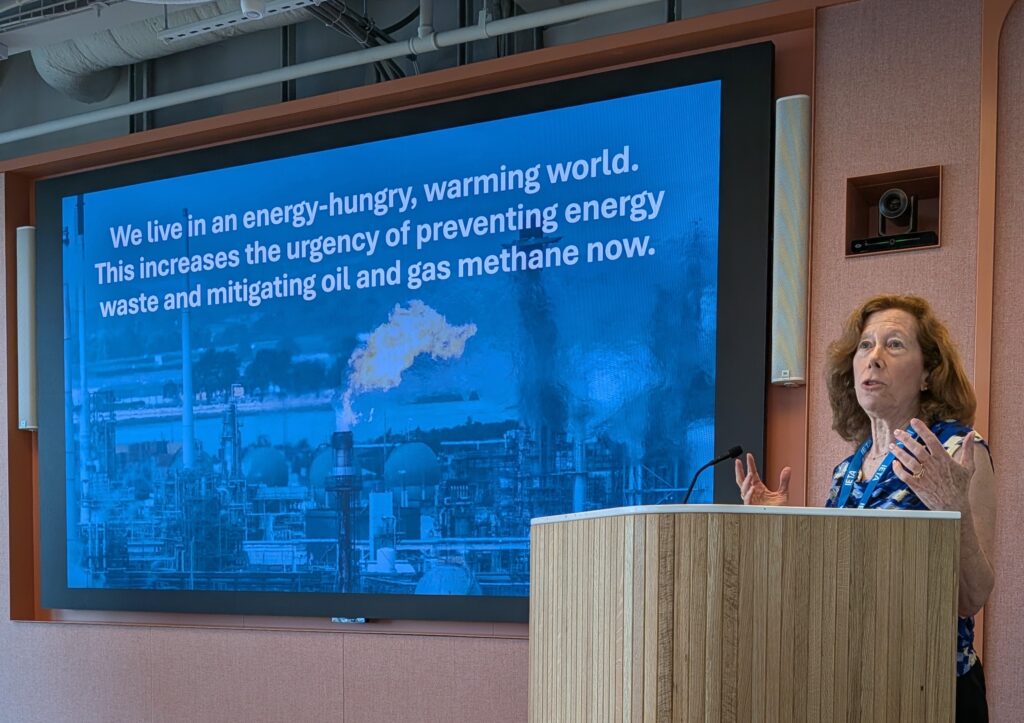
Today’s energy system is incredibly inefficient, estimated at wasting over $4.5 trillion annually, all before any value is created with energy.
3. The energy technologies we need exist, but more backing is needed to bring them to market at scale
Energy innovation is not as far off as we think. In fact, the technology we need already exists. The challenge is connecting measurement, planning, and action that results in real, scalable business outcomes. This requires decision-ready data that’s integrated into energy system workflows so that operators can more swiftly adopt new technologies. Finance, insurance, and policy also play a key role in hastening the pace of energy innovations that reduce energy, economic, and environmental risks.
Energy companies have a technology toolkit that can make conventional energy systems more efficient, secure, resilient, and effective, and strengthen near-term economic imperatives like data centers. But more work is needed to prove out the financing and deployment models that can bring these technologies to market. For example, coupling geothermal development with oil and gas drilling and production, could be material in big data center buildout. Also, more electricity and less petroleum (such as diesel, gas, bunker fuel, and petroleum coke) can be used to produce, process, refine, and transport oil and gas. Co-locating renewables at existing grid connection points made for gas-fired power generation can strategically expand energy supply. Connecting energy technologies with markets, finance, and policy to solve systems problems is what’s most needed.
4. Better data and open accounting are foundational, but not sufficient on their own
We cannot manage what we do not measure and accurately report. We need better data and a common set of accounting rules and data structures to verifiably differentiate products and operating methods in the highly competitive energy industry. Validated data and clear-cut accounting practices were central themes at LCAW.
For example, RMI is working with Sylvera, Global carbon Market Utility, and S&P Global to build and maintain the Carbon Data Open Protocol (CDOP), a cross industry, multi-stakeholder collaboration. CDOP is designed to create a unified schema for standardized data underpinning structured carbon credit exchanges across markets, geographies, and operations. What results is a common language that can scale market activation.
5. Market action is critical, but policy remains essential
Volatile energy markets have become the new normal. In this decade alone, oil prices have fallen as low as $25 per barrel in 2020 and spiked as high as $129 when Russia invaded Ukraine in 2022. By 2025, the price per barrel fell by half, then soared back into triple digits after the war in Iran began in early 2026. Liquified natural gas (LNG) prices have been just as volatile, as plotted below.
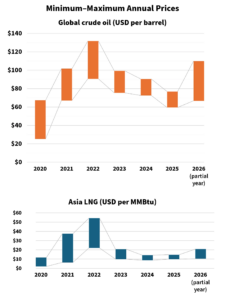
Sources: RMI graphic using source data for Global Crude Oil, https://www.macrotrends.net/1369/crude-oil-price-history-chart; Asia LNG, https://fred.stlouisfed.org/series/PNGASJPUSDM#
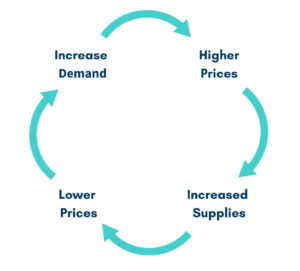
Markets are impacted by exogenous events: geopolitical, economic, technological, and environmental. These events disrupt markets’ long-term quest for equilibrium between supply and demand, driving cyclical responses to events, as depicted below. Firms must adjust to the market impacts of world events. But when it comes to addressing externalities like mitigating climate change, industries, banks, and insurers tend to act collectively, which can hinder the speed of the response. Voluntary corporate action can transform markets, especially when underpinned by financial incentives or regulations. As such, policy instruments play a critical role enabling markets with more socially beneficial and durable outcomes.
Policy can assist the scaling of solutions along three market dimensions: (1) alternatives that already pay for themselves; (2) those that need better financing or data to become bankable; and (3) those requiring research, development, and demonstration; incentives; regulation; or public-private partnerships to advance.
Market Dynamics of Energy Supply and Demand
6. Demand aggregation deserves more attention in balancing energy and climate security
Energy security rests on a well-functioning market that balances supply and demand. Yet investors and energy firms tend to over-index on market signals that influence energy supplies. Understanding buyers’ needs and barriers when it comes to energy procurement, the regulations they face, trade policies, and ever-shifting geopolitical impediments are paramount to future market solutions.
For example, regulations and policy can play a role in helping to structure more efficient markets. Policy can establish buyers’ clubs to aggregate demand in ways that address externalities that threaten to undermine market dynamics. In the EU, for example, Methane regulations are critical to balance energy, economic, and environmental security in a region that is exposed to energy and climate risks dependent on oil and gas imports with wide-ranging methane intensities. It cannot simply be assumed that industrial buyers and consumers will make decisions that ultimately balance supply in the marketplace.
7. Finance is ready but bankability remains a roadblock
Just as diversified energy systems can induce greater resilience, so too does diversification better secure the portfolios of the energy investors that back them. But technology benefits alone are insufficient to unlock capital. As many solutions move up the deployment readiness curve, there remains a critical gap between what is technically ready and what is bankable.
As they evaluate technologies, institutional capital seeks economic assurances: a sustainable business model, with customers willing to pay for value delivered at a viable price point; reliable offtake to underpin long-term cash flows; and a clear strategy to manage, price, or transfer residual risks as deployment scales. These requirements can be more complex for diversified energy systems, where value creation spans across multiple actors — such as efficiency and demand-response providers, generators, transmission owners, waste capture and storage developers, and end users. Policy uncertainty adds further perceived financial risk, making it harder for otherwise promising projects to clear bankability thresholds.
This barrier points to an opportunity for finance to play a coordinating role. Financial institutions bring cross-cutting expertise and relationships across technology providers, producers, customers, insurers, public finance, and other capital sources. Different types of capital may be needed as technologies cross risk thresholds, and coordination can match risk-return profiles to each stage of market development.
Insurance plays an underappreciated role. By helping quantify, price, and redistribute risks that might otherwise prevent projects from reaching bankability, insurers can accelerate financing when deal makers engage them earlier. The challenge is not whether finance is interested in balanced energy-by-design solutions; it is whether the broader market can create the conditions for that interest to translate into executable deals.
8. The energy transition needs to be a transition of organizational identity, not simply a shift of technology and assets
What tied these conversations together was the concept that this is not just a transition of energy or assets; it is a transition of organizational identity. Re-skilling is a necessity for both the financial and energy sectors. For example, oil and gas bankers needed to reskill to finance geothermal, just as the global technology company SLB is reskilling its exploration team to build it.
The shifting energy hierarchy — currently with cost and resilience on top — presents growing pressure for action. Firms’ need to balance security risks is on display. This moment of heightened pressures is an opportune time to enable firms to shift gears in their organizational identities faster than they have in the past.
Localized solutions will not be enough to achieve the progress we need. Global systems change across organizing structures of corporations, financial institutions, utilities, communities, and governments will be essential to operationalize the solutions we need to scale. The ways in which low-carbon and efficient solutions are discussed in the boardroom, project site, and neighborhood will need to be instilled as a core principle in the way we operate, as opposed to a silo within a larger apparatus.
Optimal solutions address multiple security concerns simultaneously
An overarching message throughout LCAW was that optimal solutions address multiple security concerns simultaneously. Siloed thinking and unilateral action on energy security can exacerbate economic and climate insecurity. Solving a collective systems’ problem requires getting the multitude of influential decision makers in the same room to have meaningful conversation about the path forward.
Energy markets have historically been prone to disruption, and such volatility will likely continue. There was an air of impatience expressed throughout the week and a desire to move faster to meet the security challenges facing us. Lessons learned at LCAW point to less waste; more transparent, flexible, open accounting; durable policy; demand aggregation; reliable bankability; and organizational adaptation to bolster energy, economic, and environmental security.
RMI is grateful for our event co-conveners, including David Seabrook (SLB), Amit Puri (Barclays), Maria-Olivia Torcea (Bloomberg NEF), and Darien Sturges (CLEE, UC Berkeley). And thank you to the following RMI staff for gathering intelligence on energy security at LCAW: Jon Creyts, TJ Conway, Thomas Koch Blank, Caitlin Smith, Evan Kornbluh, Sarah Mendelson, Coreina Chan, and Denali Hussin.


Related Insights



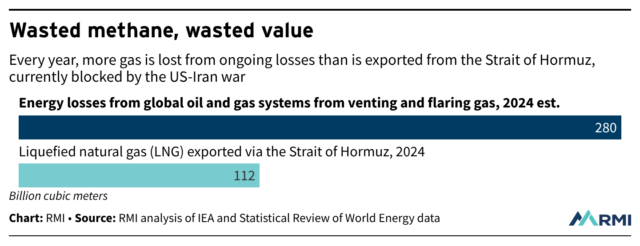
The World Wastes More Gas Each Year than the Strait of Hormuz Supplies
Help build the clean energy future. Donate today.
Independent research. Real-world solutions. Supported by donors.
RMI can pursue the highest-impact climate and energy solutions because we’re supported by people who believe change is possible. Every gift helps advance the work needed to make clean energy the default choice worldwide.
For other ways to give to RMI, including checks or gifts of stock, please visit Other Ways to Give.