

Learn how we are working to transform how we use and produce energy.
Methane: A Threat to People and Planet
Why we share this work for free
RMI is an independent nonprofit working to accelerate the clean energy transition. We publish research like this to inform decision-makers and drive real-world impact.
Our work is supported by philanthropy as well as partnerships, including fee-for-service engagements. This support makes it possible for us to share our independent insights for free.
If you find this work valuable, you can support it anytime.
Get more insights like this
Stay up to date with the latest research, analysis, and tools from RMI by opting in to receive occasional emails below. You’ll get new reports, event invitations, and practical insights to help us all accelerate the clean energy transition.
Loading form...
Your download should start automatically. If it doesn’t, click the download button below.
This work is made possible by philanthropy
RMI is a nonprofit supported by donors and partners. Philanthropy enables us to produce independent research and make resources like this freely available.
If you find this report valuable, please consider supporting our work. You can also explore how we partner with organizations to drive impact.
Jump to Section
Methane is out of control and we need to manage it—to protect people and the planet. This main component of natural or fossil gas is a vastly more potent warming agent than CO2 over short timeframes, is accompanied by highly toxic chemicals, and when leaked can be a major health and safety hazard.
Companies, investors, governments, and the public cannot continue to assume methane is harmless given the danger that it poses to public health, safety, and the climate. For our protection, the world needs greater methane emissions visibility, more accurate source attribution, and new methane standards to stop it from wantonly leaking.
An estimated 375 million tons of methane are emitted a year. Where does all of this methane come from?
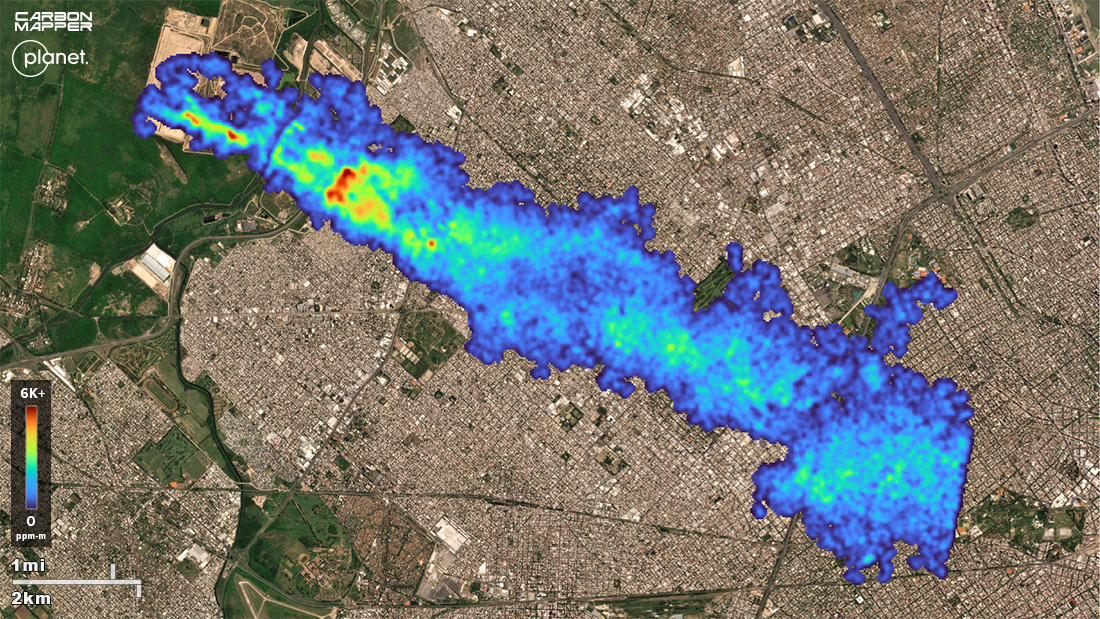
Oil and gas systems, coal mines, landfills, and livestock are the major human-made sources. Scientists who study methane report that a small number of methane sources account for the vast majority of total methane emissions in the atmosphere. These super-emitters can be spotted by satellites and other remote sensing equipment. To this end, RMI is participating in Carbon Mapper, a new public-private-non-profit consortium that is hunting for large methane plumes using aircraft and eventually new satellites. One-half of the leaks they’re finding are considered fixable.
RMI is also tracking methane from global oil and gas operations for the Climate TRACE coalition, which will launch in mid-September. We’re finding wide-ranging methane intensities from different oil and gas assets worldwide that can be tallied up at a country level. However, many national inventories currently undercount methane. There’s significant work to be done. If we can’t measure methane, we can’t manage it.
Why is unbridled methane leakage a major concern?
Methane is a risk to public health. Large methane leaks—like the tons of methane recently escaped from China’s Shanxi Province—typically contain toxic pollutants, carcinogens, and poisonous gases like toluene, benzene, and hydrogen sulfide. These leaks can be deadly to those in the immediate vicinity, which is often where disadvantaged people reside. Even when methane is released in smaller continuous volumes, it reacts to form sickening smog that shortens lives in affected regions.
Public safety is also an ongoing concern, as recently evidenced by an underwater inferno that erupted when a gas pipeline leak ignited offshore in Mexico. And, half way around the world, another gas-propelled fireball shook the Caspian Sea where Azerbaijan has extensive offshore oil and gas developments. Leaking gas is highly explosive. Workers, residents, and property are at stake whenever accidents occur.
Unfortunately, leaks happen all too frequently. Analysts estimate over 600,000 methane leaks a year from US pipelines alone. The methane leak tally is likely in the hundreds of millions when considering the sheer volume of equipment in the United States and abroad.
And the overriding risk from all these methane leaks is accelerated climate change. As the climate dangerously warms, super pollutants like methane, which is much more powerful at warming the planet than CO2, must be avoided. If CO2 is envisioned as a single blanket wrapped around Earth, methane has the warming power of about 100 blankets over its 12-year lifetime before it is converted to smog and eventually carbon dioxide.
Until policy and markets factor methane into government rules and financial transactions, it will continue to leak. This is where the MiQ voluntary standard and certificate system figure in. By grading oil and gas based on their methane intensity, company practices, and monitoring methods, we are able to create a differentiated market for low-methane gas. Converting this into a mandatory methane standard is the ultimate goal.
RMI’s Climate Intelligence Program mission is laser-focused on decarbonizing energy supply chains and activating markets for low- and zero-carbon products. By making emissions transparent, analyzing metadata to attribute emissions, and developing standards we can reshape oil and gas markets for a 1.5-degree future. Taken together, visibility, attribution, and market activation hold the keys to getting control of methane in this decisive decade.
Authors

Deborah Gordon
Senior PrincipalRelated Insights
The Opportunity for Heat Pumps to Put Downward Pressure on Electricity Rates
Gas Utility Depreciation: Recommendations for an Uncertain Future
Help build the clean energy future. Donate today.
Independent research. Real-world solutions. Supported by donors.
RMI can pursue the highest-impact climate and energy solutions because we’re supported by people who believe change is possible. Every gift helps advance the work needed to make clean energy the default choice worldwide.
For other ways to give to RMI, including checks or gifts of stock, please visit Other Ways to Give.
