

Learn how we are working to transform how we use and produce energy.
Taking the Reinventing Fire Path (Video)
Why we share this work for free
RMI is an independent nonprofit working to accelerate the clean energy transition. We publish research like this to inform decision-makers and drive real-world impact.
Our work is supported by philanthropy as well as partnerships, including fee-for-service engagements. This support makes it possible for us to share our independent insights for free.
If you find this work valuable, you can support it anytime.
Get more insights like this
Stay up to date with the latest research, analysis, and tools from RMI by opting in to receive occasional emails below. You’ll get new reports, event invitations, and practical insights to help us all accelerate the clean energy transition.
Loading form...
Your download should start automatically. If it doesn’t, click the download button below.
This work is made possible by philanthropy
RMI is a nonprofit supported by donors and partners. Philanthropy enables us to produce independent research and make resources like this freely available.
If you find this report valuable, please consider supporting our work. You can also explore how we partner with organizations to drive impact.
Jump to Section
Business and policy leaders came together last week at the Aspen Environment Forum for a vibrant exchange of ideas on a variety of topics from energy to food related to how Earth can sustain “our expanding human needs.”
RMI Chairman and Chief Scientist Amory Lovins sat down for a conversation with Aspen Institute Senior Fellow in Energy and Environment Jack Riggs to discuss Reinventing Fire.
In 1976, Lovins’ seminal work Energy Strategy: the Road Not Taken, outlined two energy choices then facing the nation. While society has traveled far since then, it continues to face enormous domestic energy challenges. And, according to Riggs, seem to be politically gridlocked against any near-term solutions.
The U.S. does not have to wait for a comprehensive energy policy in Washington to move the country toward a more environmentally benign, secure and economic future, Lovins said.
“We can get around political gridlock by focusing on business,” Lovins said to loud applause. “No acts of Congress are required to transition to a future free of coal, oil and nuclear by 2050, and a one-third reduction in natural gas.”
Watch the Video of Amory Speaking at the Aspen Environment Forum
Reinventing Fire, RMI’s strategic initiative (and forthcoming book) that outlines potential and credible pathways for the U.S. transition from coal and oil to efficiency and renewables, harnesses the power of business to realize an untapped $5 trillion economic opportunity.
That is reason alone to enough to shift to a new energy economy and build a more secure energy system than the one that powers our society today.
Riggs and Lovins discussed the possibilities that can be unlocked in each of America’s most energy intensive sectors: transportation, buildings, industry and electricity:
- Changing the architecture of the grid from centralized power plants to a set of secure and reliable microgrids. As Lovins pointed out, a majority of U.S. military bases are already doing this at a huge economic advantage.
- Marrying IT and transportation to facilitate car sharing, ride sharing and traffic flows to reduce driving by 46 percent to 84 percent, lessening the economic and environmental traffic burden.
- Using electricity more efficiency in buildings and industry through present day technologies and integrated design strategies to double efficiency in industry and quadruple the efficiency of buildings.
It’s competitive business strategies, not just new designs or pie-in-the sky technologies that makes the Reinventing Fire vision plausible, Lovins said. However, there are major barriers to overcome. Each sector requires creative solutions to overcome multiple split or perverse incentives.
Oil companies and utilities, for example, will need to shift the most and overcome rules and cultures embedded in the current energy paradigm. But, Lovins pointed out, as oil becomes more volatile, demand increases and supplies dwindle the business case for “small, agile and renewable” becomes much more attractive than “finite, big and dirty.”
The low hanging fruit—the efficient use of energy—has a very strong business case and large profit incentive,” Lovins said. “But, unlocking the potential of today’s efficiency technologies gets difficult because it has to be taken to scale quickly.”
Where the rubber meets the road is in implementation, and that’s where business shines. Smart policies at the federal, state and local level will speed the transition.
Authors

Kelly Vaughn
Related Insights

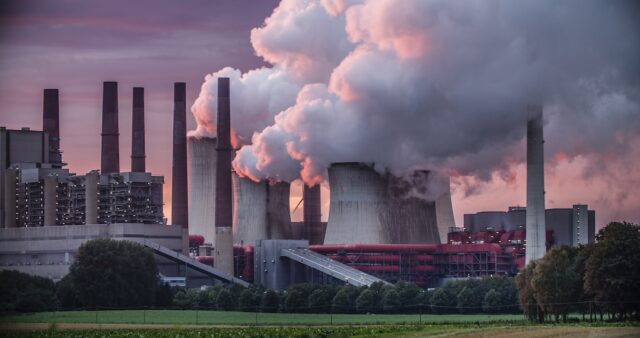
Reality Check: For Power Plants, Changing the Fuel Doesn’t Fix the Economics


Beyond the First Frontier: What Comes Next for Carbon Removal
Help build the clean energy future. Donate today.
Independent research. Real-world solutions. Supported by donors.
RMI can pursue the highest-impact climate and energy solutions because we’re supported by people who believe change is possible. Every gift helps advance the work needed to make clean energy the default choice worldwide.
For other ways to give to RMI, including checks or gifts of stock, please visit Other Ways to Give.