

Learn how we are working to transform how we use and produce energy.
Toward a Shared Zero-Carbon Energy Future
A Global Analysis of Rural Energy Cooperatives
Why we share this work for free
RMI is an independent nonprofit working to accelerate the clean energy transition. We publish research like this to inform decision-makers and drive real-world impact.
Our work is supported by philanthropy as well as partnerships, including fee-for-service engagements. This support makes it possible for us to share our independent insights for free.
If you find this work valuable, you can support it anytime.
Get more insights like this
Stay up to date with the latest research, analysis, and tools from RMI by opting in to receive occasional emails below. You’ll get new reports, event invitations, and practical insights to help us all accelerate the clean energy transition.
Loading form...
Your download should start automatically. If it doesn’t, click the download button below.
This work is made possible by philanthropy
RMI is a nonprofit supported by donors and partners. Philanthropy enables us to produce independent research and make resources like this freely available.
If you find this report valuable, please consider supporting our work. You can also explore how we partner with organizations to drive impact.
Jump to Section
Rural areas, with their abundant renewable energy resources, are experiencing an unprecedented energy transition opportunity, driven by the narrowing window to tackle climate change and the global consensus on the steadfast pursuit of renewable energy development. Rural energy transition shows great potential to address long-standing challenges of energy access and affordability for rural communities and small-scale farmers, and to reduce the energy-related health risks for the 2.4 billion people who still rely on traditional fuels for cooking and heating.
However, throughout the energy transition process, the interplay of technical, financial, and organizational barriers has historically marginalized rural communities, limiting their participation in decision-making and benefit-sharing. Over time, this lack of local involvement can weaken the sustainability of energy projects and exacerbate social and economic disparities. Therefore, an equitable rural energy transition is crucial for expanding access to reliable, clean, and affordable energy, driving local economic growth, and building more resilient and prosperous rural communities.
Community energy models, exemplified by rural energy cooperatives, are playing a key role in accelerating the clean energy transition across many countries. In anticipation of the upcoming 2025 International Year of Cooperatives, this report explores the role of cooperatives as a collaborative model and an emerging player in the energy market. Based on global case studies, it provides an overview of rural energy cooperatives, illustrating various financing, profit, and benefit-distribution models, assessing their environmental, economic, and social impacts, and summarizing current trends and challenges facing their development.
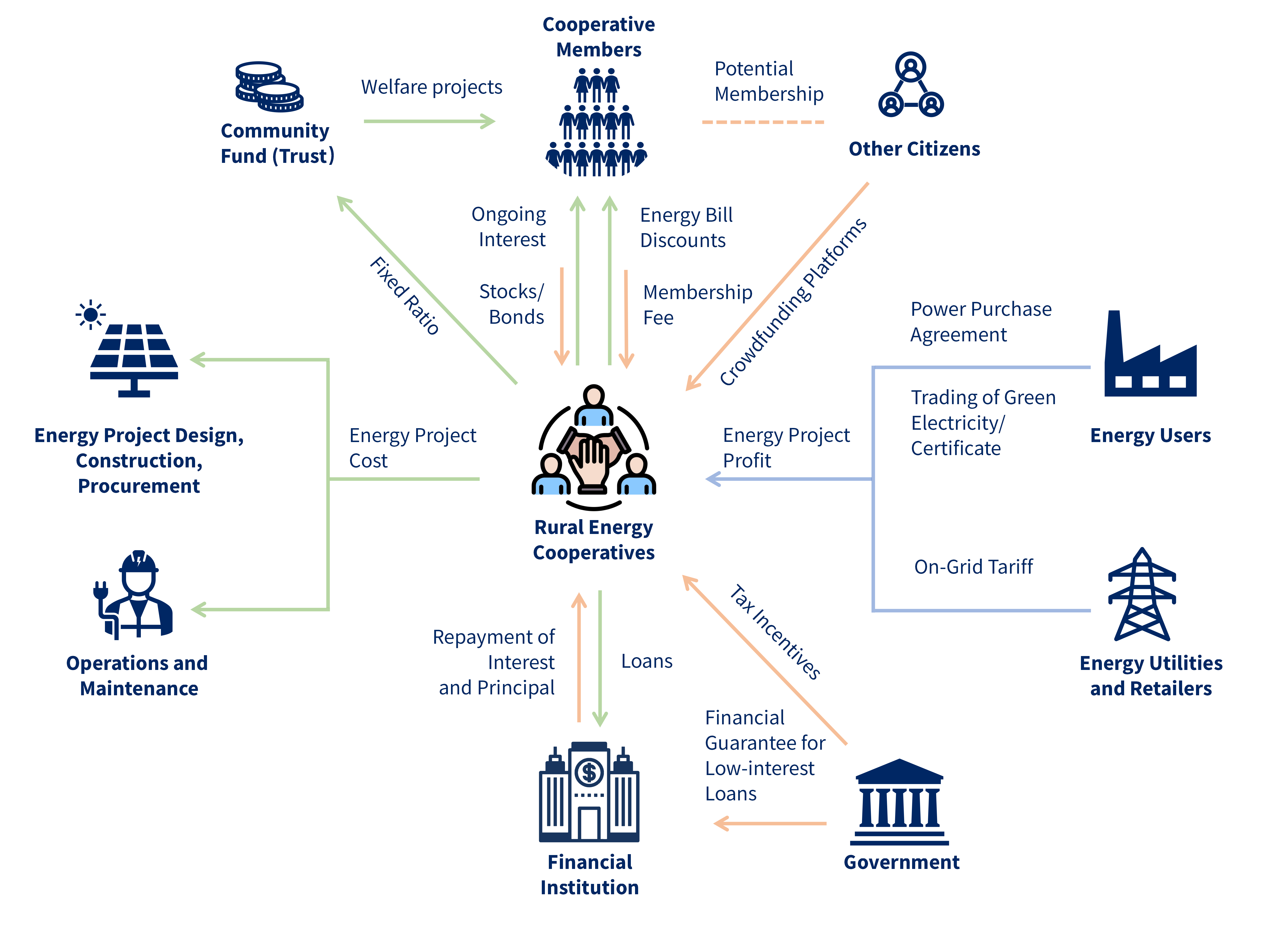
This report also highlights the potential of rural energy cooperatives in driving energy transition and innovation. By tapping into local resources, cooperatives enable energy production and consumption by local communities, reducing reliance on external supplies and ensuring equitable benefit-sharing. The collaborative model and people-centered approach can expedite the transformation from a centralized energy system to one that is decentralized, participatory, and low carbon.
Additionally, the report discusses how we can innovate institutional frameworks and leverage multiple mechanisms to accelerate the rural energy transition. Ultimately, we hope this analysis offers a fresh perspective for countries and regions rapidly deploying distributed renewable energy, particularly China and other developing countries, focusing on encouraging local engagement, boosting local economies, enhancing well-being, and driving rural revitalization.



Related Insights

Steel’s Transformation: China and Australia’s next horizon of clean steel

Efficiency Reimagined: The next phase of China’s industrial energy transition

Help build the clean energy future. Donate today.
Independent research. Real-world solutions. Supported by donors.
RMI can pursue the highest-impact climate and energy solutions because we’re supported by people who believe change is possible. Every gift helps advance the work needed to make clean energy the default choice worldwide.
For other ways to give to RMI, including checks or gifts of stock, please visit Other Ways to Give.