

Learn how we are working to transform how we use and produce energy.
Reimagining Resource Planning
Why we share this work for free
RMI is an independent nonprofit working to accelerate the clean energy transition. We publish research like this to inform decision-makers and drive real-world impact.
Our work is supported by philanthropy as well as partnerships, including fee-for-service engagements. This support makes it possible for us to share our independent insights for free.
If you find this work valuable, you can support it anytime.
Get more insights like this
Stay up to date with the latest research, analysis, and tools from RMI by opting in to receive occasional emails below. You’ll get new reports, event invitations, and practical insights to help us all accelerate the clean energy transition.
Loading form...
Your download should start automatically. If it doesn’t, click the download button below.
This work is made possible by philanthropy
RMI is a nonprofit supported by donors and partners. Philanthropy enables us to produce independent research and make resources like this freely available.
If you find this report valuable, please consider supporting our work. You can also explore how we partner with organizations to drive impact.
Jump to Section
Planning the electricity system has never been more important — or more complex.
Utilities are simultaneously facing unprecedented weather events, retiring aging resources, and considering a wider array of resource and grid improvement options to ensure electricity is reliable and affordable. On top of these factors, utilities and regulators are implementing changes to existing processes to achieve new policy objectives, such as prioritizing energy equity and reducing emissions.
Resource planning is a crucial opportunity for utilities, regulators, and stakeholders to shape the future electricity system. Integrated resource plans (IRPs) typically indicate the direction of the generation mix and help utilities and regulators define strategies to respond to future opportunities and risks.
In this report, we identify three core qualities IRPs must maintain to help utilities and regulators evaluate resource decisions even in the context of significant change: they must be trusted, comprehensive, and aligned.
To accomplish this, utilities and regulators can look to approaches that have already been tested in IRPs across the country, explored with detailed examples in the report.
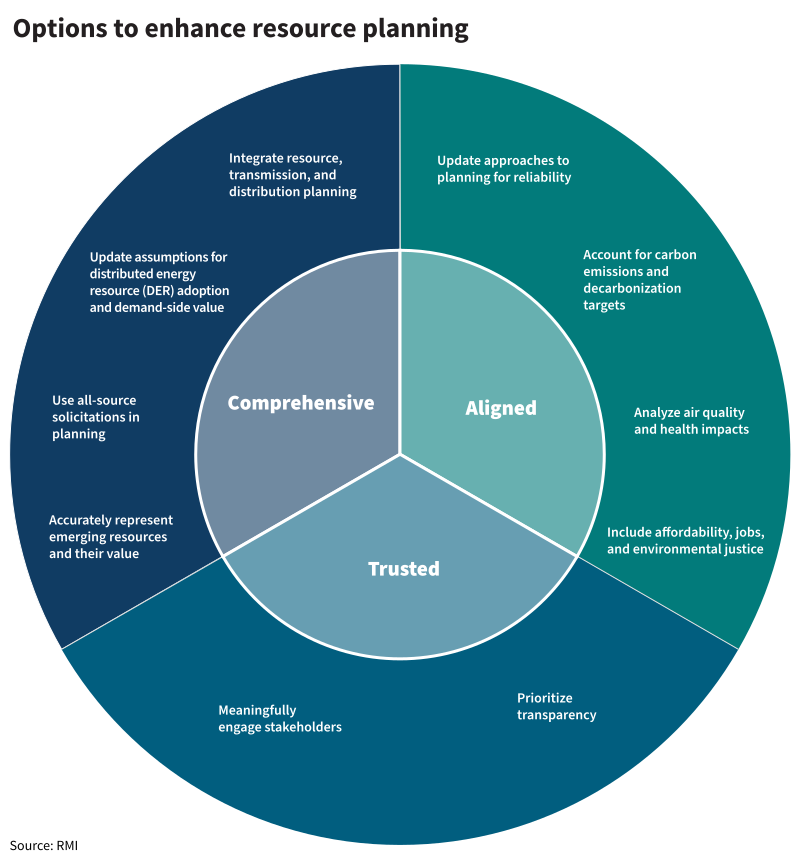
Before making piecemeal changes, regulators and state policymakers have an opportunity to revisit the fundamentals of resource planning. By intentionally and proactively considering the purpose, scope, roles, and tools of planning, utilities and regulators can prioritize the most important changes and even identify new enhancements. In the report, we explore each of the fundamentals in more detail:
- Purpose: What are the goals for the electricity system and how should plans be structured and evaluated with respect to those goals?
- Scope: What should be included in IRPs, and what should be included in separate, yet coordinated, processes?
- Roles: Who should be involved in developing IRPs?
- Tools: How can we use analytical tools and engagement processes to best support the outcomes of planning?
Ultimately, we hope that utilities and regulators will use this opportunity — when their resource planning processes are being stretched and challenged — to consider how resource planning may need to be adapted, refined, and even reimagined.



Related Insights



Help build the clean energy future. Donate today.
Independent research. Real-world solutions. Supported by donors.
RMI can pursue the highest-impact climate and energy solutions because we’re supported by people who believe change is possible. Every gift helps advance the work needed to make clean energy the default choice worldwide.
For other ways to give to RMI, including checks or gifts of stock, please visit Other Ways to Give.
