

Learn how we are working to transform how we use and produce energy.
Why we share this work for free
RMI is an independent nonprofit working to accelerate the clean energy transition. We publish research like this to inform decision-makers and drive real-world impact.
Our work is supported by philanthropy as well as partnerships, including fee-for-service engagements. This support makes it possible for us to share our independent insights for free.
If you find this work valuable, you can support it anytime.
Get more insights like this
Stay up to date with the latest research, analysis, and tools from RMI by opting in to receive occasional emails below. You’ll get new reports, event invitations, and practical insights to help us all accelerate the clean energy transition.
Loading form...
Your download should start automatically. If it doesn’t, click the download button below.
This work is made possible by philanthropy
RMI is a nonprofit supported by donors and partners. Philanthropy enables us to produce independent research and make resources like this freely available.
If you find this report valuable, please consider supporting our work. You can also explore how we partner with organizations to drive impact.
Jump to Section
India is experiencing rapid urbanization. Urban freight transport is a crucial enabler of economic activity in cities, ensuring the flow of goods for citizens and businesses. However, urban freight systems also generate negative consequences. Freight vehicles are disproportionate contributors of carbon dioxide, particulate matter, and nitrogen oxide emissions. They contribute to road fatalities and cause congestion issues in cities. Furthermore, urban freight is increasingly becoming inefficient with high final-mile costs in India’s e-commerce supply chains.
With India expected to add 124 million people to its cities in this decade, the demand for urban freight is expected to increase by 140 percent. There is an urgent need to deliver improvements in the performance of urban freight systems so that cities can enhance their economic competitiveness and reduce logistics-related costs while improving air quality, creating jobs, and helping achieve climate goals.
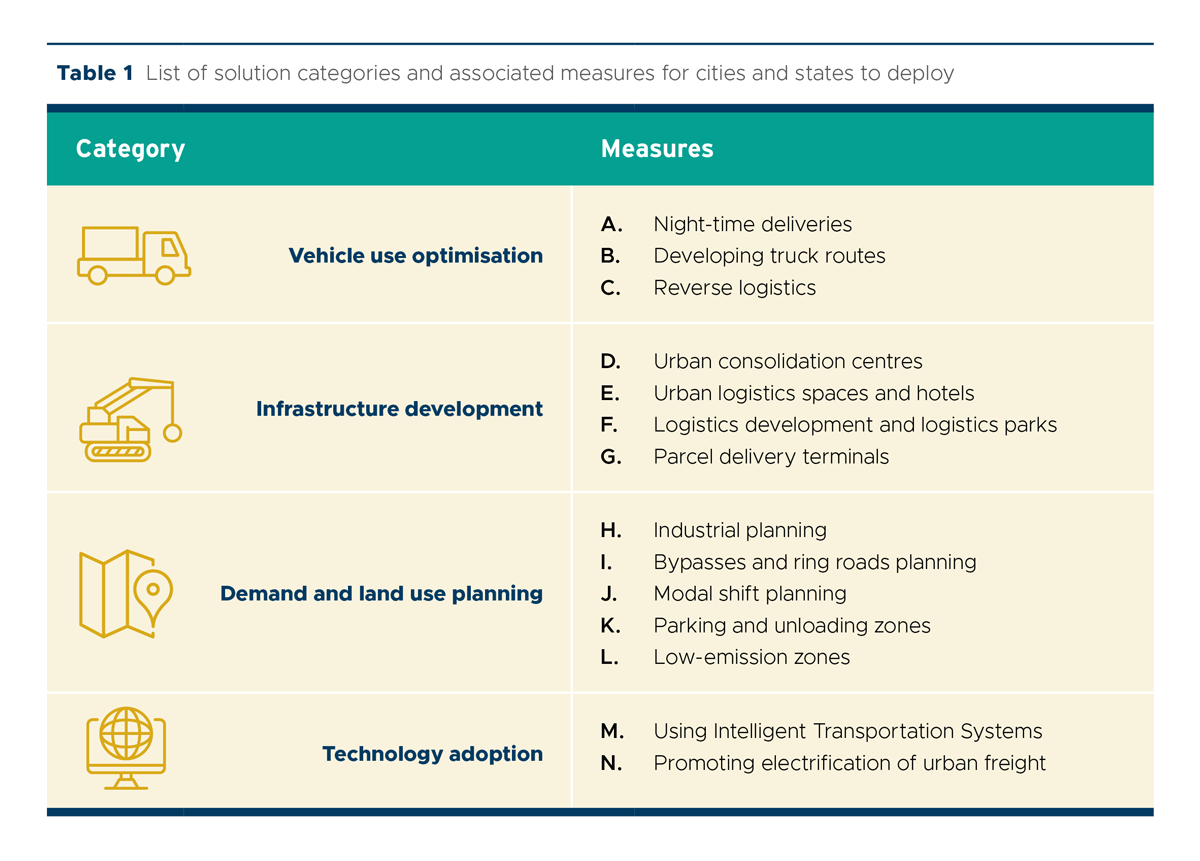
Several cities in India and around the world have implemented measures that can address different urban freight-related issues. This Handbook details a few such measures as a knowledge resource and guide for city practitioners.
Enacted effectively, these measures can help reduce logistics costs at the national level and improve India’s ranking in the Logistics Performance Index (LPI).


Related Insights

India’s Used EV Battery Market Needs Trust. Battery Aadhaar Can Help.
Help build the clean energy future. Donate today.
Independent research. Real-world solutions. Supported by donors.
RMI can pursue the highest-impact climate and energy solutions because we’re supported by people who believe change is possible. Every gift helps advance the work needed to make clean energy the default choice worldwide.
For other ways to give to RMI, including checks or gifts of stock, please visit Other Ways to Give.
