

Learn how we are working to transform how we use and produce energy.
DELIVER ELECTRIC DELHI
PILOT ON ELECTRIFICATION OF FINAL-MILE DELIVERY VEHICLES IN DELHI
Why we share this work for free
RMI is an independent nonprofit working to accelerate the clean energy transition. We publish research like this to inform decision-makers and drive real-world impact.
Our work is supported by philanthropy as well as partnerships, including fee-for-service engagements. This support makes it possible for us to share our independent insights for free.
If you find this work valuable, you can support it anytime.
Get more insights like this
Stay up to date with the latest research, analysis, and tools from RMI by opting in to receive occasional emails below. You’ll get new reports, event invitations, and practical insights to help us all accelerate the clean energy transition.
Loading form...
Your download should start automatically. If it doesn’t, click the download button below.
This work is made possible by philanthropy
RMI is a nonprofit supported by donors and partners. Philanthropy enables us to produce independent research and make resources like this freely available.
If you find this report valuable, please consider supporting our work. You can also explore how we partner with organizations to drive impact.
Jump to Section
Delhi is one of the fastest-growing cities in the world. With the increase in population, the city’s demand for goods consumption is expected to increase from 68,000 tons/day in 2015 to 100,000 tons/day in 2025, and to 130,000 tons/day in 2035. Higher demand for goods, in turn, has led to higher vehicular movement as goods are delivered to stores and customers. While final-mile delivery is a fundamental part of an urban transportation system, it is a source of air pollution, carbon emissions, and high costs to customers.
Electric vehicles (EVs) present an opportunity to simultaneously address those three challenges. EVs have no tailpipe emissions, emit 35 percent less CO2 compared with internal combustion engine vehicles, and present a strong opportunity to reduce operational costs in the medium term. To enhance the value proposition of EVs, the Delhi government has announced an EV policy that outlines incentives for the sale and use of EVs, with a special focus on urban freight vehicles.
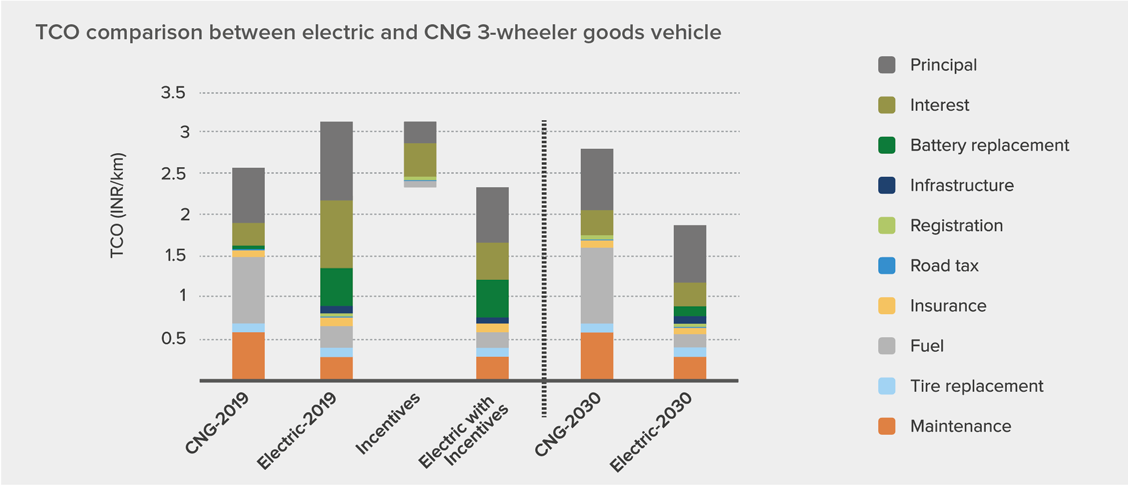
“Deliver Electric Delhi” is a pilot on the electrification of final mile delivery vehicles in Delhi. The pilot is hosted by Rocky Mountain Institute, RMI India, and Dialogue and Development Commission of Delhi in collaboration with 36 private sector organizations. The pilot will deploy 1,000 electric delivery vehicles and the associated charging infrastructure in Delhi. RMI will also rigorously document the performance and value proposition of electric vehicles to create a replicable and scalable roadmap for full electrification of urban deliveries in Indian cities. The purpose of the roadmap is to improve policymaking for the public sector and decision-making about EVs for the private sector.
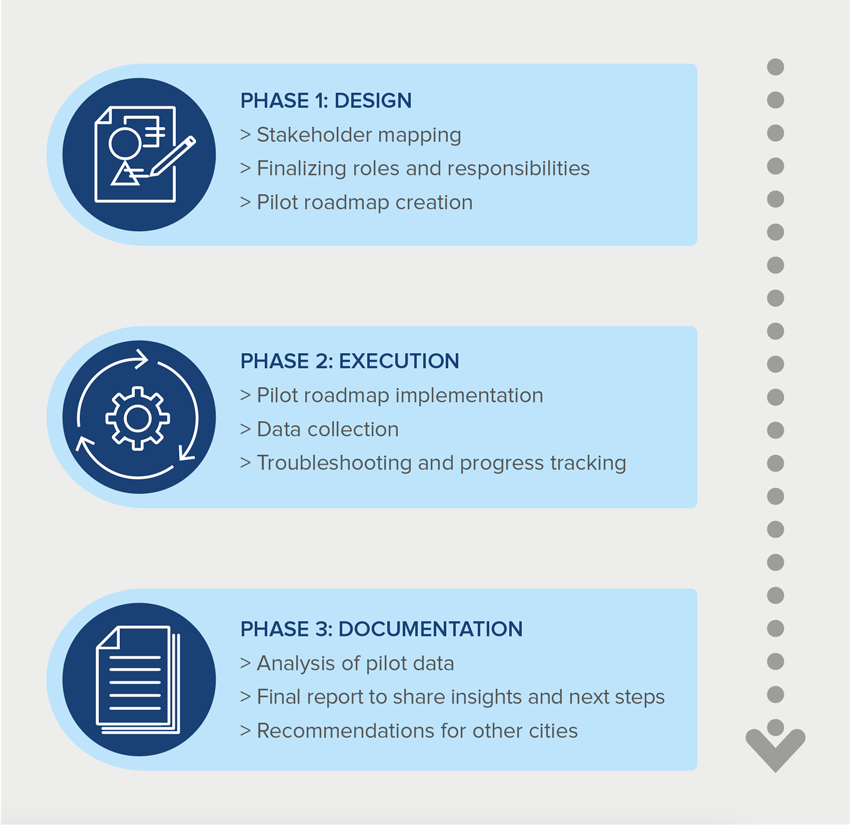
The report provides an overview of the pilot and covers the following topics:
- Opportunity and need for electrifying final-mile delivery vehicles in Delhi
- “Deliver Electric Delhi” pilot specifications
- The process for pilot implementation through a phased approach
- Conclusions and path forward
Authors

Dialogue
Development Commission of Delhi

RMI India
Clay Stranger
Dialogue and Development Commission of Delhi
Related Insights

India’s Used EV Battery Market Needs Trust. Battery Aadhaar Can Help.

Help build the clean energy future. Donate today.
Independent research. Real-world solutions. Supported by donors.
RMI can pursue the highest-impact climate and energy solutions because we’re supported by people who believe change is possible. Every gift helps advance the work needed to make clean energy the default choice worldwide.
For other ways to give to RMI, including checks or gifts of stock, please visit Other Ways to Give.
