

Learn how we are working to transform how we use and produce energy.
Why we share this work for free
RMI is an independent nonprofit working to accelerate the clean energy transition. We publish research like this to inform decision-makers and drive real-world impact.
Our work is supported by philanthropy as well as partnerships, including fee-for-service engagements. This support makes it possible for us to share our independent insights for free.
If you find this work valuable, you can support it anytime.
Get more insights like this
Stay up to date with the latest research, analysis, and tools from RMI by opting in to receive occasional emails below. You’ll get new reports, event invitations, and practical insights to help us all accelerate the clean energy transition.
Loading form...
Your download should start automatically. If it doesn’t, click the download button below.
This work is made possible by philanthropy
RMI is a nonprofit supported by donors and partners. Philanthropy enables us to produce independent research and make resources like this freely available.
If you find this report valuable, please consider supporting our work. You can also explore how we partner with organizations to drive impact.
Jump to Section
India is undergoing a mobility transition. This transition is most active in cities where rising demand for mobility services is prompting policymakers and business leaders to reimagine how to meet this demand. Mobility solutions are leapfrogging conventional approaches and building on opportunities that have been created by steeply falling technology costs and the emergence of innovative business models.
Cities in India are stepping up to build, pilot, and scale urban mobility solutions that are clean, shared, and people-centric. Delhi has a significant role to play in this transition. Most recently, the Delhi government has developed a draft electric vehicle (EV) policy to accelerate EV adoption in Delhi and complement its efforts to address vehicular pollution.
To translate policy action into progress on the ground, the Delhi government, through the Dialogue and Development Commission of Delhi (DDC-D), and Rocky Mountain Institute (RMI) partnered to host the Urban Mobility Lab—a platform that supports Indian cities in identifying, implementing, and scaling pilot projects and solutions that transform how people and goods move. The Urban Mobility Lab is led by RMI and was announced by NITI Aayog in November 2017.
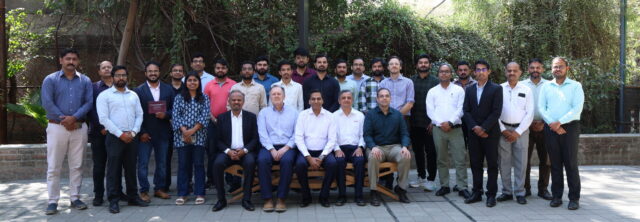
As part of the Urban Mobility Lab initiative in Delhi, DDC-D and RMI hosted a Solutions Workshop on 26 and 27 June 2019 to work collaboratively with government and industry leaders to design mobility solutions for implementation. This report is a reflection of the discussions and work that took place at the workshop. It aims to share experiences, key insights, and lessons learned to support policymaking and the scaling of innovative mobility solutions in Delhi and other Indian cities.
Although the workshop focused on Delhi, public- and private-sector actors across India’s mobility system can take inspiration from these concepts and build on them to accelerate India’s transition to a clean, shared, and people-centric mobility future.


Related Insights

India’s Used EV Battery Market Needs Trust. Battery Aadhaar Can Help.
Help build the clean energy future. Donate today.
Independent research. Real-world solutions. Supported by donors.
RMI can pursue the highest-impact climate and energy solutions because we’re supported by people who believe change is possible. Every gift helps advance the work needed to make clean energy the default choice worldwide.
For other ways to give to RMI, including checks or gifts of stock, please visit Other Ways to Give.
