

Learn how we are working to transform how we use and produce energy.
Driving A Shared, Electric, Autonomous Mobility Future
What China, India, and the United States Can Learn From Each Other
Why we share this work for free
RMI is an independent nonprofit working to accelerate the clean energy transition. We publish research like this to inform decision-makers and drive real-world impact.
Our work is supported by philanthropy as well as partnerships, including fee-for-service engagements. This support makes it possible for us to share our independent insights for free.
If you find this work valuable, you can support it anytime.
Get more insights like this
Stay up to date with the latest research, analysis, and tools from RMI by opting in to receive occasional emails below. You’ll get new reports, event invitations, and practical insights to help us all accelerate the clean energy transition.
Loading form...
Your download should start automatically. If it doesn’t, click the download button below.
This work is made possible by philanthropy
RMI is a nonprofit supported by donors and partners. Philanthropy enables us to produce independent research and make resources like this freely available.
If you find this report valuable, please consider supporting our work. You can also explore how we partner with organizations to drive impact.
Jump to Section
In this report, we evaluate how mobility ecosystems are evolving in three fast-changing markets: China, India, and the United States. Specifically, we evaluate the role of policy, economics, infrastructure, and behavioral norms in shaping the mobility transformations in these three countries. The result of this multiregional and multivariate evaluation provides insights into how society can be proactive in shaping the future of mobility.
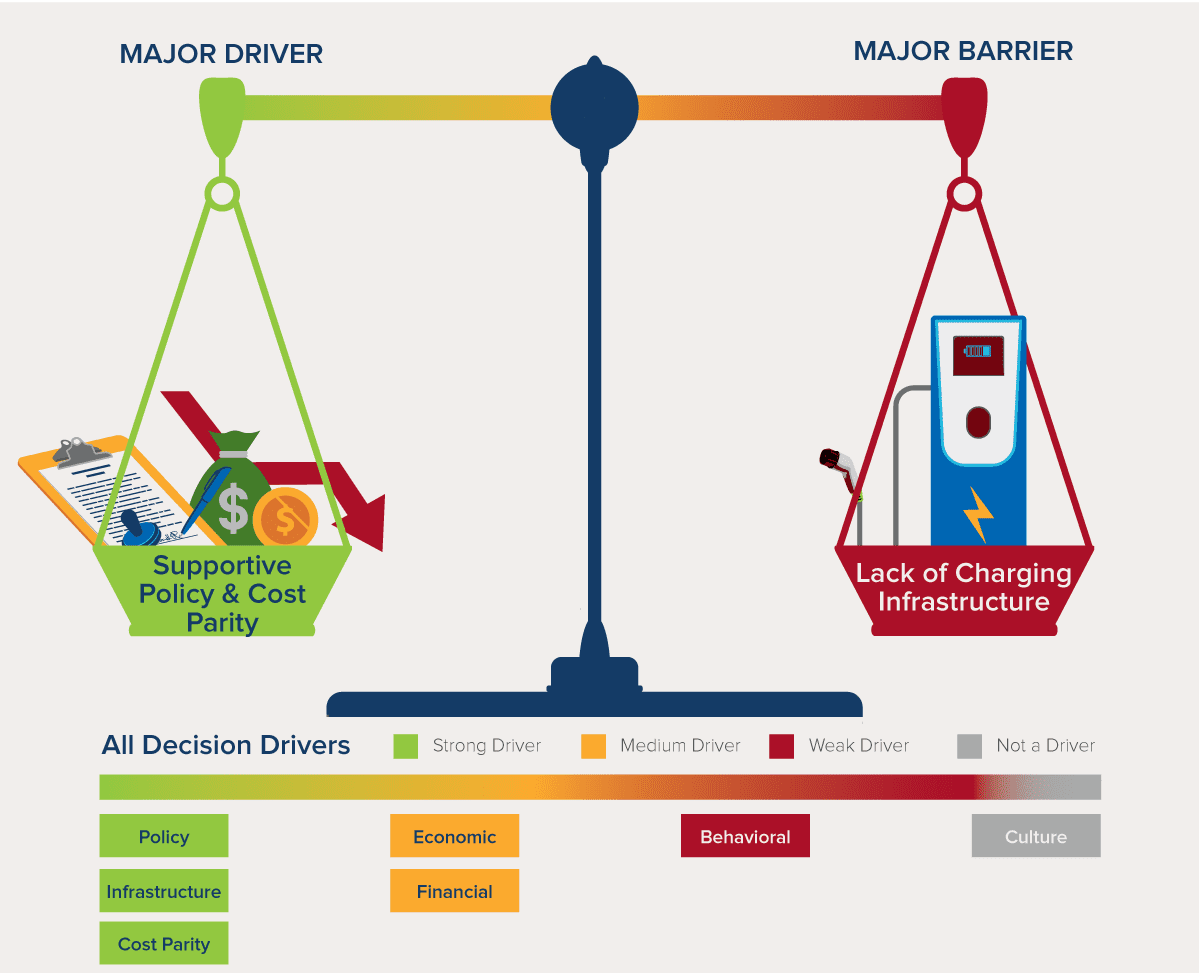
Vehicle electrification addresses pollution issues and can enable a more flexible electric grid that integrates renewables. Electric vehicles (EVs) have benefited from significant government intervention in the form of supportive policy, fiscal incentives, and infrastructure investment, which has accelerated the timeline of price parity with incumbent vehicle technology.
We share the following insights and recommendations for accelerating EV adoption across the three countries:
- Falling battery costs will bring EVs to price parity with combustion vehicles in the next 5–10 years across all three countries. While prices will naturally fall as scale and learning continues, supportive policies are needed to accelerate this transition and help overcome behavioral norms that bias toward gas vehicles and the advantages of already-built fueling infrastructure.
- A set of coordinated but distinct policies targeting both automakers and consumers with a healthy balance of rewards and punishments has proven to be most effective in China. However, each country has different capacities and appetites for top-down mandates versus subsidies and incentive packages.
- Focusing finite EV subsidies on high-utilization vehicles—as has been done in India—allows for the greatest leverage of public funds to increase electric vehicle miles while creating broad public exposure to EVs.
- A coordinated and collaborative approach to charging infrastructure investment and buildout that engages the public and private sectors across both the transportation and electricity sectors is required for quick and efficient deployment of infrastructure at the level required to support rapid EV adoption.
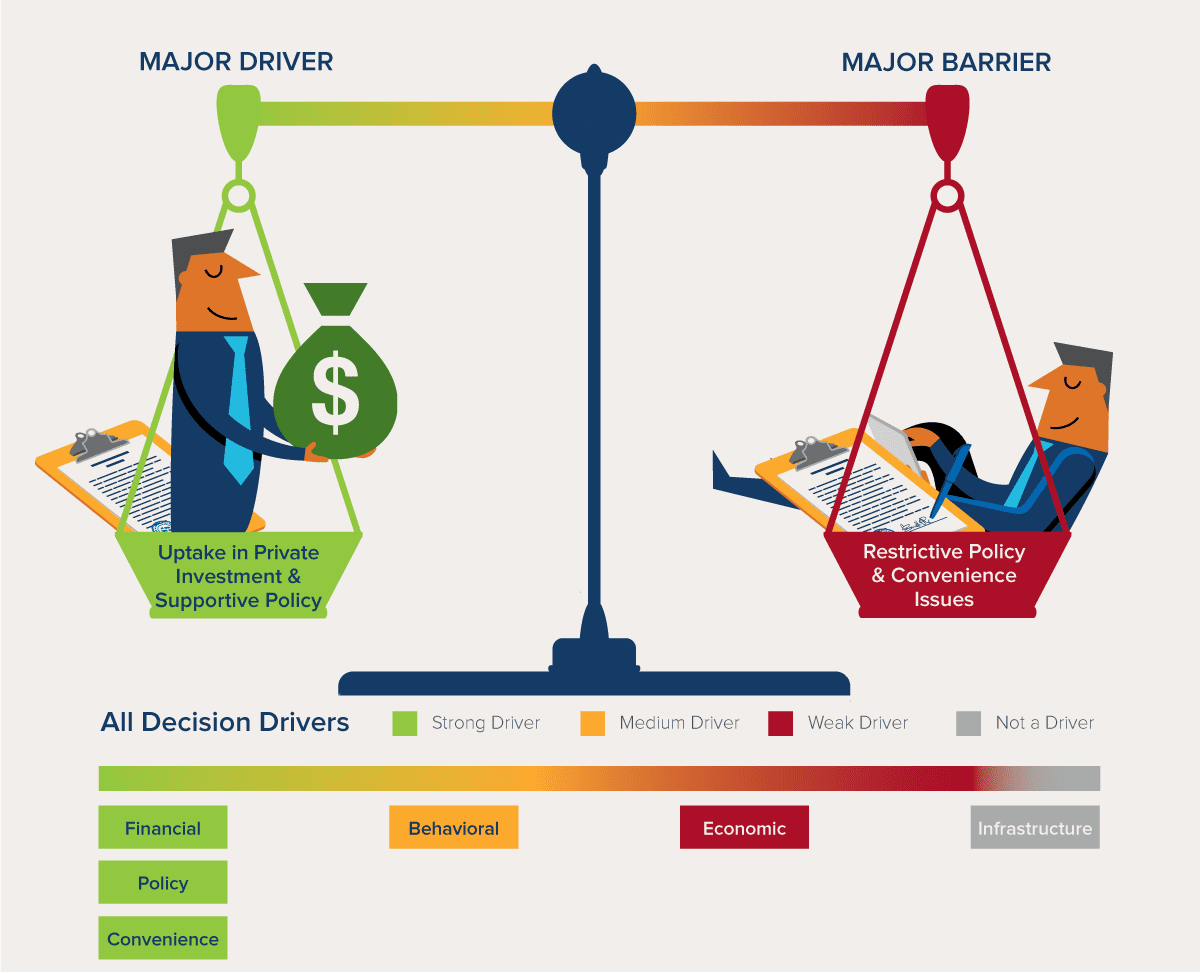
Ride-hailing services such as Ola, Lyft, Uber, and Didi have been growing rapidly in all three countries, particularly in dense urban areas. These mobility services have the potential to reduce congestion, if rides are pooled and integrated with public transit.
Mobility service companies are currently funded by private investors and many aim to implement autonomous vehicle (AV) technology to become profitable. To gain ridership, mobility services must be competitive with other modes of transit in terms of cost and convenience. We share the following insights and recommendations for accelerating the adoption of shared mobility services across the three countries:
- Encouraging pooling and electrification of ridehailing through tiered taxes and incentives can minimize the impact on congestion and air quality and can help overcome the strong behavioral preferences for single-occupancy rides.
- Ridehailing services will thrive in dense, urban environments where they are competitive with the price and convenience of personal vehicles and can be integrated with public transit (buses, rail, and subways) and nonmotorized transit modes.
- China and India have the potential to leapfrog the American paradigm of car ownership, due to their rapid urbanization and less entrenched car culture.
- Shared mobility must be well integrated with existing public transit infrastructure and should be part of future transit planning processes. Increased use of public–private partnerships should be encouraged to ensure the efficient use of public resources and private investment.
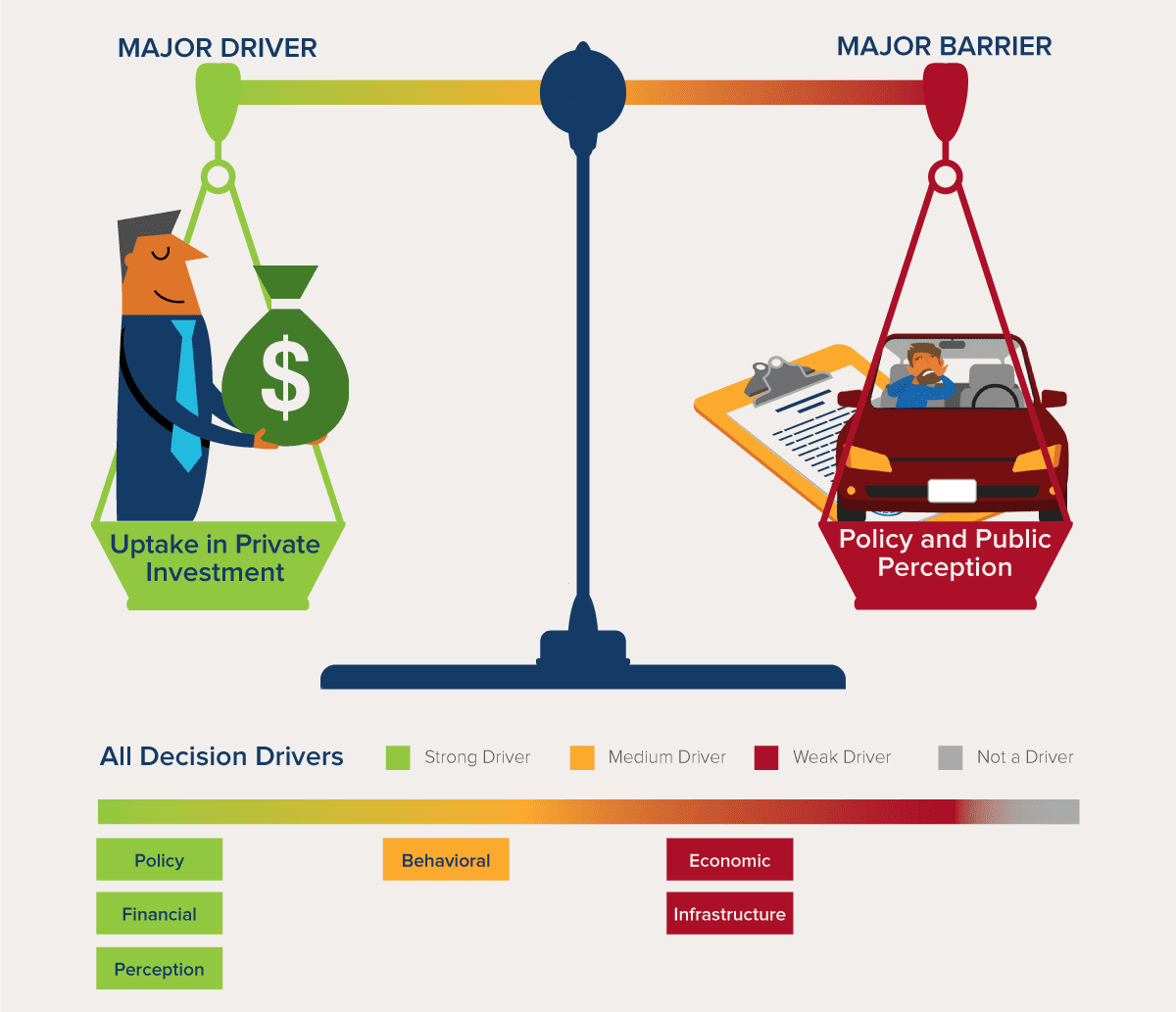
Autonomous vehicle technology has the long-term potential to truly disrupt the current mobility paradigm—but the result of that disruption may not benefit society equally and in fact could result in less equitable access, more congestion, and more pollution. Ensuring that rides in autonomous vehicles are both electrified and pooled can mitigate these congestion and pollution issues and provide reliable, low-cost mobility for a rapidly urbanizing society.
AV development is largely driven by private investment, but highly regulated by governments and scrutinized by the public. We share the following insights and recommendations for accelerating AV adoption across the three countries:
- Establishing uniform, national guidelines around AV testing to provide a clear pathway to production by AV companies will create greater confidence in the market and improve public perception.
- Encouraging electrification and pooling for AVs through tiered taxes will help to avert congestion and air quality issues and avoid potential negative side effects of low-cost AV mobility services.
- Creating liability standards and vehicle monitoring protocols can help avoid fatal accidents and instill public confidence.
- China’s funding and research into AV technology will likely accelerate the pace of AV development globally.
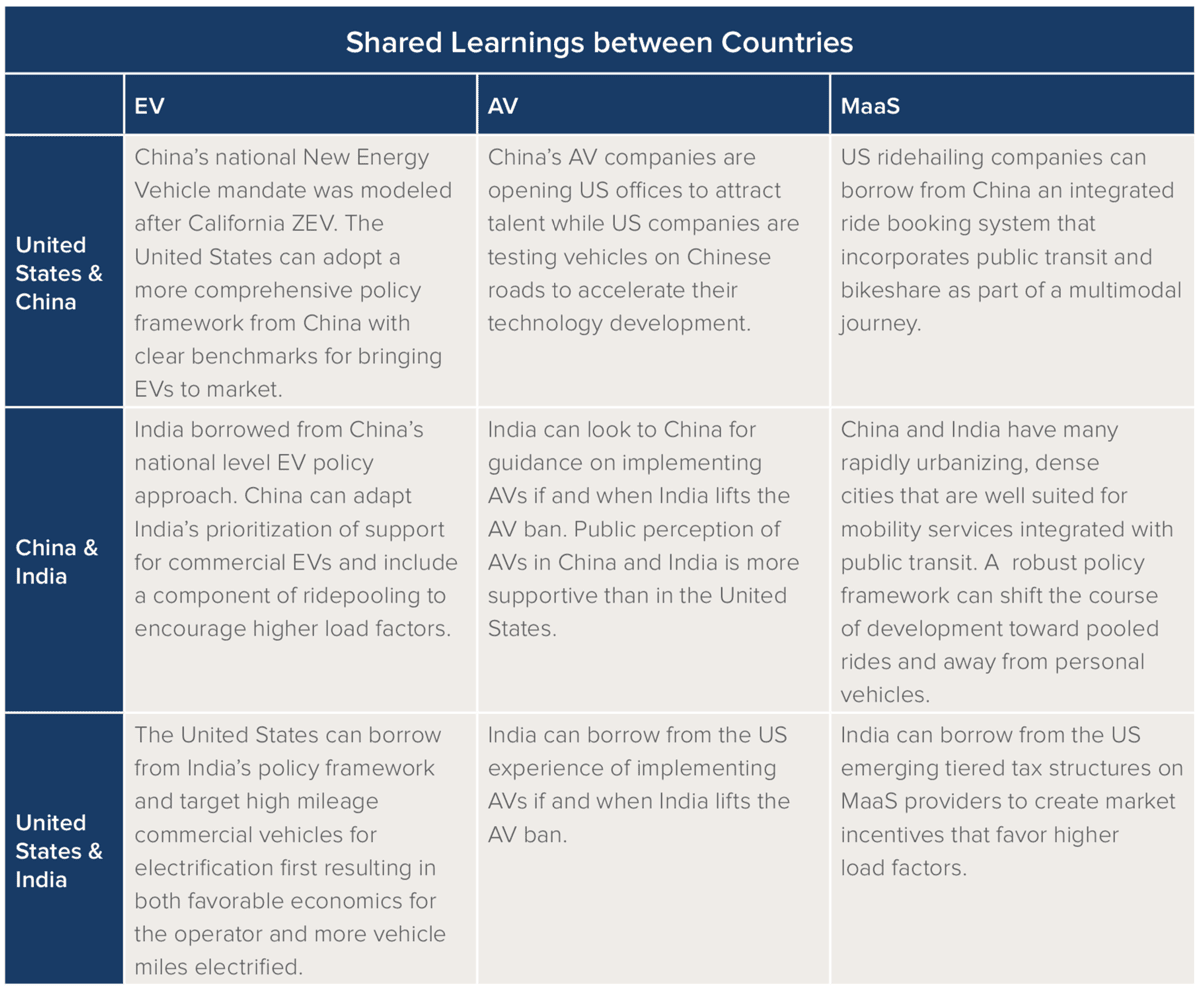
Since China, India, and the United States are at a different stages of development in these emerging technologies, they have the opportunity to share learnings and adapt each other’s frameworks to accelerate the global mobility transition, as summarized in the table above.
China and India have two of the fastest-developing economies in the world and aspire to become global leaders in vehicle manufacturing and intelligent mobility technologies. Understanding how these countries are playing roles in shaping our global mobility future is the first step to ensuring we get the best mobility future possible.
Authors

Garrett Fitzgerald
Richard Li
Related Insights

The Opportunity for Heat Pumps to Put Downward Pressure on Electricity Rates



Gas Utility Depreciation: Recommendations for an Uncertain Future
Help build the clean energy future. Donate today.
Independent research. Real-world solutions. Supported by donors.
RMI can pursue the highest-impact climate and energy solutions because we’re supported by people who believe change is possible. Every gift helps advance the work needed to make clean energy the default choice worldwide.
For other ways to give to RMI, including checks or gifts of stock, please visit Other Ways to Give.