

Learn how we are working to transform how we use and produce energy.
The Non-Wires Solutions Implementation Playbook
A Practical Guide for Regulators, Utilities, and Developers
Why we share this work for free
RMI is an independent nonprofit working to accelerate the clean energy transition. We publish research like this to inform decision-makers and drive real-world impact.
Our work is supported by philanthropy as well as partnerships, including fee-for-service engagements. This support makes it possible for us to share our independent insights for free.
If you find this work valuable, you can support it anytime.
Get more insights like this
Stay up to date with the latest research, analysis, and tools from RMI by opting in to receive occasional emails below. You’ll get new reports, event invitations, and practical insights to help us all accelerate the clean energy transition.
Loading form...
Your download should start automatically. If it doesn’t, click the download button below.
This work is made possible by philanthropy
RMI is a nonprofit supported by donors and partners. Philanthropy enables us to produce independent research and make resources like this freely available.
If you find this report valuable, please consider supporting our work. You can also explore how we partner with organizations to drive impact.
Jump to Section
For the past decade, regulated utilities have spent an average of $55 billion annually upgrading their distribution, transmission, and generation infrastructure to meet customer needs.
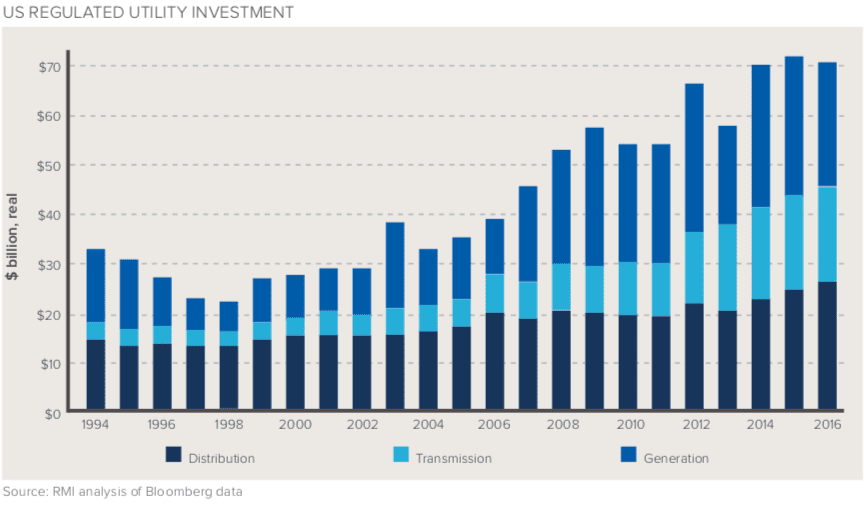
The largest share of this investment has been in distribution infrastructure to maintain and modernize the last-mile networks that deliver energy to homes and businesses.

Electric utilities increasingly can reduce their system infrastructure investments and save customers money by employing non-wires solutions (NWS) —portfolios of distributed energy resources (DERs) like solar photovoltaics, energy storage, energy efficiency, and demand response—to cost-effectively meet growing grid needs, according to The Non-Wires Solutions Implementation Playbook: A Practical Guide for Regulators, Utilities, and Developers report. NWS represent a compelling update to traditional utility investment practices, helping keep customer electricity bills stable while enabling a lower-carbon electricity grid.
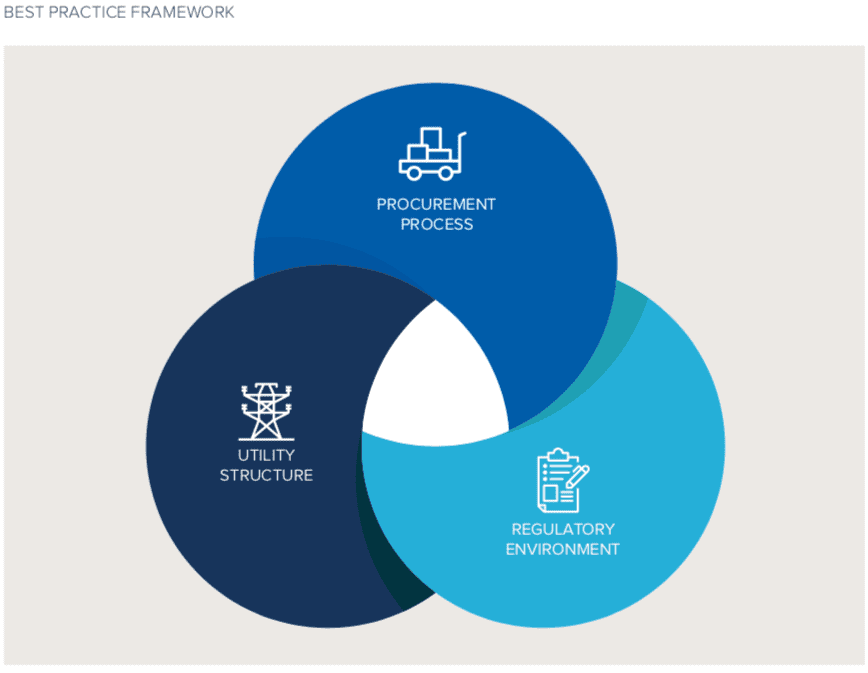
Using the Playbook, grid planners can improve on this approach to infrastructure investment by more systematically evaluating opportunities to deploy modular—and often lower-cost—NWS portfolios. Doing so reduces the risk that infrastructure investments based on uncertain forecasts may burden ratepayers with higher electricity bills for years to come if demand growth doesn’t materialize, and provides a time-value-of-money benefit since investments can be delayed until needs are realized.
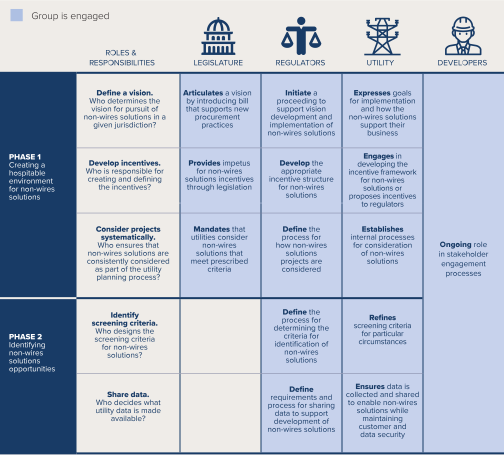
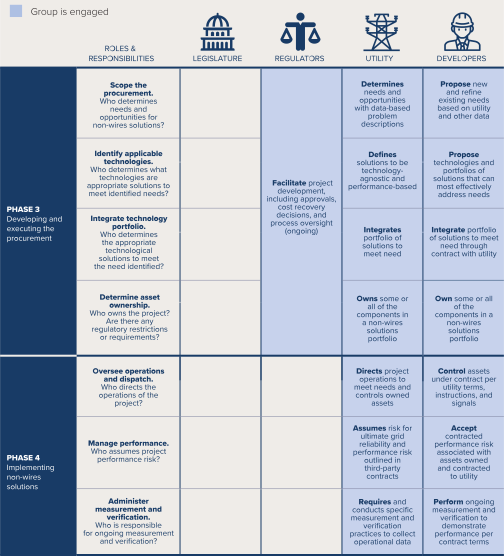
Based on interviews with more than 65 experts across 15 states—including over 20 utilities, as well as developers, regulators, and trade associations—RMI has developed a set of best-practice recommendations that are critical to creating and sustaining successful NWS programs. The Playbook also includes practical NWS implementation guidelines to help utilities operationalize NWS programs. These implementation guidelines cover four central elements that are at the heart of a successful utility NWS program: screening criteria to identify potential non-wires solution projects; competitive RFP processes that lead to meaningful responses; evaluation frameworks to help utilities determine if NWS projects are viable and competitive; and a discussion of key contract terms that are specific to NWS projects.



Related Insights

Reality Check: For Power Plants, Changing the Fuel Doesn’t Fix the Economics
The Opportunity for Heat Pumps to Put Downward Pressure on Electricity Rates

For Clean Energy Projects, How Community Benefits Are Delivered Matters
Tracking WestTEC: Where 100+ Transmission Projects Stand and What Comes Next
Help build the clean energy future. Donate today.
Independent research. Real-world solutions. Supported by donors.
RMI can pursue the highest-impact climate and energy solutions because we’re supported by people who believe change is possible. Every gift helps advance the work needed to make clean energy the default choice worldwide.
For other ways to give to RMI, including checks or gifts of stock, please visit Other Ways to Give.
