

Learn how we are working to transform how we use and produce energy.
Cool Citizens: Everyday Solutions to Climate Change: Household Solutions
Why we share this work for free
RMI is an independent nonprofit working to accelerate the clean energy transition. We publish research like this to inform decision-makers and drive real-world impact.
Our work is supported by philanthropy as well as partnerships, including fee-for-service engagements. This support makes it possible for us to share our independent insights for free.
If you find this work valuable, you can support it anytime.
Get more insights like this
Stay up to date with the latest research, analysis, and tools from RMI by opting in to receive occasional emails below. You’ll get new reports, event invitations, and practical insights to help us all accelerate the clean energy transition.
Loading form...
Your download should start automatically. If it doesn’t, click the download button below.
This work is made possible by philanthropy
RMI is a nonprofit supported by donors and partners. Philanthropy enables us to produce independent research and make resources like this freely available.
If you find this report valuable, please consider supporting our work. You can also explore how we partner with organizations to drive impact.
Jump to Section
This brief describes residential carbon dioxide emissions profiles and calculations of carbon dioxide reduction measures. The brief contains a profile for energy consumption, energy costs, and the emissions of greenhouse gases resulting from the direct and indirect use of energy in the household. The goal of this brief is to discuss numerous ways for ordinary homeowners to cost-effectively reduce their carbon emissions in their own homes. The document distinguishes energy use and emissions by end uses (such as heating, cooling, and appliances) after consideration of the various fuels used for each end-use and the carbon dioxide content of fuels. This household profile is an amalgamated average for a great variety of climate zones, heating and cooling requirements, types of installed equipment, size and age and condition, and numerous other factors that differ from your consumption and CO2 emissions patterns.
Authors

Related Insights
The Opportunity for Heat Pumps to Put Downward Pressure on Electricity Rates
Building Smarter, More Efficient Air Conditioners for Real World Conditions

How Heat Pumps Reduce Energy Bills and Air Pollution in the San Francisco Bay Area
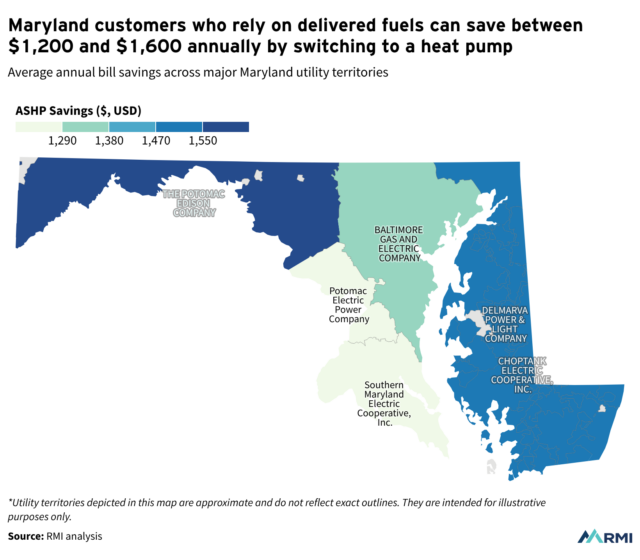
Delivered Fuel Customers in Maryland See Strong Energy Bill Savings in a Switch to Heat Pumps
Help build the clean energy future. Donate today.
Independent research. Real-world solutions. Supported by donors.
RMI can pursue the highest-impact climate and energy solutions because we’re supported by people who believe change is possible. Every gift helps advance the work needed to make clean energy the default choice worldwide.
For other ways to give to RMI, including checks or gifts of stock, please visit Other Ways to Give.