

Learn how we are working to transform how we use and produce energy.
Energy Efficient Buildings: Institutional Barriers and Opportunities
Why we share this work for free
RMI is an independent nonprofit working to accelerate the clean energy transition. We publish research like this to inform decision-makers and drive real-world impact.
Our work is supported by philanthropy as well as partnerships, including fee-for-service engagements. This support makes it possible for us to share our independent insights for free.
If you find this work valuable, you can support it anytime.
Get more insights like this
Stay up to date with the latest research, analysis, and tools from RMI by opting in to receive occasional emails below. You’ll get new reports, event invitations, and practical insights to help us all accelerate the clean energy transition.
Loading form...
Your download should start automatically. If it doesn’t, click the download button below.
This work is made possible by philanthropy
RMI is a nonprofit supported by donors and partners. Philanthropy enables us to produce independent research and make resources like this freely available.
If you find this report valuable, please consider supporting our work. You can also explore how we partner with organizations to drive impact.
Jump to Section
In this 1992 paper, Amory Lovins explains that buildings are rarely built to use energy efficiently, despite the sizeable costs that inefficient designs impose on building owners, occupants, and the utility companies that serve them. The reasons for this massive market failure have to do with the institutional framework within which buildings are financed, designed, constructed, and operated: many of the roughly two dozen actors who play a role in this process have perverse incentives that reward inefficient practice. Fragmented and commoditized design, false price signals, and substitution of obsolete rules-of-thumb for true engineering optimization have yielded buildings that cost more to build, are less comfortable, and use more energy than they should. Investments in design education, leasing reform, elimination of perverse incentives for designers and engineers, and support of building commissioning and operation offer tightly focused, high-leverage opportunities to achieve important benefits relatively quickly. This paper describes the “second generation” of utility DSM programs that emerged, incorporating novel approaches such as direct incentives for building designers. This paper also describes the competitive advantages for building designers, owners, and operators by incorporating energy design features. This paper is reprinted with permission from E Source.
Authors

Amory Lovins
Cofounder and Chairman EmeritusRelated Insights

The Opportunity for Heat Pumps to Put Downward Pressure on Electricity Rates
Building Smarter, More Efficient Air Conditioners for Real World Conditions

How Heat Pumps Reduce Energy Bills and Air Pollution in the San Francisco Bay Area
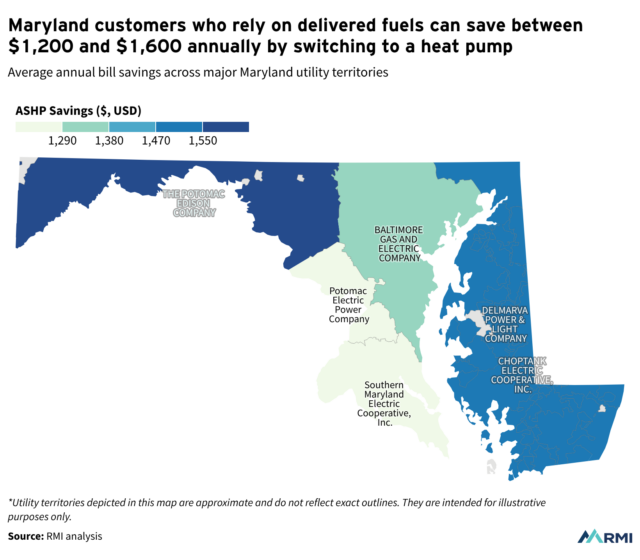
Delivered Fuel Customers in Maryland See Strong Energy Bill Savings in a Switch to Heat Pumps
Help build the clean energy future. Donate today.
Independent research. Real-world solutions. Supported by donors.
RMI can pursue the highest-impact climate and energy solutions because we’re supported by people who believe change is possible. Every gift helps advance the work needed to make clean energy the default choice worldwide.
For other ways to give to RMI, including checks or gifts of stock, please visit Other Ways to Give.
