

Learn how we are working to transform how we use and produce energy.

Grid-Interactive Energy Efficient Buildings (GEBs)
The vision of a smart, two-way grid interacting with intelligent, responsive buildings can deliver new opportunities to save costs for building owners, operators, utilities and operators. As responsive assets, buildings can ramp energy use up or down depending on the cost or carbon intensity of the utility generation source. This helps utilities ensure the balanced, flexible supply and demand of high levels of renewables and decarbonize the electricity system, resulting in resilient cities, communities, and regions.

The Issue
To meet our climate goals we need to accelerate and expand efforts to reduce building-related carbon emissions. Three key misaligned signals exacerbate the gap between utility planning and building operation: peak demand, carbon, and costs. Utility generation plants are sized based on peak needs and rate structures do not incentivize decarbonization. Buildings are rarely designed or retrofitted to reduce peak demand; most improvements are focused on reducing energy consumption or cost. Optimizing building improvement measures based solely on cost savings may not reduce the carbon intensity of a building
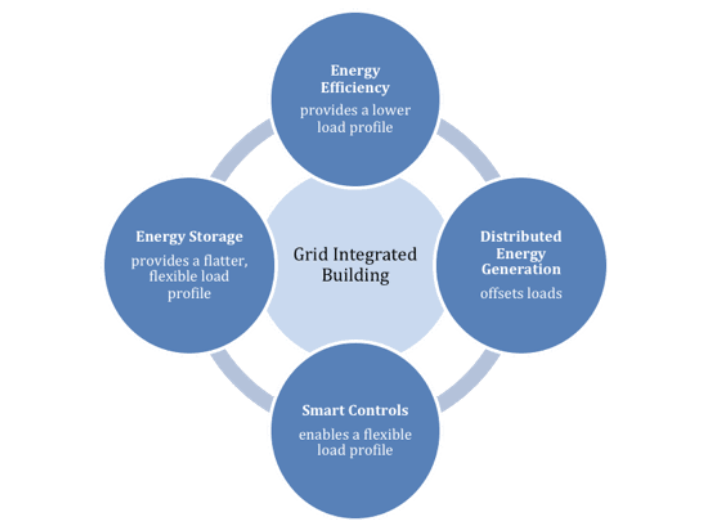
What is a Grid-Interactive, Energy Efficient Building?
Grid-Interactive Buildings have a holistically optimized blend of energy efficiency, energy storage, renewable energy, and load flexibility technologies enabled through smart controls. This results in a lower, “flatter,” more flexible energy load profile, which in turn delivers a more resilient and productive building, optimizes capital investments, reduces operating costs, and provides access to new revenue. At the campus or community scale, additional strategies such as microgrids and district energy systems may also be advantageous.

Why They Matter
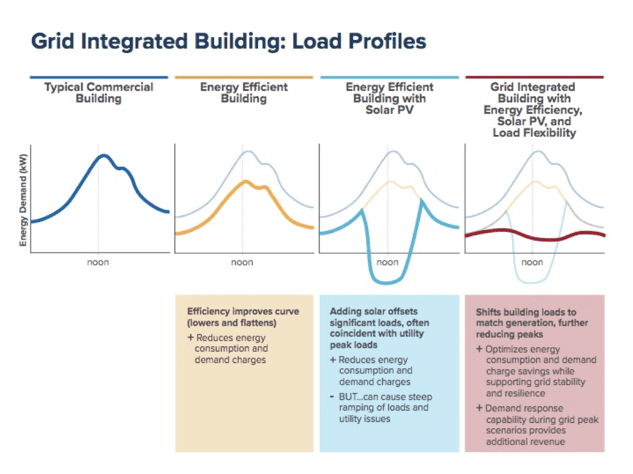
Energy efficiency, solar photovoltaics, and load flexibility can have huge effects on a typical building’s load profile over the course of the day. Each of these elements adds benefits and challenges to a building’s load profile but, in combination, they can drive financial returns, improve a building’s performance, and deliver benefits to the grid.

What We're Doing
RMI is working with industry leaders to develop a value proposition for building owners to upgrade their buildings to interact with the grid, engage with utilities, and drive greater monetary value, energy and carbon savings, energy security, and resilience together.
Our Partners





Help build the clean energy future. Donate today.
Independent research. Real-world solutions. Supported by donors.
RMI can pursue the highest-impact climate and energy solutions because we’re supported by people who believe change is possible. Every gift helps advance the work needed to make clean energy the default choice worldwide.
For other ways to give to RMI, including checks or gifts of stock, please visit Other Ways to Give.
