

Learn how we are working to transform how we use and produce energy.
Where Better Questions Lead
How one essay changed Leigh Alvarado Benson's life — and inspired her to leave a legacy through RMI.
Why we share this work for free
RMI is an independent nonprofit working to accelerate the clean energy transition. We publish research like this to inform decision-makers and drive real-world impact.
Our work is supported by philanthropy as well as partnerships, including fee-for-service engagements. This support makes it possible for us to share our independent insights for free.
If you find this work valuable, you can support it anytime.
Get more insights like this
Stay up to date with the latest research, analysis, and tools from RMI by opting in to receive occasional emails below. You’ll get new reports, event invitations, and practical insights to help us all accelerate the clean energy transition.
Loading form...
Your download should start automatically. If it doesn’t, click the download button below.
This work is made possible by philanthropy
RMI is a nonprofit supported by donors and partners. Philanthropy enables us to produce independent research and make resources like this freely available.
If you find this report valuable, please consider supporting our work. You can also explore how we partner with organizations to drive impact.
Jump to Section
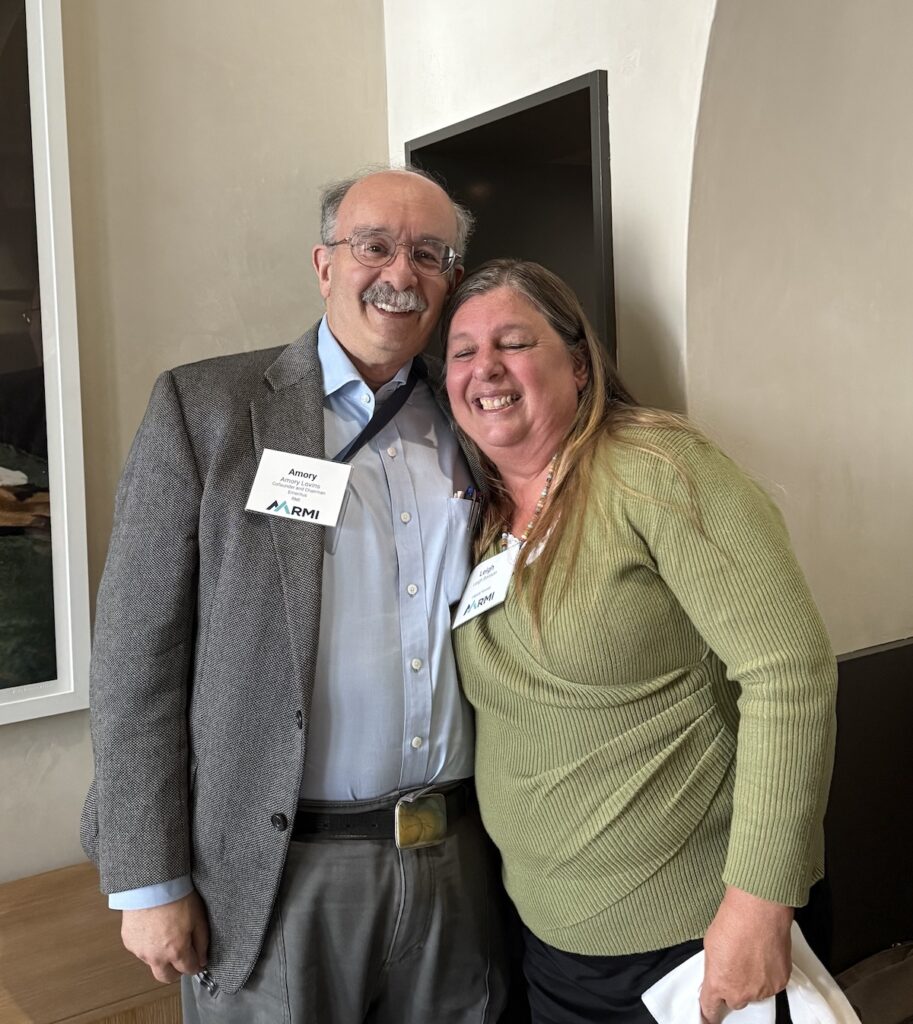
It turns out, a single essay can change the course of a life.
Fifty years ago, Amory Lovins challenged conventional thinking with an essay that would help reshape the conversation around energy. In his 1976 Foreign Affairs essay “Energy Strategy: The Road Not Taken?”, he asked readers to look beyond familiar solutions and reconsider the questions themselves.
Nearly two decades later, that essay found its way into the hands of a graduate student in environmental engineering.
“What drew me to RMI in the formative phases of my career still resonates with me today: a rigor that is imaginative, a systems view that is practical, and an optimism grounded in analysis and moral imagination.”
— Leigh Alvarado Benson
“For more than three decades, RMI has been a quiet but steady thread running through my professional and intellectual life,” Leigh says. ” I first encountered Amory Lovins’s work in the early 1990s as a graduate student at the Colorado School of Mines. As a young engineer in energy and environmental consulting, Lovins’s work fundamentally expanded how I understood systems — not as isolated technical problems to optimize, but as living, interconnected patterns where innovation often comes from seeing relationships others overlook.”
What Leigh encountered wasn’t simply a different way of thinking about energy. It was a different way of thinking about complex problems.
“It was his way of thinking and communicating. Instead of asking, ‘How do we produce more energy?’ he would ask, ‘Why do we need the energy in the first place?’ That shift seems simple, but it changes everything,” she says. “That shift in how to think about complex problems has shaped every chapter of my life ever since.”
Rather than focusing on optimizing existing systems, Leigh found herself drawn toward helping shape them from the beginning.
“I found myself increasingly drawn upstream, toward the places where the questions themselves were being framed — where assumptions could be challenged, needs better understood, and design choices made before they became constraints. Looking back, nearly every transition in my career was a move in that direction.”
And one habit became a constant. “I learned to keep asking ‘why.’ Not just once, but repeatedly, because the first answer is often someone’s stated objective, not their actual need.”
Leigh laughs that repeatedly asking “why” may not always have made her the easiest colleague. But she kept doing it because she found it was often the fastest way to uncover the real problem — and ultimately, the best solutions.
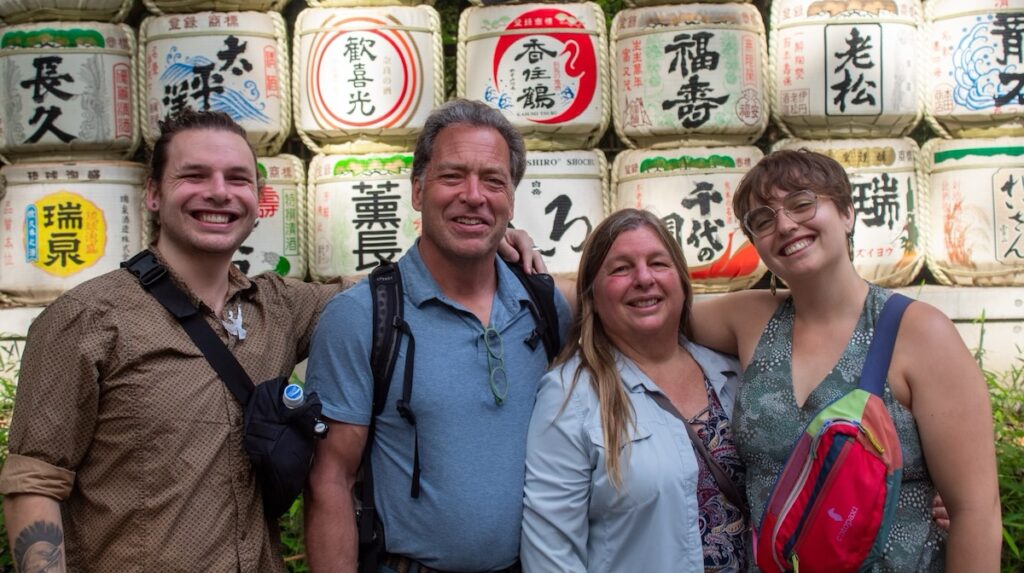
As her career evolved — from environmental engineering to data science and artificial intelligence in support of several different industries — Leigh found herself applying the same systems-thinking approach in every field. When she later taught college courses in statistics, predictive modeling, data analysis, and optimization, she introduced her students to RMI’s ideas alongside the curriculum.
“I assigned Amory’s and RMI readings because they invited students to think differently — not just about energy, but about problem-solving itself. They modeled that good analysis can be creative, that efficiency can be elegant, and that large systems can be redesigned rather than merely endured. I never shared out of advocacy in any formal sense, but because RMI’s work consistently enlarged the conversations being had by many different kinds of industry professionals.”
For more than 25 years, she introduced generations of students to the same systems-thinking approach that had shaped her career.
Looking back, Leigh sees those ideas as reflecting something deeper.
“What drew me to RMI in the formative phases of my career still resonates with me today: a rigor that is imaginative, a systems view that is practical, and an optimism grounded in analysis and moral imagination.”
And those ideas didn’t stay at work. They became part of the way Leigh raised her children and thought about the world at home.
“[It] became part of our family’s vocabulary. We often say, ‘Just because we can, doesn’t mean we should.’ To me, that’s moral imagination in everyday language.”
Years after first discovering RMI’s work, Leigh and her husband faced a different kind of question: what values did they want their estate plans to reflect?
For Leigh, the answer brought her back to where the journey began.
“That is also why giving to RMI feels deeply personal. It is, in part, an act of gratitude for an institution whose ideas shaped how I think, taught, and practice. But it is also a way of supporting a rare organization that has, over decades, held together a dream grounded in analytical seriousness, practical innovation, and a long view of what a more resilient future can look like.”
When Leigh and her husband began their estate planning, they chose to include RMI in their plans, helping ensure the ideas that transformed her life can continue shaping future generations.
“To me, legacy giving isn’t about being remembered. It’s about helping good ideas outlive us.”
More than thirty years after first reading Amory’s essay, Leigh doesn’t think of herself simply as a donor to RMI.
“If I have helped spread some of those ideas forward through students and colleagues, it is because RMI helped plant them in our world first. Supporting the Institute feels less like philanthropy than participating in a long conversation I have been fortunate to learn from for most of my 30-plus-year professional life.”
Authors

Jennifer Grizzard Ekzarkhov
Senior Manager- Development Marketing and CommunicationsRelated Insights

Creating Sustainable Communities through Systems Thinking and Integrative Design

Help build the clean energy future. Donate today.
Independent research. Real-world solutions. Supported by donors.
RMI can pursue the highest-impact climate and energy solutions because we’re supported by people who believe change is possible. Every gift helps advance the work needed to make clean energy the default choice worldwide.
For other ways to give to RMI, including checks or gifts of stock, please visit Other Ways to Give.
