

Learn how we are working to transform how we use and produce energy.
Energy Within Reach
Why we share this work for free
RMI is an independent nonprofit working to accelerate the clean energy transition. We publish research like this to inform decision-makers and drive real-world impact.
Our work is supported by philanthropy as well as partnerships, including fee-for-service engagements. This support makes it possible for us to share our independent insights for free.
If you find this work valuable, you can support it anytime.
Get more insights like this
Stay up to date with the latest research, analysis, and tools from RMI by opting in to receive occasional emails below. You’ll get new reports, event invitations, and practical insights to help us all accelerate the clean energy transition.
Loading form...
Your download should start automatically. If it doesn’t, click the download button below.
This work is made possible by philanthropy
RMI is a nonprofit supported by donors and partners. Philanthropy enables us to produce independent research and make resources like this freely available.
If you find this report valuable, please consider supporting our work. You can also explore how we partner with organizations to drive impact.
Jump to Section
1.3 billion people around the world live without basic access to electricity, including 900 million in sub-Saharan Africa and India. Bringing light to these people currently in the dark is an acute, urgent humanitarian and economic development challenge for these countries that have ambitious goals. Energy is the cornerstone that supports both, yet forecasts suggest we’ll make little progress in the years ahead. An estimated 1.7 billion people are expected to gain electricity access by 2030, yet these gains will be virtually negated by forecasted population growth (1.4 billion). In sub-Saharan Africa and India, the International Energy Agency’s World Energy Outlook estimates an increase (from 600 to 645 million) in the number of people in sub-Saharan Africa without electricity access and a decrease (from 300 to 147 million) in India. That still leaves nearly 800 million people without electricity across the region. Yet providing electricity access to these hundreds of millions and supporting developing countries’ broader economic development goals mustn’t happen by building more coal-fired power plants and expanding an already dirty and unreliable grid. The result would be a projected 141-percent increase in carbon emissions for these areas of the world by 2040. Instead, solar energy can lift these people out of energy poverty, enable and support meaningful economic growth, and prevent significant increases to global coal consumption and carbon emissions that drive climate change. Decentralized solar energy can provide reliable, low-carbon electricity; help stimulate local economic activity; avoid the negative health consequences of fossil-fueled generation and kerosene lamps; provide increasingly affordable energy access; and be infinitely scalable to power communities large and small. A solar-based energy ladder—with each rung in reach of the next—can enable families to climb out of energy poverty to energy access, support economic development and halt coal’s expansion—from solar lanterns, to home solar systems, to mini and microgrids.
Authors

Jules Kortenhorst
Related Insights
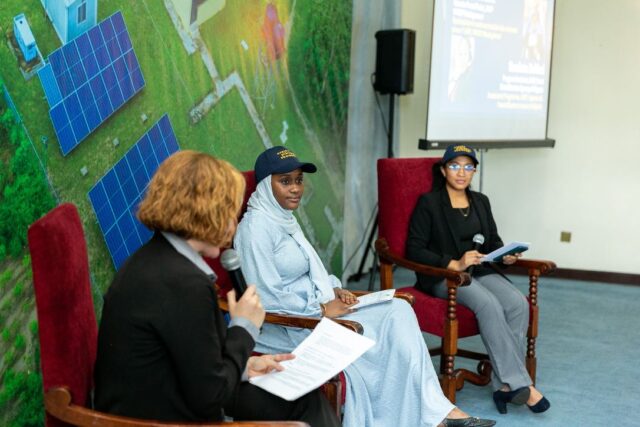
Beyond the Checkbox: Gender action plans that work in Africa’s minigrid sector
India’s Used EV Battery Market Needs Trust. Battery Aadhaar Can Help.
Help build the clean energy future. Donate today.
Independent research. Real-world solutions. Supported by donors.
RMI can pursue the highest-impact climate and energy solutions because we’re supported by people who believe change is possible. Every gift helps advance the work needed to make clean energy the default choice worldwide.
For other ways to give to RMI, including checks or gifts of stock, please visit Other Ways to Give.
