

Learn how we are working to transform how we use and produce energy.
Accelerating Industrial Decarbonization in China
Key Climate Actions for Iron and Steel Companies
Why we share this work for free
RMI is an independent nonprofit working to accelerate the clean energy transition. We publish research like this to inform decision-makers and drive real-world impact.
Our work is supported by philanthropy as well as partnerships, including fee-for-service engagements. This support makes it possible for us to share our independent insights for free.
If you find this work valuable, you can support it anytime.
Get more insights like this
Stay up to date with the latest research, analysis, and tools from RMI by opting in to receive occasional emails below. You’ll get new reports, event invitations, and practical insights to help us all accelerate the clean energy transition.
Loading form...
Your download should start automatically. If it doesn’t, click the download button below.
This work is made possible by philanthropy
RMI is a nonprofit supported by donors and partners. Philanthropy enables us to produce independent research and make resources like this freely available.
If you find this report valuable, please consider supporting our work. You can also explore how we partner with organizations to drive impact.
Jump to Section
The iron and steel industry — one of the high emitting sectors — will take up 4.8–10.9 percent of the global carbon budget, which is only 400 gigatons for the next 30 years for a 67 percent chance of staying within 1.5°C of warming. At the current pace of development and carbon emissions, the carbon budget projected for steel will be used up in 5-12 years. With more than half of the world’s steel production, China remains a key geography when it comes to steel decarbonization. Climate actions by Chinese iron and steel companies are critical not only to China’s carbon neutrality goal, but also to emissions reductions in the global iron and steel industry.
This report provides a comprehensive summary of international target-setting practices, examining their boundaries and pathways under the 1.5°C climate goal by 2050. While global practices serve to guide Chinese iron and steel companies to set climate-aligned targets, an industry-level target broken down from China’s national goals of carbon peaking by 2030 and carbon neutrality by 2060 will help direct companies’ level of ambition and pace of transition. Moreover, companies can refer to the technological feasibility of carbon reduction levers to set practical climate targets.
To support companies, this report introduces trading-, financing-, and carbon asset management-based mechanisms, and illustrates how their synergies can help iron and steel companies implement emissions reduction initiatives. Finally, the report calls iron and steel companies and other key stakeholders to ensure a successful transition by developing industry-level carbon reduction targets and roadmaps per China’s national targets; improving clarity and comprehensiveness of corporate’s carbon targets; collaborating across the value chain; actively participating in existing market mechanisms; and engaging in mechanism innovations.
Authors

Shuyi Li
Principal
Ting Li
Chief Representative and Managing Director of RMI China
Wei Li
Principal
Shutong (Lucy) Lu
Manager
Peishan Wang
Senior Associate
Boya Zhang
AssociateRelated Insights
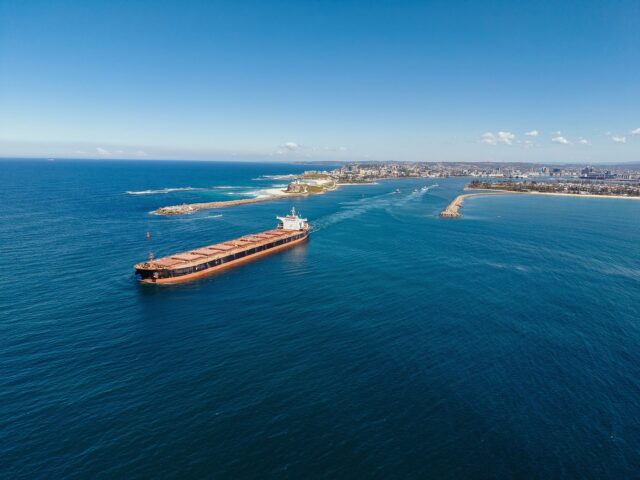
Steel’s Transformation: China and Australia’s next horizon of clean steel

Efficiency Reimagined: The next phase of China’s industrial energy transition

Help build the clean energy future. Donate today.
Independent research. Real-world solutions. Supported by donors.
RMI can pursue the highest-impact climate and energy solutions because we’re supported by people who believe change is possible. Every gift helps advance the work needed to make clean energy the default choice worldwide.
For other ways to give to RMI, including checks or gifts of stock, please visit Other Ways to Give.
