

Learn how we are working to transform how we use and produce energy.
Empowering the Next Chapter of Indonesia’s Energy Transition
Data and stories from RMI’s first Global Women in Clean Energy fellowship cohort in Indonesia.
Why we share this work for free
RMI is an independent nonprofit working to accelerate the clean energy transition. We publish research like this to inform decision-makers and drive real-world impact.
Our work is supported by philanthropy as well as partnerships, including fee-for-service engagements. This support makes it possible for us to share our independent insights for free.
If you find this work valuable, you can support it anytime.
Get more insights like this
Stay up to date with the latest research, analysis, and tools from RMI by opting in to receive occasional emails below. You’ll get new reports, event invitations, and practical insights to help us all accelerate the clean energy transition.
Loading form...
Your download should start automatically. If it doesn’t, click the download button below.
This work is made possible by philanthropy
RMI is a nonprofit supported by donors and partners. Philanthropy enables us to produce independent research and make resources like this freely available.
If you find this report valuable, please consider supporting our work. You can also explore how we partner with organizations to drive impact.
Jump to Section
For many young professionals in Indonesia, the energy sector now offers a different kind of career path than it did just a decade ago. Opportunities are opening in renewable power, climate finance, grid modernization, and clean technology deployment, fields that also offer new economic opportunities.
Yet, a significant portion of the country’s workforce remains underrepresented in the very sectors expected to drive this growth. Across rural regions, the responsibility for maintaining daily household needs, such as securing food and obtaining water and fuel, largely falls on women and girls. These roles position women with firsthand knowledge of community energy needs, but despite this proximity to both challenges and solutions, women remain underrepresented in the clean energy workforce and leadership positions that shape system design.
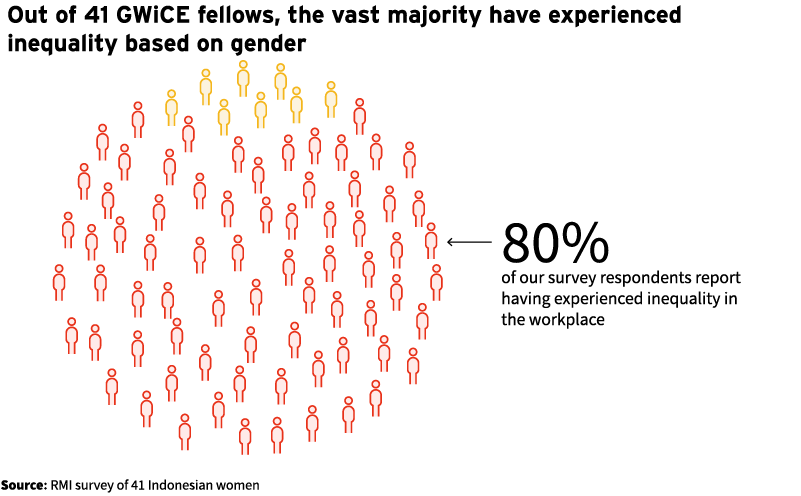
According to the World Economic Forum’s Global Gender Gap Report 2023, East Asia and the Pacific could require an estimated 189 years to reach gender parity. Indonesia ranks 97 out of 148 countries as of 2025, reflecting persistent structural, cultural, and institutional barriers. Based on RMI’s interviews with 41 Indonesian women, 80% reported experiencing gender-based challenges within their organizations, work communities, or career progression.
Ultimately, the disparity has economic implications. With women’s representation and leadership being tied to more sustainability-oriented decision-making, their representation within decision-making processes shapes if and how projects are designed, financed, and implemented in a just, inclusive, and efficient way. As investment and development in the energy sector accelerate, demand for technical and managerial talent is likely to grow. Ongoing disparities in workforce participation may limit the depth of Indonesia’s talent pool and transition pace relative to peer economies.
These workforce and inclusion considerations emerge within a broader tension of balancing the country’s economic ambition while ensuring the resiliency of its climate and energy systems. In late 2025, extreme flooding swept through Aceh, North Sumatra, and West Sumatra, killing 940 people, leaving 276 missing, and injuring more than 4,000. Such events are not isolated; floods, landslides, and prolonged rainfall have intensified in frequency and severity across the country. Disruptions of this scale affect households, local economies, and entire infrastructure systems. Interruptions highlight the increasing importance of resilient energy planning and whole energy system change. Without an inclusive, capable workforce, this transformation would prove almost impossible.
It’s against this backdrop that RMI launched the Global Women in Clean Energy Fellowship (GWiCE) in Indonesia, with support from Topsoe, a global leader in advanced technologies for fuel transition, and in partnership with Think Policy. The fellowship offers technical and leadership training aimed at empowering women participants to grow into system thinkers leading Indonesia’s energy transition.
Cross-sector collaboration for systemic change
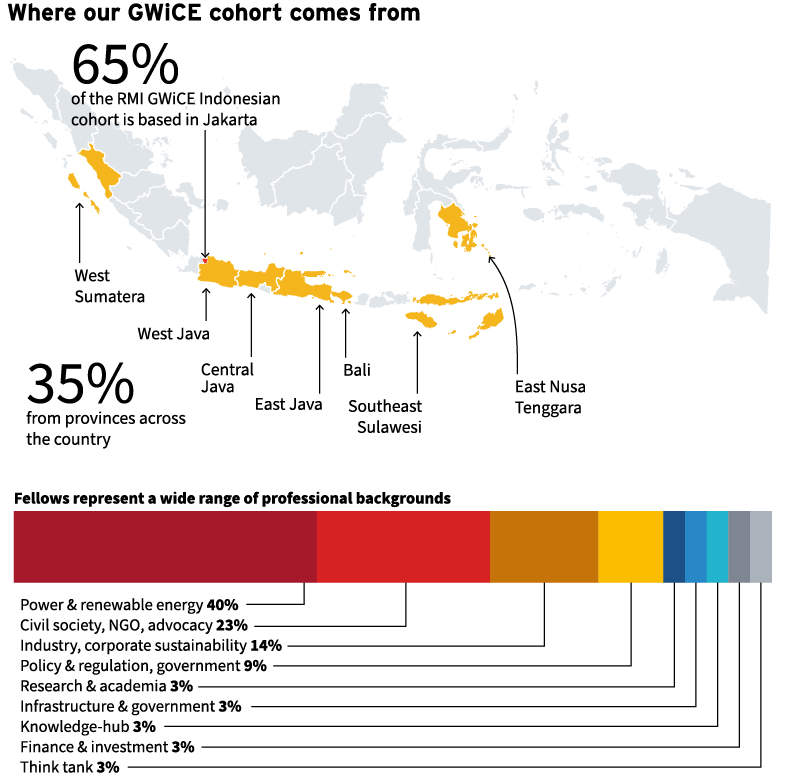
The GWiCE fellowship responds to the need for more inclusive leadership and a more coordinated, equitable energy transition. By cultivating a diverse cohort of 35 women from across sectors and disciplines, GWiCE is building the connective tissue Indonesia’s energy future needs. The fellows represent a wide range of professional backgrounds across the power sector, government, private industry, NGOs/CSOs, and academia. Around 65% are based in Jakarta, with the rest coming from various provinces, including Central Java, West Java, East Java, Bali, West Sumatra, East Nusa Tenggara, and Southeast Sulawesi.
Through training in technical aspects of decarbonization, systems thinking, leadership, and cross-sector collaboration, fellows are entering clean energy careers earlier and more equipped to strengthen an entire employment infrastructure.
The women leading Indonesia’s next energy economy
Through the systems thinking lens applied in the fellowship, Dena Amani Utami, an engineer who began her career as the only woman engineer on an oil rig, sees Indonesia split in two.
“There’s an energy access problem, and an energy transition problem,” she said.
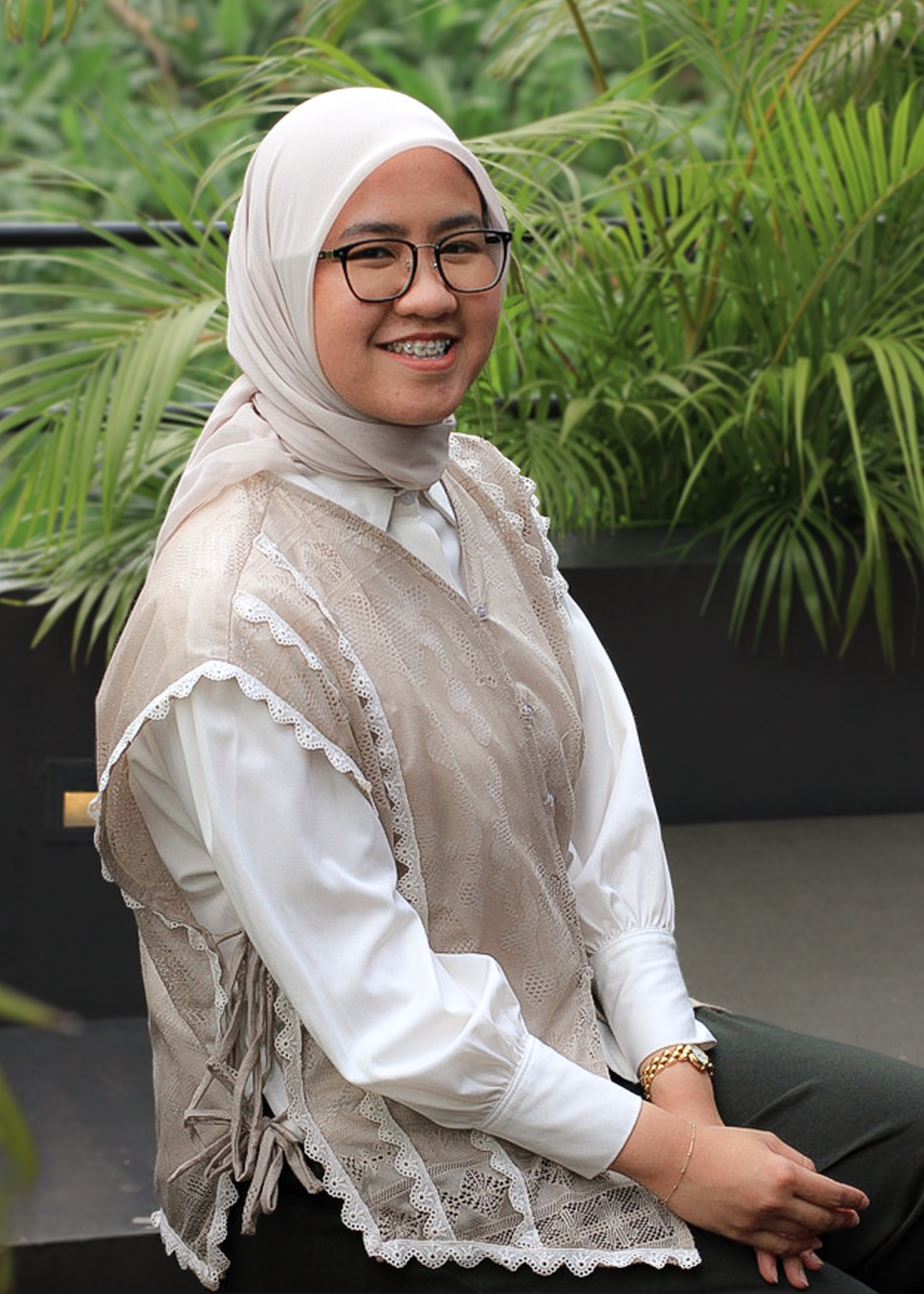
Wini Rizkiningayu, Southeast Asia Regional Director at RMI, knows this challenge firsthand.
“This is the start of system intervention to support all those young women just entering the energy transition sector,” Wini said. “They can explore systems thinking and the energy transition from many angles: the technical side, climate finance, and how to navigate the sector as female leaders trying to generate impact.”
Like Dena, Wini also began her career as one of the only female engineers on an oil rig, and worked in oil and gas for a decade. She transitioned to a new role in geothermal business development and investment for the New Zealand government, which required relearning about the energy landscape. She encountered technical and systemic gaps where women were ultimately not in the rooms where energy futures were decided.
Even today, women hold just 5% of decision-making roles in Indonesia’s energy sector. And only 12% of STEM graduates are women, a number that lags behind neighboring countries. Energy management is even more male-dominated: just 3% of energy managers and 4% of auditors are women.
“…Working in male-dominated sectors has always been a challenge for women, especially myself in navigating my devoted career in green energy transition. I feel the disparity in terms of equal proportion of experts working in these fields, which leads to often having more male represented voices”
“There's a lack of women in decision-making roles/C-suites level in energy-related industries, especially in the technical fields. Oftentimes, when I meet stakeholders from the energy industries, all of the expert speakers are male. The women are usually related to public relations work and event organizer activities”
“I was once told not to apply for a field assignment because it was too remote. I know they have good intentions, but I think it is unfair”
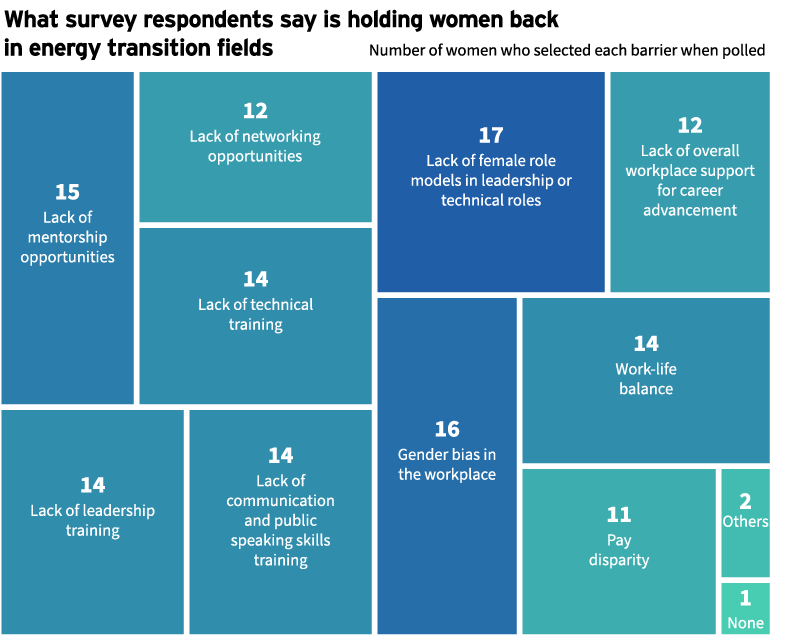
Our survey and interviews with a total of 70+ participants highlighted persistent structural and cultural barriers, including limited access and restrictive gender norms, that continue to hinder women’s career progression.
Barriers to women’s advancement in energy transition fields
At the launch of the GWiCE Fellowship, Dena attended her first professional event where all the panelists were women.
“That was the first time I ever thought, there is women leadership in Indonesia, which brought hope,” Dena said.
Wini, years further into her career, sees in Dena the beginning of a new generation. One that could lead differently, if given the right support.
“There are not many fellowships that focus on women with two to three years of experience who just entered the energy transition field,” she said. “Most are tailored for people with 10 to 15 years in the sector who’ve already proven their leadership.”
For current fellows Nadia Khairani and Primadita Rahma Ekida, the GWiCE fellowship enables skills and networks they did not have access to earlier in their careers.
While Nadia studied economics as an undergraduate, in graduate school she began to understand the role sustainable finance could play in accelerating clean energy deployment. Now working as a finance manager at Accelerate Wind, a US-based wind turbine manufacturer, she is learning how distributed energy generation can scale renewable energy projects. She sees the financing insights as directly relevant to Indonesia.
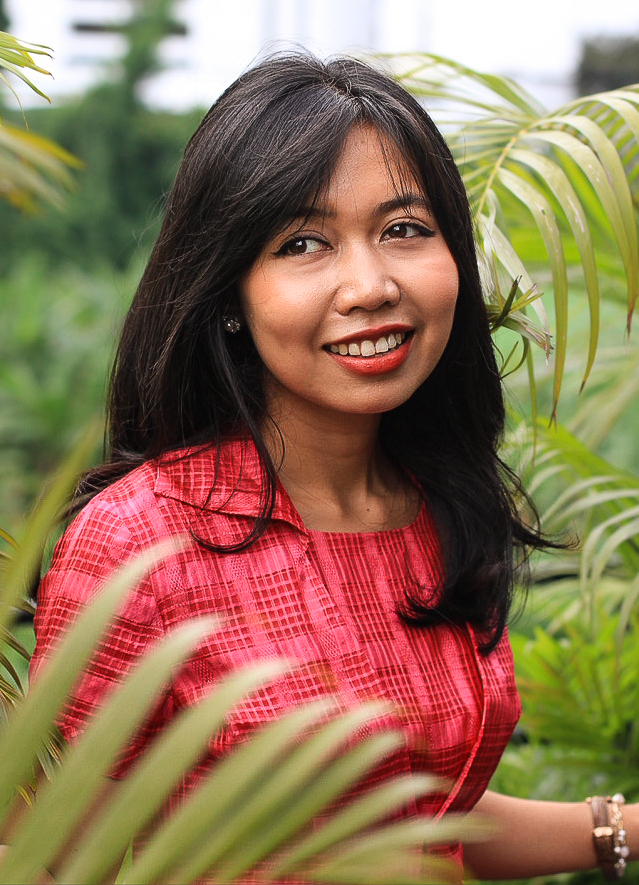
“I hope that the economic opportunity of clean energy can bring more access to many people in Indonesia,” she said.
Primadita, who currently works for the clean air organization Bicara Udara, grew up with two parents in the health sector. She began to see the connections between energy systems and human health, particularly the impacts of fossil fuel power plants on air quality. This fellowship applies her earliest career inspirations to executing cleaner air and energy policies.
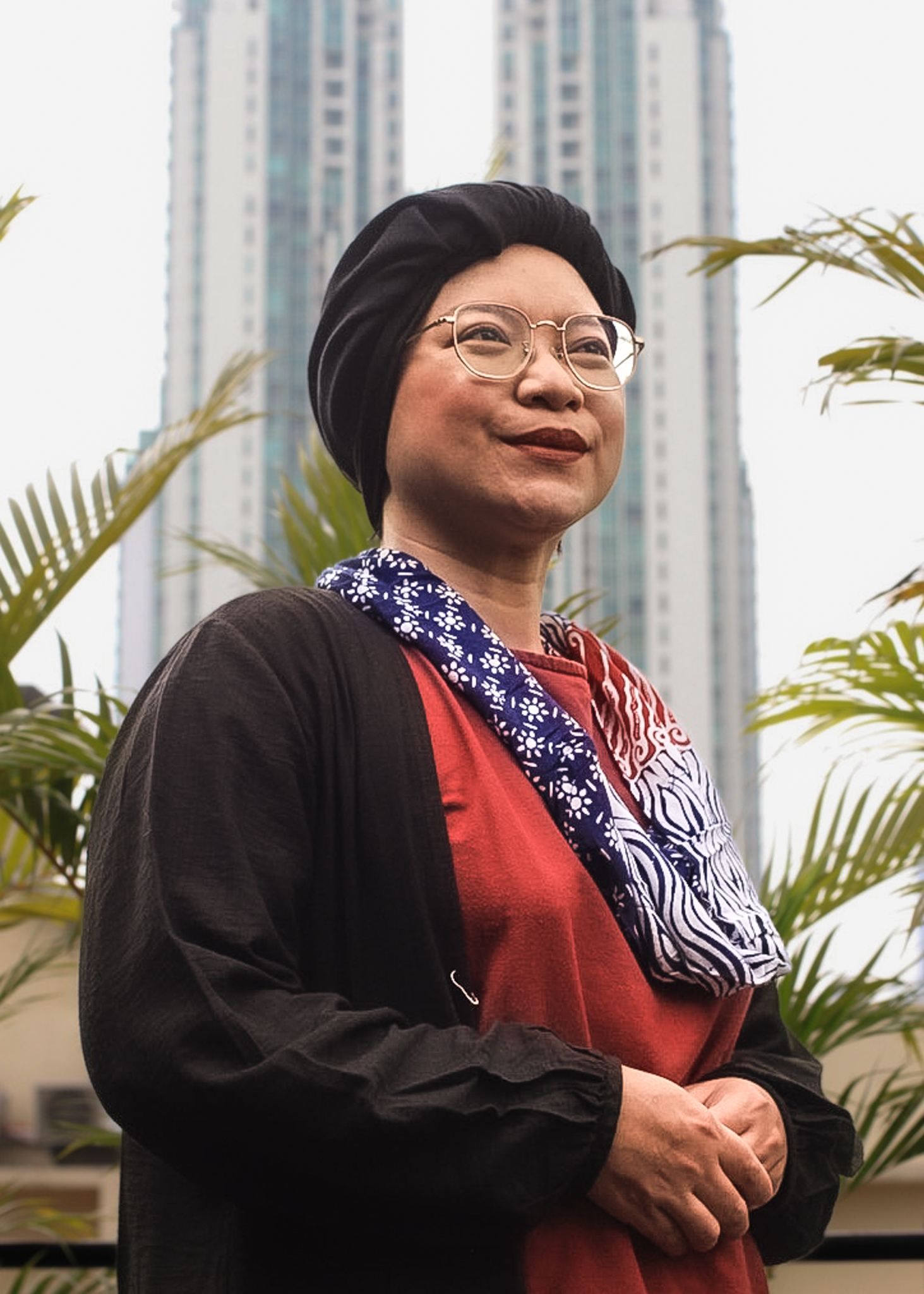
“That is why I want to join a movement where I can learn more about how to transform the cleaner air,” she said. “I see a lot of opportunities for youth to get into green jobs. There are bigger economic opportunities if we know how to actualize cleaner energy.”
Breaking silos across the world’s largest archipelagic state
In November 2025, the first GWiCE Indonesia cohort gathered for the first time in Jakarta, on the island of Java. But the energy transition they are working toward is not confined to the capital.
“Central Java has some of the highest renewable potential in the country, especially for solar,” Ayu Pratiwi Muyasyaroh said, an energy researcher and Sustainable Development Goal (SDG) storyteller part of the GWiCE fellowship. “With growing demand from small and medium enterprises and more supportive policies, the region has developed more than 2,000 independent energy villages.”
She also pointed to the potential in Kamanggih village in East Nusa Tenggara, where decentralized renewable energy systems, such as a microhydro power plant, allow the community to generate its own electricity, even without full connection to the national grid.
“Despite geographic and socioeconomic challenges, they [the village] built a system that ensures access to energy and supports a dignified life,” she said.
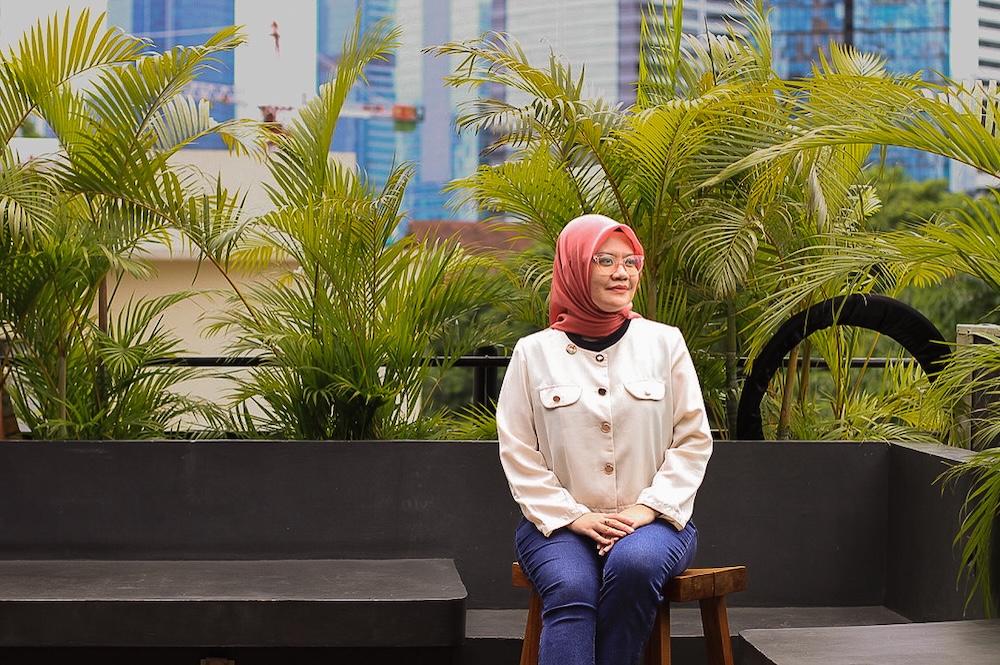
In her hometown of East Kalimantan, Muara Enggelam village is recognized for its achievement in establishing an energy-independent village.
“They moved from energy poverty to energy abundance,” she said. “That energy created livelihoods.”
Through their capstone project, the fellows will develop solutions and ideas for the energy transition that aim to build community and awareness around the energy transition. In that way, the fellowship aims to operate as a springboard for problem solving that addresses multiple environmental and social issues at once.
The GWiCE vision for a just energy transition in Indonesia
The energy transition will not be completed in a single career, or even a single generation. It depends on those willing to step forward one generation after the other and build on the work already laid. The GWiCE program reflects that commitment and opportunity, setting the vision for a more just and inclusive energy transition in Indonesia.
Spend time with the fellowship group right now, and you’ll hear conversations that turn quickly to their upcoming capstone projects. In small teams, they are mapping proposals on education reform, policy design, and energy operations. In the summer, they will present these ideas to regional women leaders and their mentors.
Dena described Indonesia as divided between energy access and the energy transition. Listening to these women weigh grid upgrades alongside community engagement strategies, the divide feels less fixed. It appears to be a systems design challenge. One the GWiCE fellows are prepared, and eager, to solve.
Read more about the women in this inaugural cohort at the GWiCE homepage, and contact eta@rmi.org to learn more about how to support, partner, and get involved.
Authors
Rahmayani
Associate
Valentina Guido Bergamo
Senior Associate
Hannah Hall
Strategic Communications Lead
Wini Rizkiningayu
PrincipalRelated Insights
How Southeast Asia’s Low-Emission Chemicals Sector Can Expand

Southeast Asia’s Shift to Clean Energy Is Its Best Economic Opportunity
Help build the clean energy future. Donate today.
Independent research. Real-world solutions. Supported by donors.
RMI can pursue the highest-impact climate and energy solutions because we’re supported by people who believe change is possible. Every gift helps advance the work needed to make clean energy the default choice worldwide.
For other ways to give to RMI, including checks or gifts of stock, please visit Other Ways to Give.