

Learn how we are working to transform how we use and produce energy.
Unlocking Demand-Side Flexibility in China
Current Status and Potential of Demand Response in the Industrial Sector
Why we share this work for free
RMI is an independent nonprofit working to accelerate the clean energy transition. We publish research like this to inform decision-makers and drive real-world impact.
Our work is supported by philanthropy as well as partnerships, including fee-for-service engagements. This support makes it possible for us to share our independent insights for free.
If you find this work valuable, you can support it anytime.
Get more insights like this
Stay up to date with the latest research, analysis, and tools from RMI by opting in to receive occasional emails below. You’ll get new reports, event invitations, and practical insights to help us all accelerate the clean energy transition.
Loading form...
Your download should start automatically. If it doesn’t, click the download button below.
This work is made possible by philanthropy
RMI is a nonprofit supported by donors and partners. Philanthropy enables us to produce independent research and make resources like this freely available.
If you find this report valuable, please consider supporting our work. You can also explore how we partner with organizations to drive impact.
Jump to Section
A zero-carbon power system will face uncertainties from both the supply and demand sides. This will require more system flexibility resources to meet the power balance and to realize a larger scale of renewable energy integration. This is especially true in China where the compound annual growth rate of electricity consumption between 2015 and 2022 reached 6.1 percent. The growth rate of the peak load was even higher at 7.1 percent, showing greater volatility on the load side.
With economic development and electrification of other sectors, China’s electricity demand will continue to grow, and the value of demand-side flexibility (DSF) will become increasingly significant. In recent years, the power supply and demand balance in China has been tight and strengthening load management and developing DSF resources have become urgent tasks in building the New Power System.
Why Focus on the Industrial Sector?
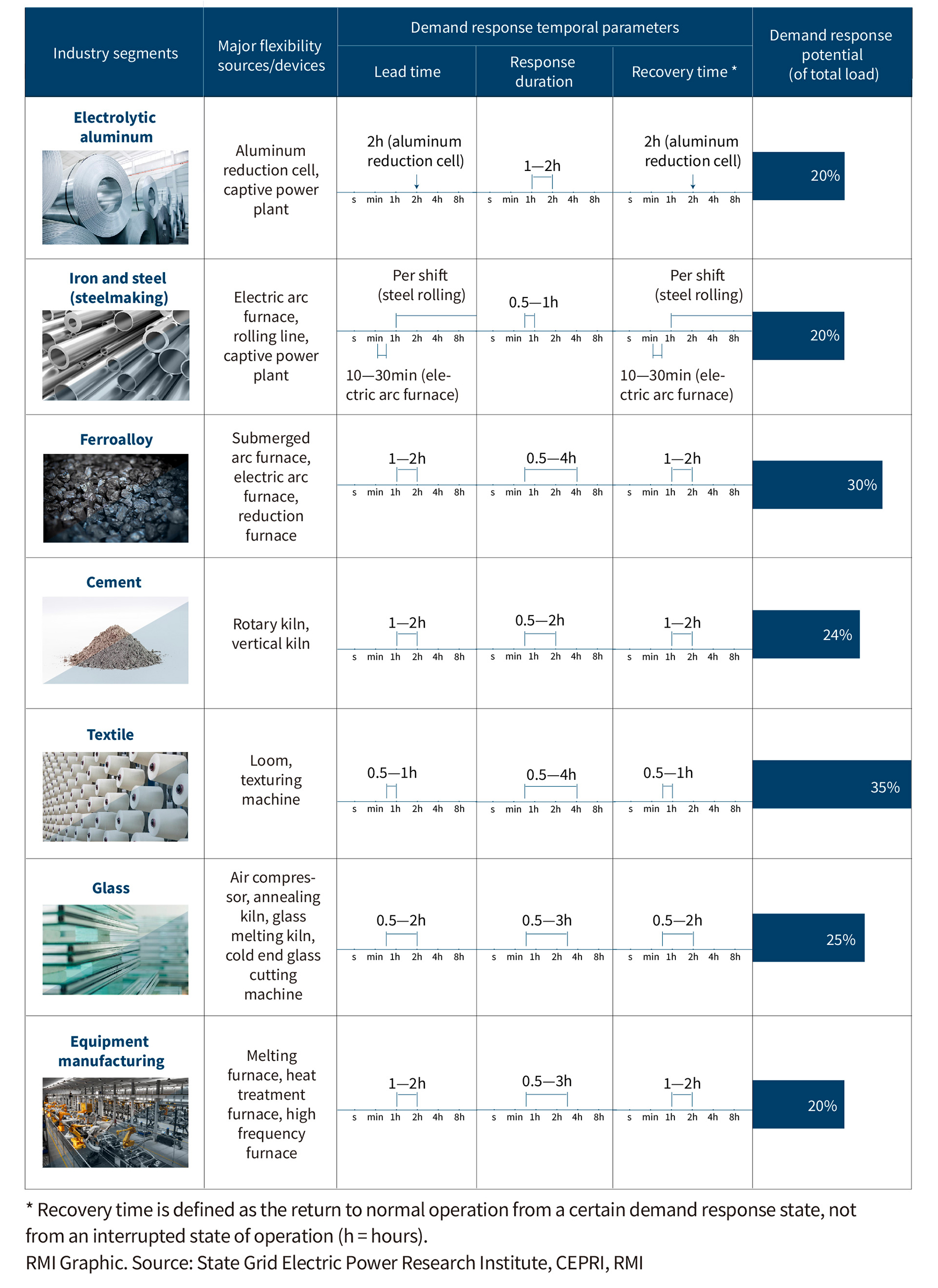
The electricity consumption of industrial users in China has reached 5,700 terawatt-hours, accounting for 65 percent of total electricity consumption in 2022, and is still increasing. Considering the comprehensive industrial system and diversified load structure, the industrial sector theoretically possesses significant potential for developing DSF. Our in-depth investigation of the demand response capabilities of different industries and enterprises showed that seven major industries would achieve over 20 percent of demand response capability. Developing this industrial DSF will reduce 3-10 percent of the annual peak load and avoid 40–130 GW of new coal power investment in China. China’s practices in industrial DSF could serve as a model especially for developing countries that are still in the process of industrialization but need to achieve climate goals at the same time.
About This Report
This report dives deep into the technical issues of developing industrial DSF. Combining domestic and international practice and progress, we identify the main sources and potentials of industrial DSF; explore the technical, economic, and managerial challenges; and specify the important role that industrial DSF plays in building the New Power System.
Exhibit: Major flexibility sources, demand response temporal parameters, and potential for key industries


Related Insights

Steel’s Transformation: China and Australia’s next horizon of clean steel

Efficiency Reimagined: The next phase of China’s industrial energy transition


Help build the clean energy future. Donate today.
Independent research. Real-world solutions. Supported by donors.
RMI can pursue the highest-impact climate and energy solutions because we’re supported by people who believe change is possible. Every gift helps advance the work needed to make clean energy the default choice worldwide.
For other ways to give to RMI, including checks or gifts of stock, please visit Other Ways to Give.
