Project Objective
Develop a plan, building off of initial scoping work, to build a framework for Minnesota’s energy future and reduce or eliminate its dependence on fossil fuels.
Project Team Members
Anna Henderson, Planner, Climate and Energy Specialist, MN Environmental Quality Board, LinkedInrnAnnie Levenson-Falk, Executive Director, MN Legislative Energy Commission, LinkedInrnNick Martin, Manager, Environmental Policy, Xcel Energy, LinkedInrnJohn Pendray, Technical Advisor, Cummins Power GenerationrnErin Ruccolo, Director, Electricity Markets, Fresh Energy, LinkedInrnLise Trudeau, Engineer, Renewable Energy and Advanced Technologies, MN Department of Commerce, LinkedIn
2013 legislation tasked the Minnesota Legislative Energy Commission (LEC) with developing a framework for Minnesota’s energy future that protects the environment and creates jobs. The objective is a long-term and comprehensive vision for Minnesota’s energy future – including electricity, heating and cooling, transportation, industry, and agriculture. This is a large and complex undertaking, and it will require a defensible and analytically rigorous study along with a network of leaders within government, business, utility, NGO, and academia who will shepherd the framework’s development and see to its implementation.
As required by 2013 legislation, the Minnesota Department of Commerce has scoped a study that would evaluate how Minnesota can achieve a sustainable and cost-effective energy system that does not rely on burning fossil fuels. RMI conducted the study scoping on behalf of the Department of Commerce, and it was released on January 1 and presented to the LEC on February 12. The LEC is currently doing outreach to stakeholders regarding the study scoping, value proposition, and strategies to drive action.
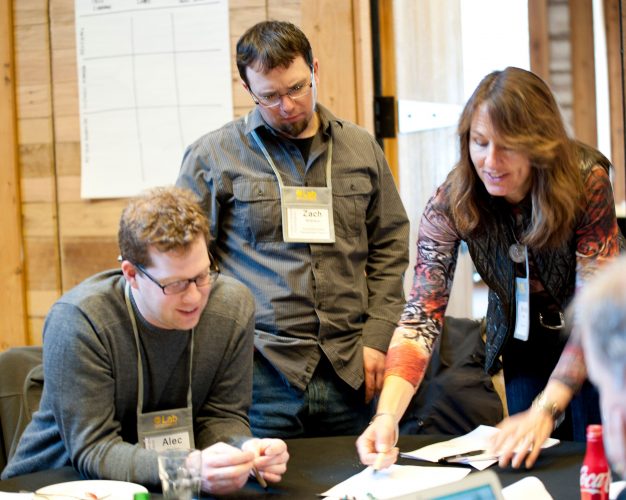
At Accelerator, team members clarified and developed a common understanding of the overall objectives of the Minnesota Energy Future Framework with an eye to ensuring this is clear prior to expanding stakeholder engagement. The team also refined the decision criteria suggested by the study scoping report and began to sketch the overall stakeholder engagement process and core stakeholder groups. As a key focus of EFF next steps, the group identified key individuals and specific organizations to connect with and interview in the coming months. Where appropriate, team members were assigned to interviewees.
Help build the clean energy future. Donate today.
Independent research. Real-world solutions. Supported by donors.
RMI can pursue the highest-impact climate and energy solutions because we’re supported by people who believe change is possible. Every gift helps advance the work needed to make clean energy the default choice worldwide.
For other ways to give to RMI, including checks or gifts of stock, please visit Other Ways to Give.