Project Objective
Establish design strategies for a downtown energy innovation district utilizing distributed generation
Project Team Members
Danise Alano-Martin, Director of Economic & Sustainable Development, City of BloomingtonrnJacqueline Bauer, Sustainability Coordinator, City of BloomingtonrnBruce Calloway, Government and Community Relations Manager, Duke Energy IndianarnSunil Cherian, Chief Executive Officer, SpiraernJackie Moore, Assistant City Attorney, City of BloomingtonrnDan Sowder, Renewable Generation Business Development Manager, Duke EnergyrnDavid Walter, President of the Redevelopment Commission, City of Bloomington
In 2011, the City of Bloomington acquired 12 acres of land in the heart of downtown with the goal of establishing a Certified Technology Park (CTP). The master plan for the CTP, completed in 2013, aims for the development to become a model of modern, sustainable urban redevelopment that nurtures creativity and entrepreneurship and emphasizes vibrant civic spaces, placemaking, active transportation, green infrastructure, and seamless integration with the adjacent sections of downtown. A key piece of the long-term vision for the CTP is energy innovation. Options under consideration include on-site solar, biomass, waste-to-energy, geothermal, cogeneration, energy storage, demand-side management, power from the utility grid, and microgrids. In order to create an energy innovation district within Bloomington’s CTP, the City of Bloomington seeks expertise on the technological, financial, environmental, and regulatory components that will be needed to make this vision a reality.
The City completed a master plan for the area in 2013. While the plan addressed distributed energy, it did not evaluate options in detail. Since the plan was completed, the City has contacted several organizations, seeking expertise to help evaluate the feasibility of distributed energy.The project is moving forward, with the deconstruction of two unneeded buildings taking place this spring, and road realignment and other infrastructure improvements following soon after. In order to include energy innovation and distributed energy in the project, the City needs to develop an energy plan in the next few months.
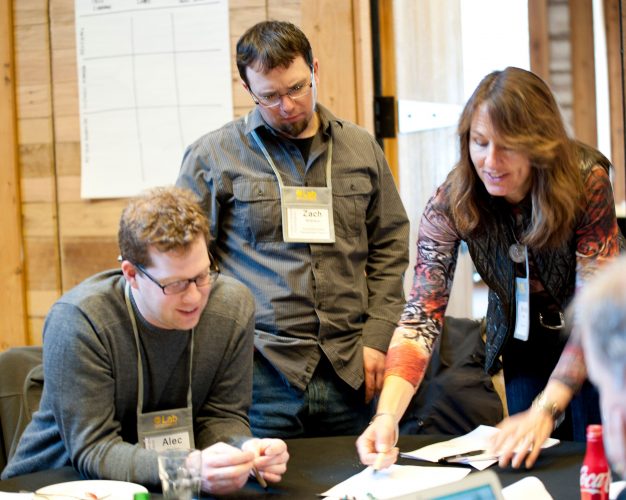
At Accelerator, the team explored potential means of incorporating energy innovation into the basic infrastructure, function, and branding of the Bloomington CTP. Through conversations among the team and with eLab expert faculty, they developed a framework for further planning, including fostering stakeholder support and developing criteria for creating an energy innovation ecosystem. They reviewed a range of technology options to consider for the park, including distributed generation, energy storage, demand response and energy efficiency. The Bloomington team is incorporating the insights and lessons from Accelerator into the redevelopment planning process for the CTP, including attention to refining the project vision and identifying key community influencers with whom to partner.
Help build the clean energy future. Donate today.
Independent research. Real-world solutions. Supported by donors.
RMI can pursue the highest-impact climate and energy solutions because we’re supported by people who believe change is possible. Every gift helps advance the work needed to make clean energy the default choice worldwide.
For other ways to give to RMI, including checks or gifts of stock, please visit Other Ways to Give.