Project Objective
Enable, accelerate, and optimize adoption of electrified vehicles in Juneau, Alaska. Power the EVs with renewable, low-impact energy, as the region has large hydropower capacity.
Project Team Members
Alec Mesdag, Director of Energy Services, AEL&PrnJohn Neary, Director, USFS Mendenhall Glacier Visitor CenterrnGeorge Roe, Research Professor at Alaska Center, Energy & Power, University of Alaska FairbanksrnZach Wilkinson, Program Manager, Juneau Economic Development Council
With greater than 99% of total generation from low-impact hydropower, Juneau benefits from one of the cleanest sources of electricity in the world. The hydro resource peaks between May and October, when Juneau experiences high rainfall and snowmelt. This timing aligns with a world-class tour industry. Around 1,000,000 visitors come to Juneau each year, most arriving via cruise ship to see the Mendenhall Glacier. As the community and visitors alike become more conscious of the need to advance technologies that combat climate change, the tour industry leads Juneau in seeking ways to integrate electrified transportation into their operations. Coupling the actions of tour companies with dozens of locals driving EVs on Juneau’s limited road system makes it clear Juneau possesses the opportunity to move beyond petroleum-fuelled vehicles. Our team intends to use the e-Lab Accelerator to map Juneau’s path to a zero-carbon highway and marine transportation sector.
In 2013, the JEDC Renewable Energy Cluster identified Electric Vehicles as a priority and set a goal to make Juneau the national leader in public charging stations per capita. Through a grant awarded to the Juneau Community Foundation and CBJ, and local match funds raised in the community, Level II charging stations were installed around Juneau. The JEDC EV Action Initiative coordinated the effort, which will result in 14 public charging spaces available by mid-2015. This program spurred broader interest in electric transportation among residents and businesses, and the EV initiative recently diversified to also include electric buses, boats, and bikes, largely to help coordinate the independent efforts of local businesses. 2015 goals include finding a reliable charging solution for at least one multi-family complex and making it possible for a cruise passenger to use only zero-carbon transportation during their visit in Juneau.
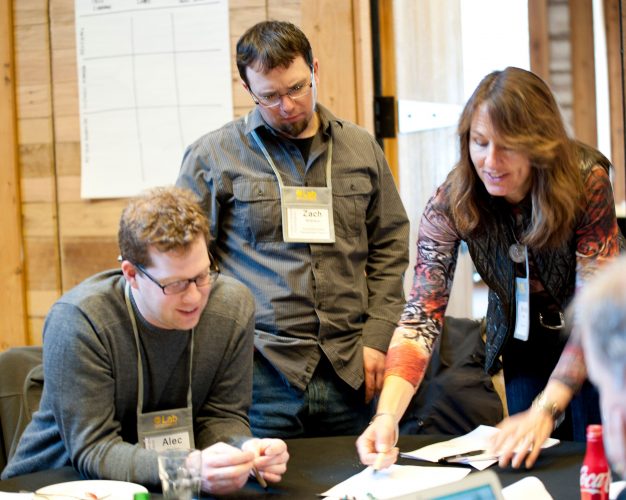
At Accelerator, the team explored potential means of incorporating electrified vehicles into Juneau's transportation system as well as optimizing the system as a whole. Work within the group, aided by eLab expert faculty, led to the creation of a framework of a near-term action plan. The plan builds on previous work and will move Juneau toward optimizing and electrifying transportation systems within the city and region. They reviewed a range of technology options to consider, including commercial electric vehicles, smaller electrified buses, and the potential to incorporated emerging "autopilot" technology when it becomes commercially available and locally viable.
Help build the clean energy future. Donate today.
Independent research. Real-world solutions. Supported by donors.
RMI can pursue the highest-impact climate and energy solutions because we’re supported by people who believe change is possible. Every gift helps advance the work needed to make clean energy the default choice worldwide.
For other ways to give to RMI, including checks or gifts of stock, please visit Other Ways to Give.